

Monday 31 March 2025
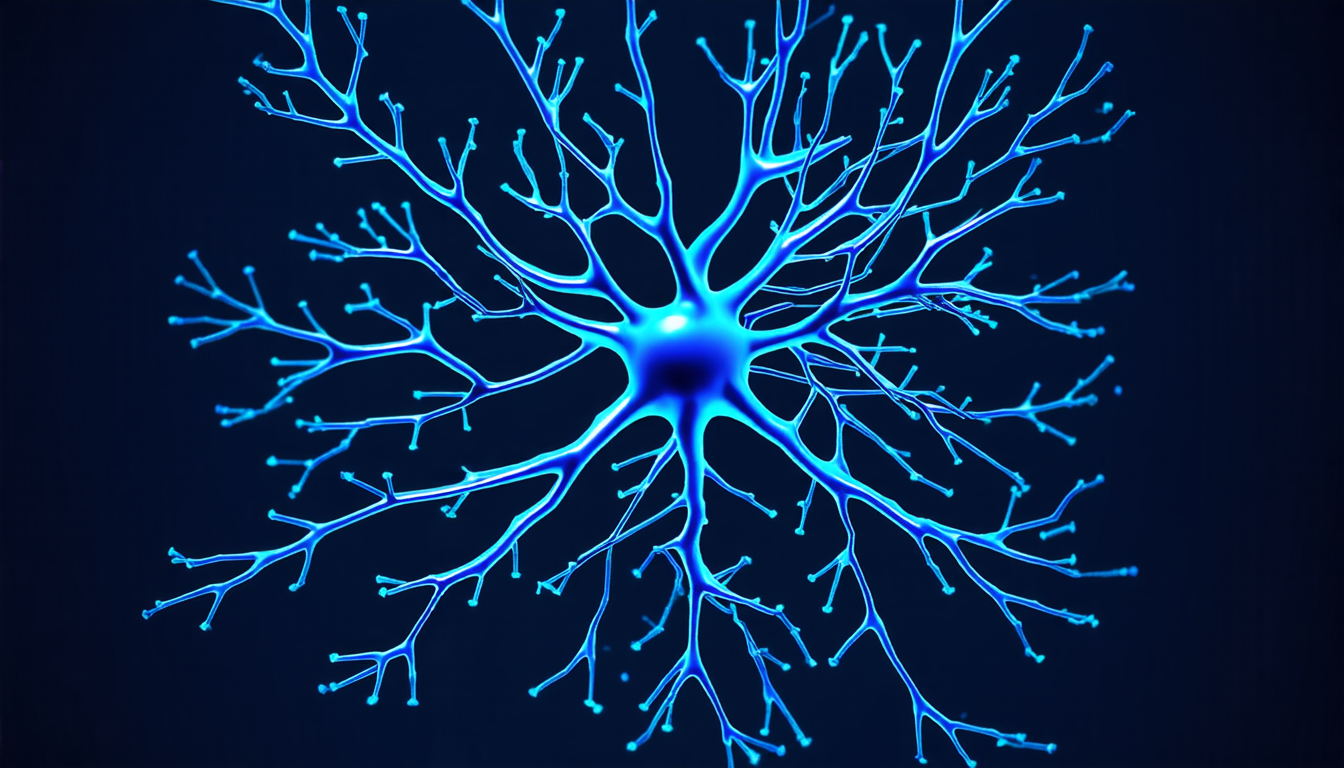
Scientists have made a significant breakthrough in the development of neuromorphic computing, which is inspired by the workings of the human brain. A team of researchers has created a new model that integrates astrocytes, a type of cell found in the brain that plays a crucial role in regulating neural activity, into neural networks.
Traditionally, artificial intelligence systems have been designed to mimic the behavior of individual neurons or groups of neurons, but this new approach takes it a step further by incorporating astrocytes into the network. Astrocytes are responsible for providing support and maintenance to the brain’s neurons, as well as regulating the flow of ions and nutrients between them.
The researchers used a combination of theoretical modeling and computer simulations to develop their new model, which they call the Leaky Integrate-and-Fire Astrocyte (LIFA) model. This model is designed to mimic the way astrocytes interact with neurons in the brain, allowing it to learn and adapt in response to new information.
One of the key benefits of this new approach is that it allows for more efficient processing of information. Traditional neural networks are limited by their ability to process only a certain amount of information at once, whereas the LIFA model can handle much larger amounts of data without becoming overwhelmed.
Another advantage of the LIFA model is its ability to recover from errors and malfunctions. In traditional neural networks, if one neuron becomes damaged or faulty, it can have a ripple effect throughout the entire network, causing it to malfunction or even crash. The LIFA model, on the other hand, has built-in mechanisms for self-repair and error correction, allowing it to continue functioning even in the presence of errors.
The researchers tested their new model using a variety of neural networks and found that it was able to perform tasks more accurately and efficiently than traditional models. They also found that it was able to recover from errors and malfunctions more effectively, making it a promising technology for use in real-world applications.
This breakthrough has significant implications for the field of artificial intelligence and could potentially lead to the development of more advanced and sophisticated AI systems. With its ability to learn, adapt, and self-repair, the LIFA model could be used in a wide range of applications, from robots and autonomous vehicles to medical devices and financial systems.
In addition to its potential uses in AI, this research also sheds light on the workings of the human brain and how it is able to function efficiently and effectively.
Cite this article: “Revolutionary Breakthrough in Neuromorphic Computing: Astrocytes Unlock Efficient AI Processing”, The Science Archive, 2025.
Neuromorphic Computing, Astrocytes, Neural Networks, Artificial Intelligence, Brain-Inspired, Leaky Integrate-And-Fire Astrocyte Model, Information Processing, Error Correction, Self-Repair, Machine Learning.





