

Monday 31 March 2025
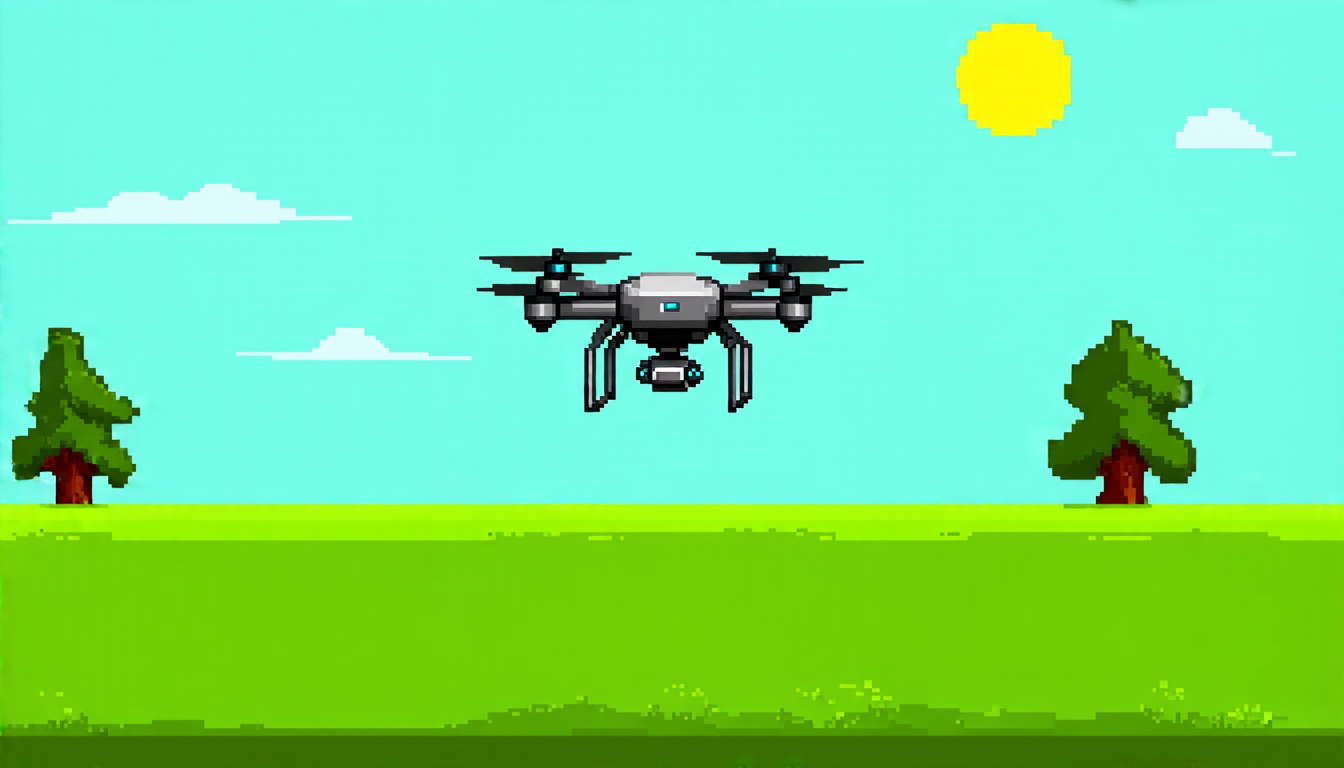
A team of researchers has developed a new approach to controlling quadrotors, those small flying robots that are increasingly used in applications such as search and rescue missions, aerial surveys, and even entertainment. The key innovation is an algorithm that uses symmetry-aware learning to improve the performance of these devices.
Quadrotors are notoriously difficult to control because they have many degrees of freedom – they can move up or down, side to side, forward or backward, and rotate around all three axes. This makes it challenging for algorithms to predict their behavior and make accurate decisions about how to guide them.
The researchers’ approach involves using a type of neural network called an equivariant network, which is designed specifically to handle symmetries in the data. In this case, the symmetry is rotational – the quadrotor’s behavior is the same regardless of its orientation in space. By incorporating this knowledge into the algorithm, the team was able to reduce the complexity of the control problem and improve the accuracy of their predictions.
The researchers tested their approach using a simulator and a real-world quadrotor, and found that it outperformed traditional methods in terms of speed and precision. The algorithm was also able to learn from experience and adapt to changing conditions, such as wind or obstacles.
One potential application of this technology is in the field of autonomous aerial vehicles (AAVs), which are being developed for a range of tasks including package delivery, surveillance, and search and rescue. By improving the control algorithms used in AAVs, it may be possible to make them more reliable and efficient, and to expand their capabilities.
The researchers’ work is an important step forward in the development of quadrotor control systems, and has the potential to benefit a range of industries and applications.
Cite this article: “Symmetry-Aware Learning Improves Quadrotor Control”, The Science Archive, 2025.
Quadrotors, Symmetry-Aware Learning, Neural Networks, Equivariant Network, Control Systems, Autonomous Aerial Vehicles, Aavs, Package Delivery, Surveillance, Search And Rescue





