

Friday 04 April 2025
In a breakthrough that could revolutionize the way we interact with technology, researchers have developed a system that allows small language models to be fine-tuned for specific tasks and deployed on local devices, eliminating the need for powerful cloud-based servers.
These small language models, also known as SLMs, are a type of artificial intelligence designed to understand and generate human-like language. While they’re impressive in their own right, traditional SLMs have one major drawback: they require significant computational power and storage space to operate effectively.
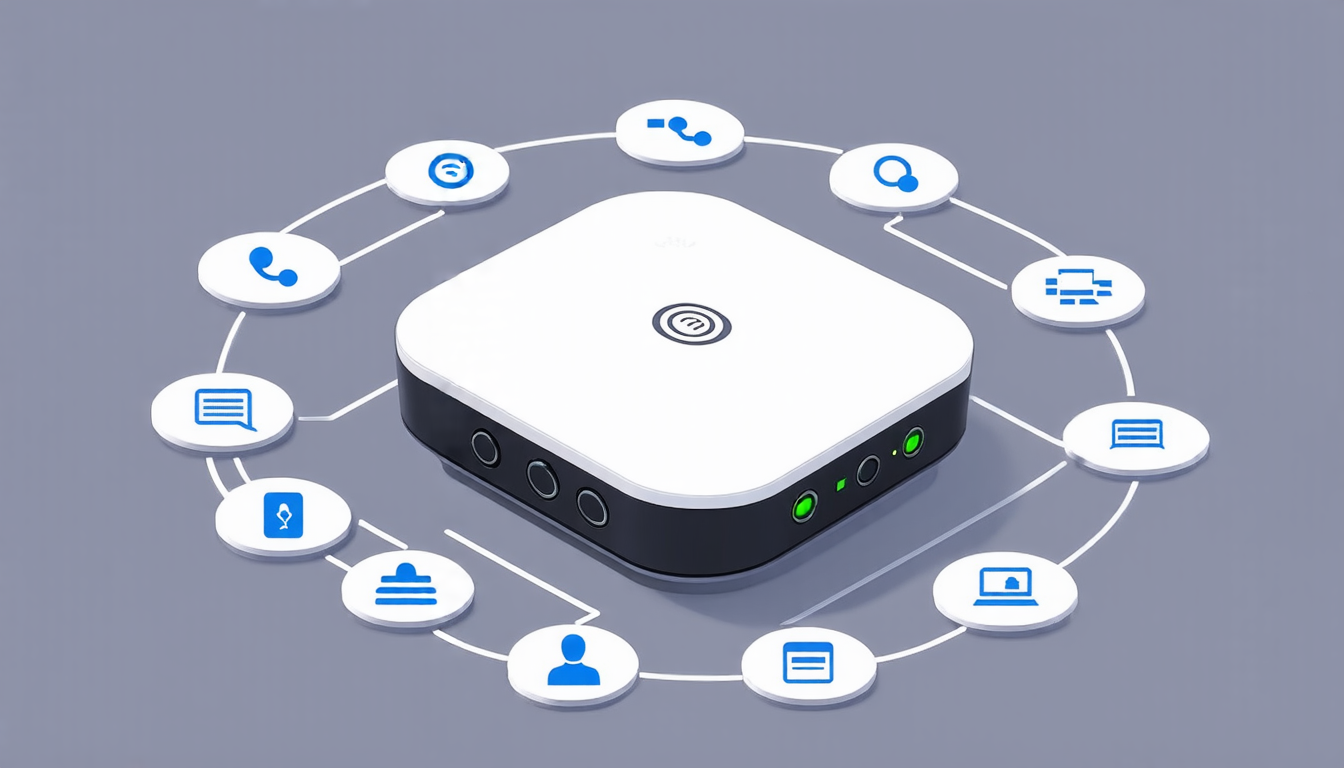
That’s why scientists have been working on ways to shrink these models down to size, making them more accessible and practical for everyday use. The latest innovation in this field is a system called GPIoT, which allows SLMs to be fine-tuned for specific tasks and deployed on local devices like smartphones or smart home devices.
The key to GPIoT’s success lies in its ability to augment the SLMs with domain-specific knowledge, allowing them to better understand the context of their surroundings. This is achieved through a process called data augmentation, which involves adding noise or perturbations to the training data to make it more representative of real-world scenarios.
By fine-tuning these models on local devices, users can enjoy faster and more accurate language processing capabilities, without having to rely on cloud-based servers. This has significant implications for fields like healthcare, finance, and education, where timely and secure processing of sensitive information is crucial.
One potential application of GPIoT is in the development of smart home assistants that can understand and respond to voice commands with greater accuracy. Currently, these devices often struggle to comprehend complex queries or follow multi-step instructions, but a fine-tuned SLM could potentially bridge this gap.
Another area where GPIoT could make a significant impact is in the field of healthcare. For example, medical professionals could use fine-tuned SLMs to analyze patient data and provide personalized treatment recommendations. This could be especially useful in remote or underserved areas where access to specialized care may be limited.
The researchers behind GPIoT are excited about its potential applications and see it as a major step forward in the development of practical AI solutions. As the technology continues to evolve, we can expect to see even more innovative uses for fine-tuned SLMs, from smart home devices to medical equipment and beyond.
Cite this article: “Unleashing the Power of Large Language Models in IoT Program Synthesis and Development”, The Science Archive, 2025.
Language Models, Small Language Models, Fine-Tuning, Local Devices, Ai, Artificial Intelligence, Cloud-Based Servers, Data Augmentation, Smart Home Devices, Healthcare.





