

Friday 04 April 2025
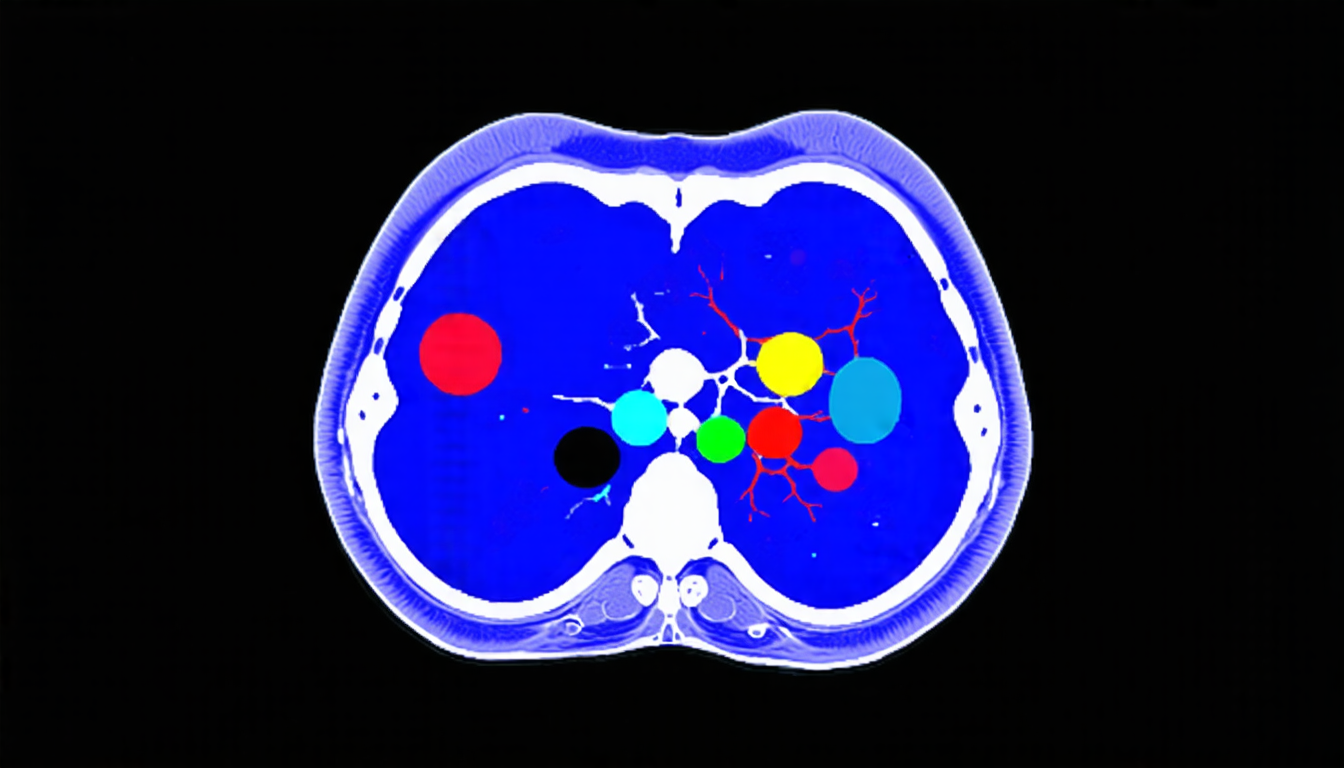
A team of researchers has made significant strides in developing a more efficient way to fine-tune artificial intelligence models for medical image segmentation tasks, such as identifying lymph nodes in CT scans.
The process of fine-tuning AI models involves adjusting their parameters based on a small number of labeled training examples. This is particularly challenging when it comes to medical imaging, where the data is often limited and the task requires high accuracy.
To tackle this problem, the researchers developed a novel approach called Dynamic Gradient Sparsification Training (DGST). This method dynamically selects the most critical parameters for fine-tuning based on the gradient of the loss function at each iteration.
The results are impressive: DGST outperforms existing fine-tuning methods in both quantitative and qualitative terms. On two publicly available datasets, DGST achieved superior performance with limited labeled data, demonstrating its ability to balance model stability and flexibility.
One of the key benefits of DGST is its efficiency. By only updating the most critical parameters, it requires fewer computations than traditional fine-tuning methods. This makes it more suitable for real-world applications where computational resources are limited.
The researchers also explored different parameter sparsification strategies, including static gradient-based selection and random parameter selection. However, these methods failed to produce results comparable to DGST.
The development of DGST has significant implications for the medical imaging community. It could enable the creation of more accurate and efficient AI models for tasks such as tumor segmentation, organ detection, and disease diagnosis.
Furthermore, the approach could be applied to other domains where fine-tuning is necessary, such as natural language processing and computer vision.
The researchers plan to release their dataset of 36,106 annotated lymph nodes and validated framework to advance the deployment of robust, resource-efficient segmentation tools in evolving clinical workflows. This will provide a valuable resource for the medical imaging community and facilitate further research and development.
Overall, DGST represents a significant step forward in the field of artificial intelligence for medical image analysis. Its efficiency, accuracy, and potential applications make it an exciting development with far-reaching implications.
Cite this article: “Fine-Tuning Foundation Models for Efficient Lymph Node Segmentation in Medical Imaging”, The Science Archive, 2025.
Artificial Intelligence, Medical Image Segmentation, Fine-Tuning, Dynamic Gradient Sparsification Training, Dgst, Computational Efficiency, Parameter Selection, Medical Imaging, Lymph Nodes, Ct Scans.





