

Saturday 05 April 2025
A new approach to path planning for autonomous vehicles has been developed, one that takes into account the non-holonomic constraints of real-world environments. This is a significant step forward in ensuring the safety and efficiency of self-driving cars.
The traditional method of path planning involves discretizing the environment into a grid and then using algorithms like A* or Dijkstra to find the shortest path to the goal. However, this approach has limitations when it comes to non-holonomic systems, such as autonomous vehicles, which have limited steering capabilities and can only move in certain directions.
The new algorithm, developed by researchers at U.R. Rao Satellite Centre, uses a combination of kinematic and geometric models to plan paths that take into account the vehicle’s dimensions and movement constraints. This approach allows for more realistic path planning, one that reflects the real-world limitations of autonomous vehicles.
One of the key features of this new algorithm is its ability to incorporate non-holonomic constraints directly into the path-planning process. This means that the algorithm can avoid scenarios where the vehicle would need to make a tight turn or reverse direction, which could be dangerous or impractical in certain situations.
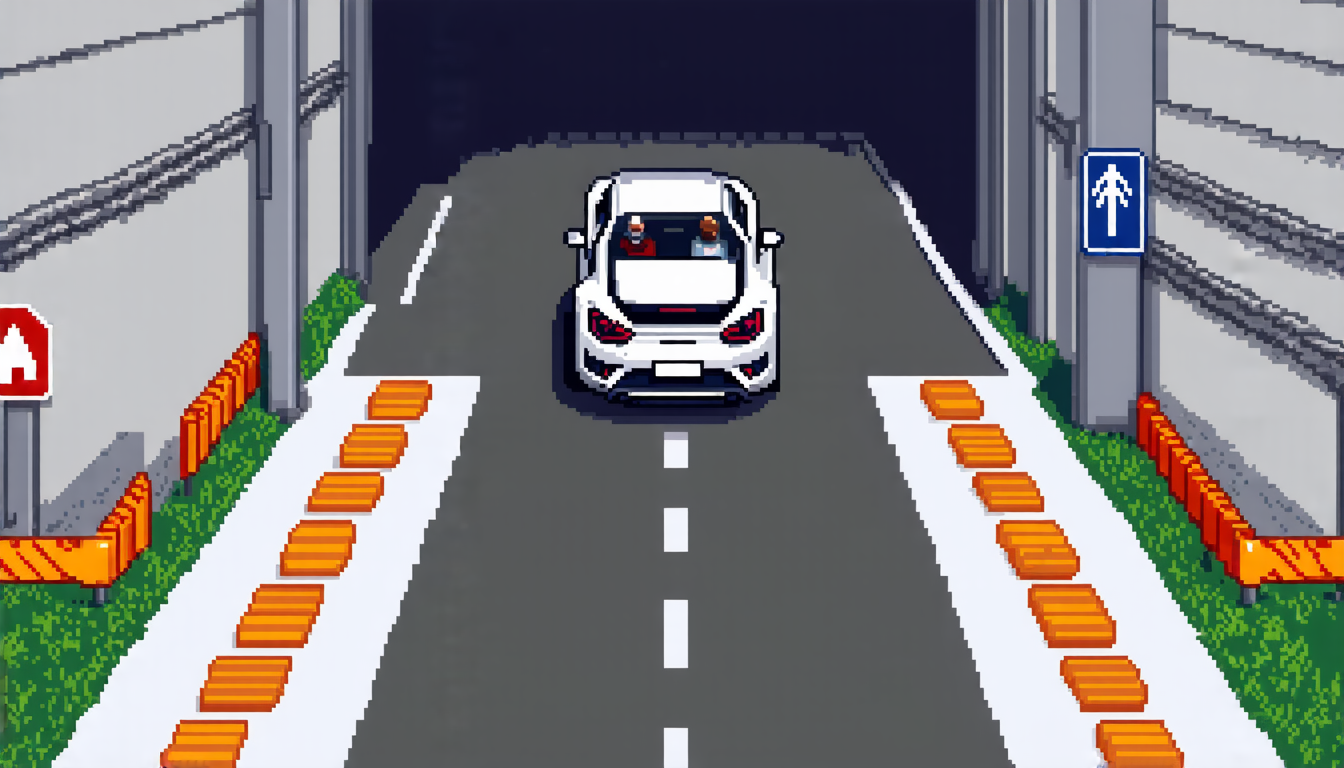
The researchers used simulations to test their approach and found that it was able to produce more efficient and safer paths than traditional methods. For example, they tested the algorithm on a scenario where a self-driving car needed to navigate through a narrow corridor with obstacles on either side. The new algorithm was able to plan a path that avoided collisions and took into account the vehicle’s limited steering capabilities.
The implications of this research are significant for the development of autonomous vehicles. By incorporating non-holonomic constraints into the path-planning process, self-driving cars can be designed to navigate complex environments more safely and efficiently. This could lead to widespread adoption of autonomous vehicles in industries such as logistics and transportation.
In addition to its practical applications, this research also highlights the importance of considering real-world constraints when designing algorithms for autonomous systems. As we continue to develop more sophisticated AI systems, it is essential that we take into account the limitations and challenges of the physical world.
The researchers’ approach has several advantages over traditional methods, including the ability to generate smoother paths and avoid collisions. It also allows for more flexible planning, as the algorithm can adapt to changing environments and obstacles.
Overall, this new approach to path planning is a significant step forward in the development of autonomous vehicles.
Cite this article: “Efficient Path Planning for Autonomous Vehicles: A Novel Enhanced A Algorithm”, The Science Archive, 2025.
Autonomous Vehicles, Path Planning, Non-Holonomic Constraints, Kinematic Models, Geometric Models, Self-Driving Cars, Algorithm, Simulations, Logistics, Transportation





