

Saturday 05 April 2025
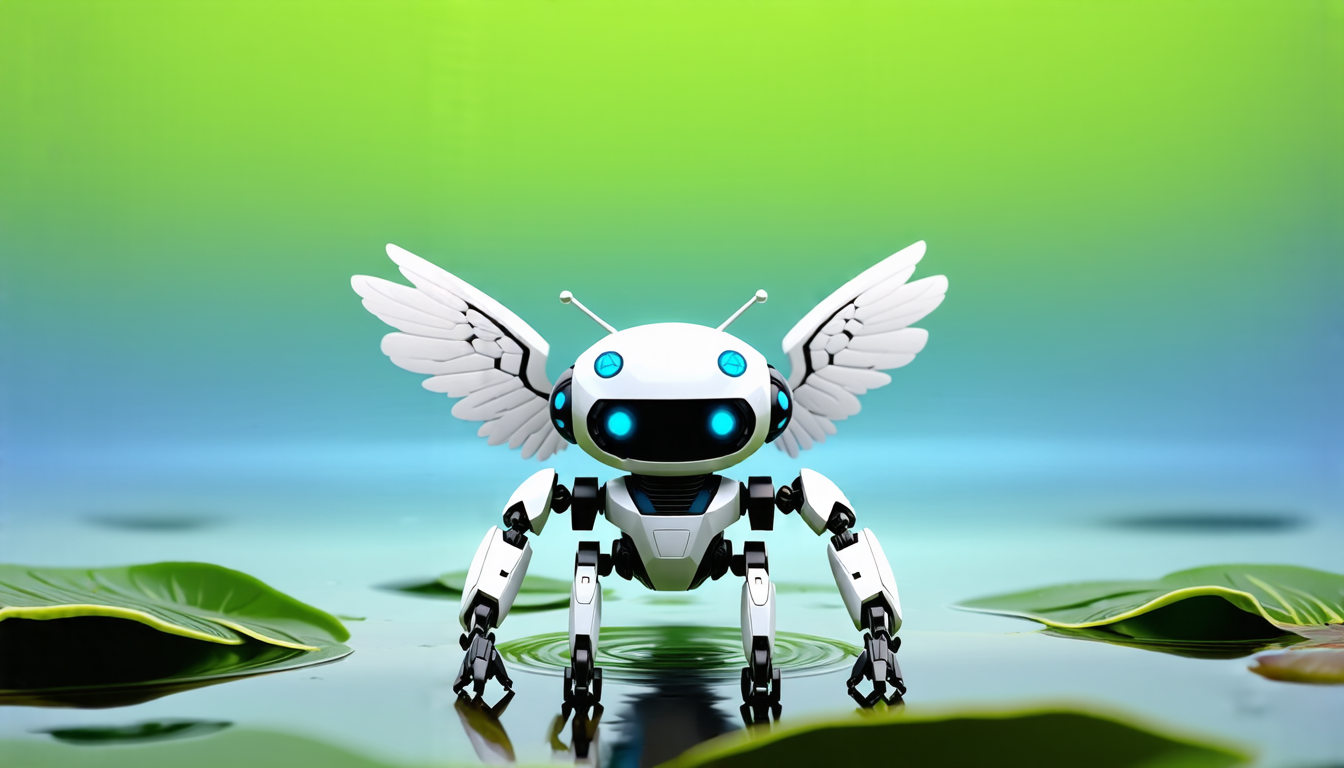
A tiny robot that can fly and crawl has been developed by scientists, showcasing a remarkable feat of engineering and biomimicry.
The device, which weighs just 37 grams, is known as T3, and its creators have designed it to mimic the movements of insects such as water striders. These insects are able to walk on water using their specially adapted legs, which create ripples in the surface that help them stay afloat.
T3 has three pairs of wings that flap independently, allowing it to generate lift and propulsion in mid-air. However, unlike traditional flying robots, T3’s wings don’t just flap up and down – they also move from side to side, creating a unique motion that is similar to the way insects fly.
But what makes T3 truly remarkable is its ability to transition seamlessly between flight and crawling. The robot uses elastic legs that are designed to mimic the movements of water striders, allowing it to generate forward momentum on land by using vibrations created by its flapping wings.
This ability to switch between flying and crawling is a major challenge for roboticists, as it requires the development of sophisticated sensors and control systems that can accurately track the robot’s movement and adjust its behavior accordingly.
T3 has been designed with multiple modes of locomotion in mind, including vertical takeoff and landing, hovering, and trajectory tracking. Its creators have also developed advanced algorithms that allow it to adapt to changing environments and obstacles, making it a highly versatile and capable robot.
One of the key benefits of T3 is its potential for use in search and rescue missions, where it could be used to navigate difficult terrain and reach areas inaccessible to larger robots or humans. Its ability to fly and crawl also makes it an attractive option for surveillance and monitoring applications, as it could be used to gather data from hard-to-reach locations.
T3 is just the latest example of the remarkable advances being made in the field of robotics, where scientists are continually pushing the boundaries of what is possible with these machines. As our understanding of biology and biomechanics continues to grow, we can expect to see even more innovative and capable robots like T3 in the future.
Cite this article: “Revolutionizing Locomotion: A Tailless Flapping-Wing Robot Achieves Efficient Ground Crawling and Flight”, The Science Archive, 2025.
Robot, Flight, Crawling, Biomimicry, Engineering, Insect, Wings, Sensors, Control Systems, Search And Rescue





