

Saturday 05 April 2025
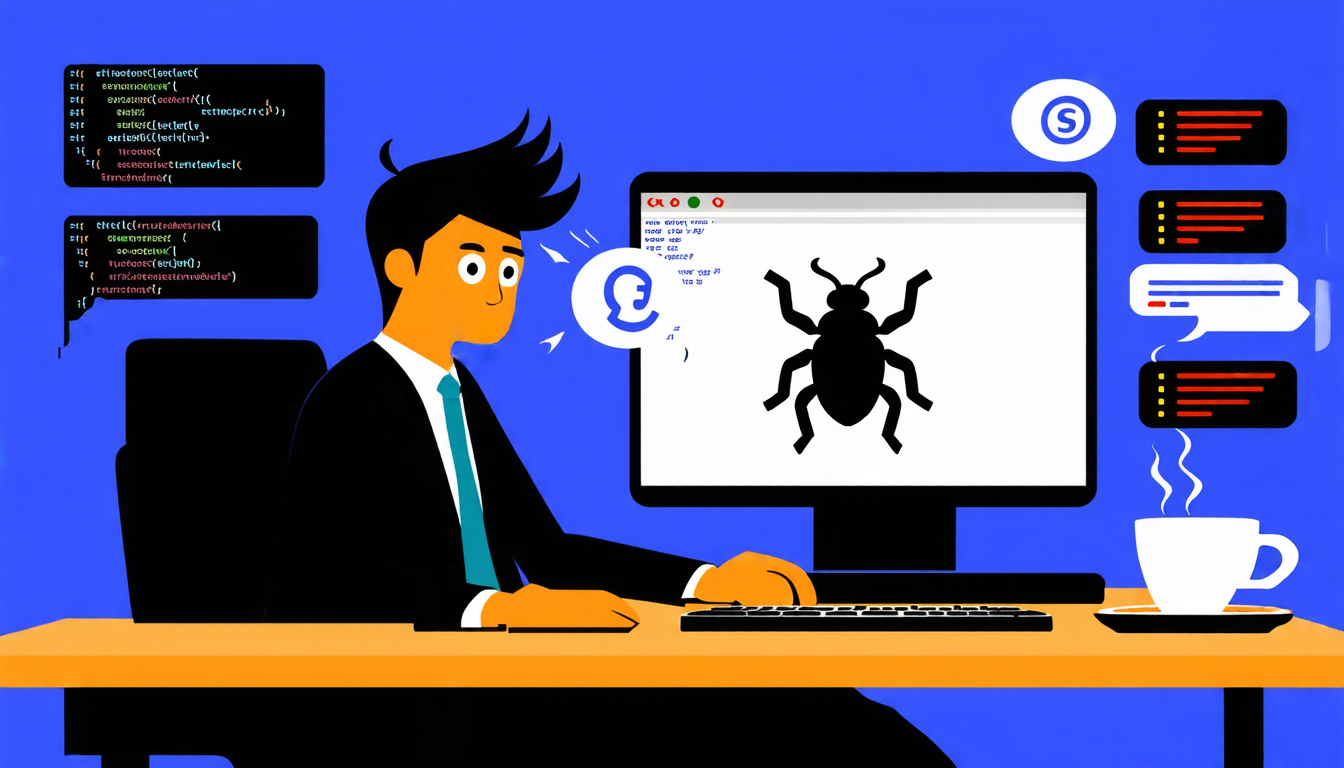
A new way to detect bugs in computer programs has been developed, and it’s revolutionizing the field of software verification. For years, programmers have relied on manual testing and debugging to ensure their code is free of errors, but this approach can be time-consuming and prone to human error.
The problem lies in the complexity of modern software systems, which often involve intricate interactions between multiple components. As a result, bugs can easily slip through the cracks and remain undetected for extended periods. This not only wastes valuable development time but also puts users at risk of encountering unpredictable behavior or even security vulnerabilities.
To address this issue, researchers have been working on developing formal verification techniques that can automatically detect errors in software code. One such approach is called Separation Logic, which uses a mathematical framework to reason about the relationships between different parts of a program.
The latest breakthrough comes from a team of scientists who have extended Separation Logic to handle arrays and pointer arithmetic, two key features of modern programming languages. By combining these elements with formal verification, they’ve created a powerful tool for identifying bugs early on in the development process.
The technique works by analyzing the behavior of individual components within a program, rather than focusing on the entire system at once. This allows developers to pinpoint specific areas where errors may be lurking and address them before they cause problems downstream.
One of the key advantages of this approach is its ability to scale to large and complex programs. Unlike traditional testing methods, which can become unwieldy as the size of the program increases, formal verification techniques like Separation Logic can handle massive codebases with ease.
In addition to improving the efficiency of software development, this technology also has significant implications for security and reliability. By detecting bugs earlier in the process, developers can reduce the risk of introducing vulnerabilities into their code, making it safer for users to interact with.
The potential applications of this research are vast, from ensuring the integrity of critical infrastructure systems to safeguarding financial transactions. As our reliance on technology continues to grow, the need for reliable and secure software will only increase, making innovations like Separation Logic a crucial step forward in the pursuit of better software engineering.
Cite this article: “Unlocking the Power of Inconsistent Data: A Novel Approach to Separation Logic with Arrays and Pointer Arithmetic”, The Science Archive, 2025.
Software Verification, Formal Verification, Separation Logic, Arrays, Pointer Arithmetic, Programming Languages, Bug Detection, Software Development, Security, Reliability.





