

Saturday 05 April 2025
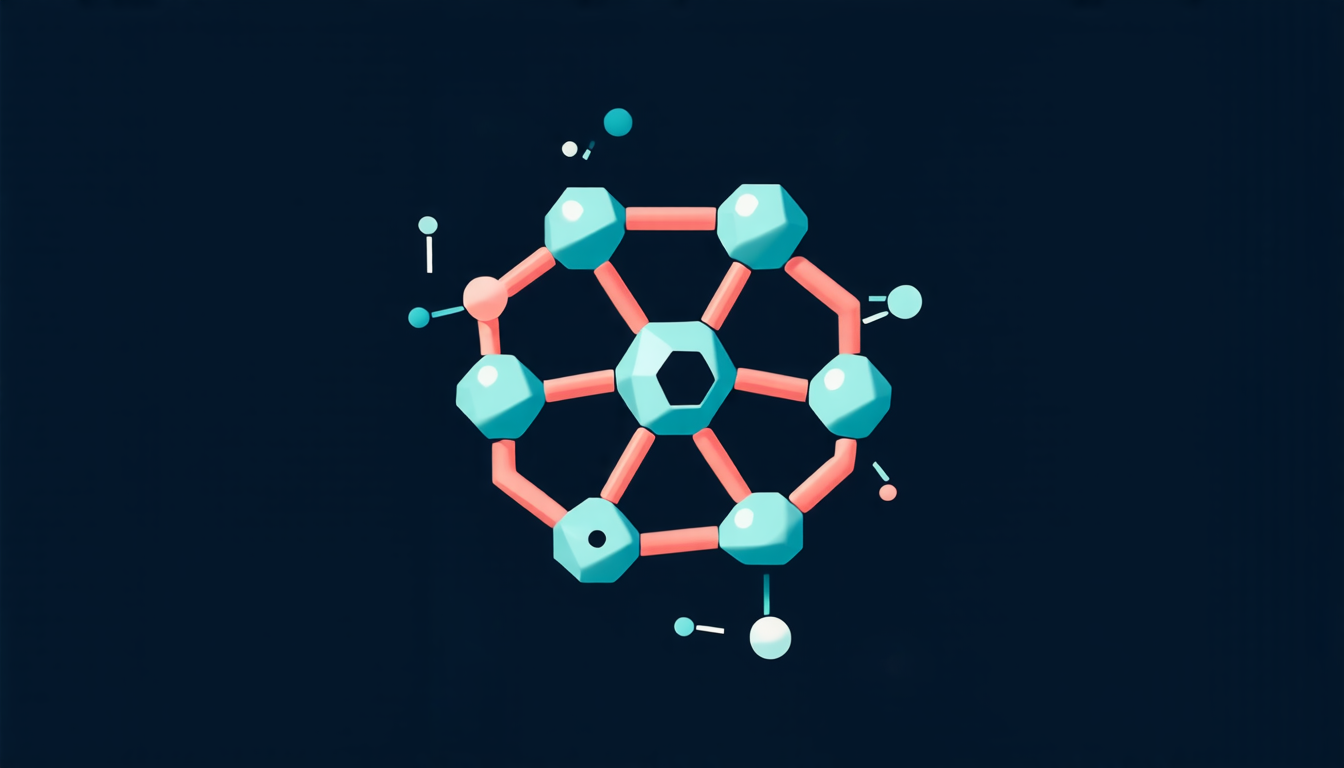
The intricate dance of self-assembly, where individual components come together to form complex structures, is a phenomenon that has fascinated scientists for decades. In a recent study, researchers have shed new light on this process by exploring the behavior of isotropic octahedral junctions – tiny building blocks with six branches that can combine in various ways to create more complex structures.
To understand how these junctions behave, the team turned to computer simulations and theoretical models. They developed an antiferroic three-state Potts model, which allowed them to study the self-assembly process on a large scale. The results were both surprising and fascinating – despite their initial randomness, the junctions began to order themselves in a uniaxial fashion, with one direction emerging as dominant.
This ordering phenomenon has significant implications for our understanding of self-assembly. In traditional systems, entropy tends to favor isotropic structures, where all directions are equivalent. However, in this case, the researchers found that the antiferroic behavior led to an unexpected preference for uniaxial order – a result that challenges our classical intuition.
The team’s findings also have practical applications in fields like materials science and chemistry. By understanding how these junctions behave, scientists can better design and control the self-assembly of complex structures, potentially leading to breakthroughs in areas such as nanotechnology and energy storage.
One of the most intriguing aspects of this study is its connection to other fields beyond physics and chemistry. For example, the researchers noted parallels between their findings and the behavior of certain biological systems, where molecules come together to form intricate patterns and structures. This underscores the interconnectedness of scientific disciplines and highlights the potential for cross-pollination between seemingly disparate areas.
The self-assembly process is a complex and multifaceted phenomenon that continues to fascinate scientists and engineers. As researchers like this team push the boundaries of our understanding, we may uncover new insights into the fundamental nature of matter itself – and unlock innovative solutions to some of humanity’s most pressing challenges.
Cite this article: “Unlocking the Secrets of Self-Assembly: Unusual Ordering in a Tripartite Lattice”, The Science Archive, 2025.
Self-Assembly, Materials Science, Chemistry, Nanotechnology, Energy Storage, Physics, Biology, Molecular Behavior, Antiferroic, Potts Model.
Reference: Kazuya Saito, “Uniaxial Ordering by Self-Assembly of Isotropic Octahedral Junctions” (2025).





