

Saturday 05 April 2025
Scientists have been working tirelessly to develop a new method for solving complex problems in imaging and inverse problems, which are crucial in fields such as medicine, astronomy, and materials science.
These problems typically involve finding an unknown image or function from a set of indirect measurements. The challenge lies in the fact that the measurements are often noisy and incomplete, making it difficult to reconstruct the original image or function accurately.
Researchers have been exploring various techniques to tackle this issue, including multiscale decomposition methods. Multiscale decomposition involves breaking down the problem into smaller parts at different scales, allowing for a more detailed analysis of each component.
In recent years, scientists have developed a new approach that uses a combination of multiscale decomposition and total variation regularization. Total variation regularization is a technique used to reduce noise in images by penalizing large differences between neighboring pixels.
The latest study builds upon this work, introducing a novel way to combine multiscale decomposition with a different type of regularization called Hilbert norm regularization. This new approach shows promise in improving the accuracy and stability of image reconstruction.
One of the key findings is that the new method can converge faster and more reliably than traditional methods. Convergence refers to the process of approaching the correct solution as the algorithm iterates through the calculations.
The researchers also discovered that the new method can produce more accurate results, especially in situations where the measurements are noisy or incomplete. This is significant because it means that scientists can use this method to reconstruct images and functions with greater confidence.
So how does this technology work? The process begins by dividing the problem into smaller parts at different scales. Each part is then analyzed separately using a combination of multiscale decomposition and Hilbert norm regularization.
The algorithm iterates through these calculations, adjusting the solution at each scale until it converges to the final answer. This process allows for a more accurate and detailed reconstruction of the original image or function.
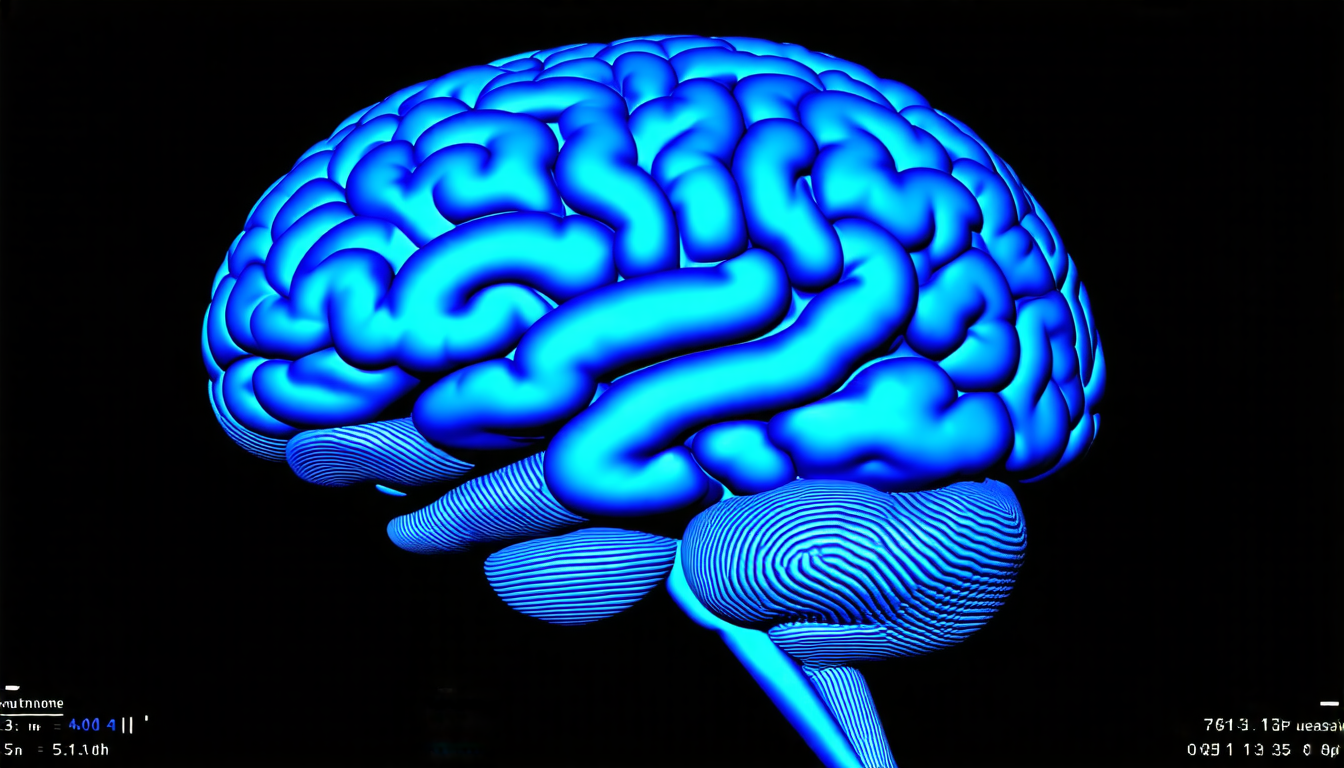
The implications of this research are far-reaching, with potential applications in fields such as medical imaging, astrophysics, and materials science. For instance, scientists could use this method to reconstruct images of the brain or other organs from limited data, allowing for better diagnosis and treatment of diseases.
Similarly, astronomers could use this method to reconstruct images of distant galaxies and stars from incomplete data, gaining valuable insights into the formation and evolution of the universe.
Overall, this new approach has the potential to revolutionize the way scientists solve complex imaging and inverse problems.
Cite this article: “Multiscale Inverse Problems: A New Frontier in Image Processing and Optimization”, The Science Archive, 2025.
Image Reconstruction, Multiscale Decomposition, Total Variation Regularization, Hilbert Norm Regularization, Noise Reduction, Image Processing, Inverse Problems, Medical Imaging, Astronomy, Materials Science.





