

Saturday 05 April 2025
Deep learning has made tremendous progress in recent years, and its applications are increasingly diverse. From self-driving cars to medical imaging, deep neural networks have become a crucial tool for many industries. However, despite their success, these networks often struggle with one particular challenge: dealing with noisy or degraded data.
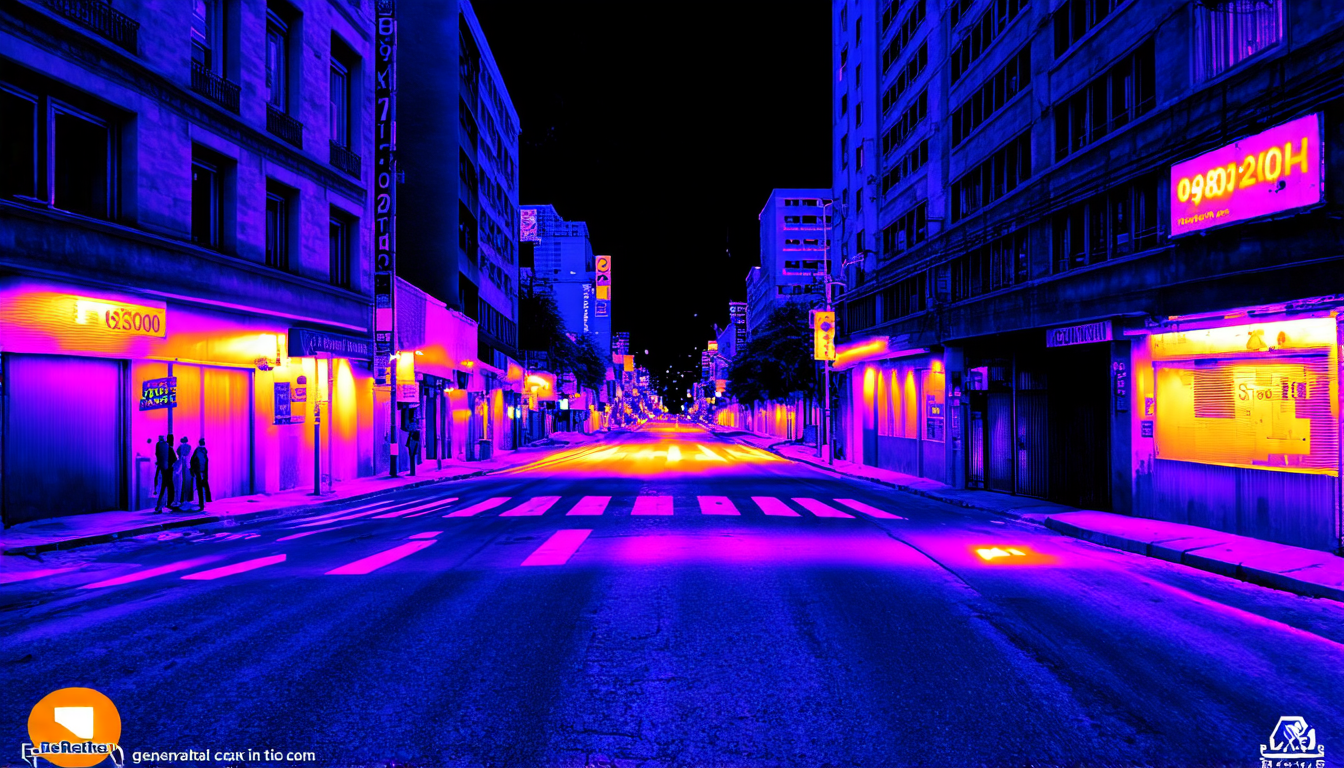
Thermal imaging, for instance, is a critical technology used in various fields such as surveillance and military operations. But the images produced by thermal cameras are often plagued by noise, streaks, and other forms of degradation that can make it difficult to extract useful information from them.
In an effort to address this issue, researchers have developed a new approach called DEAL (Data-Efficient Adversarial Learning). This method uses a combination of deep learning and adversarial training to improve the quality of thermal images by simulating the effects of noise and degradation.
The key insight behind DEAL is that traditional methods for image denoising often rely on manual tuning of hyperparameters or hand-crafted rules. These approaches can be time-consuming, labor-intensive, and may not generalize well to new scenarios. In contrast, DEAL uses a self-supervised learning framework that allows the model to adapt to different types of noise and degradation without requiring explicit labels or human intervention.
The approach works by first training a deep neural network on a dataset of clean images. Then, the network is used as a generator to produce synthetic noisy images, which are used to train another network that acts as a discriminator. This process is repeated multiple times, with the generator and discriminator networks competing against each other in an adversarial game.
The result is a model that can not only denoise thermal images but also remove streaks, restore lost details, and even correct for non-uniformity of illumination. The authors have demonstrated the effectiveness of DEAL by applying it to real-world datasets, including thermal images captured during surveillance operations.
One of the most impressive aspects of DEAL is its ability to generalize well across different types of noise and degradation. In testing scenarios where the model was exposed to unknown levels of noise or streaks, it consistently outperformed traditional methods in terms of image quality and accuracy.
The authors also experimented with using DEAL as a pre-processing step for other computer vision tasks, such as object detection and segmentation. The results showed that DEAL can significantly improve the performance of these tasks by providing high-quality input images.
While DEAL is still an early-stage technology, its potential applications are vast.
Cite this article: “Unveiling the Secrets of Thermal Imaging: A Novel Adversarial Learning Approach for High-Quality Infrared Image Enhancement”, The Science Archive, 2025.
Deep Learning, Thermal Imaging, Noise Reduction, Image Denoising, Adversarial Training, Self-Supervised Learning, Generator Network, Discriminator Network, Computer Vision, Surveillance





