

Saturday 05 April 2025
The quest for a smarter, more efficient power grid has been ongoing for years, and researchers have made significant strides in recent times. One of the latest developments is a new control strategy that enables self-synchronization in hybrid series-parallel systems – a crucial breakthrough for the widespread adoption of renewable energy sources.
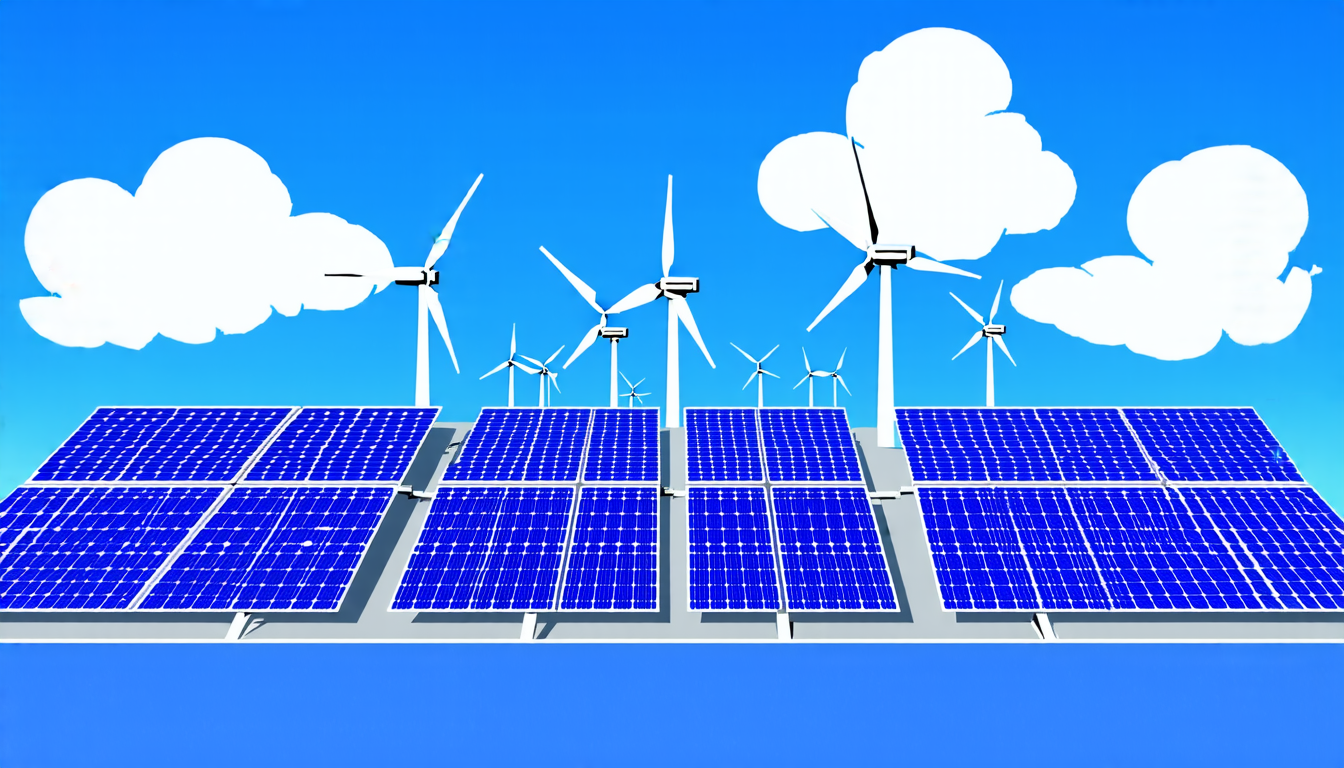
In traditional power grids, energy is generated at centralized facilities and transmitted over long distances to reach consumers. However, with the increasing popularity of decentralized energy production, such as rooftop solar panels, the need for more flexible and adaptable grid management systems has become paramount. Hybrid series-parallel systems are one such approach, where multiple power sources, including solar, wind, and storage devices, are connected in a way that allows them to work together seamlessly.
The challenge lies in ensuring that these disparate components synchronize their operations to maintain the stability of the overall system. This is where the new control strategy comes in – developed by researchers who have designed a decentralized control method that can self-synchronize the hybrid series-parallel system.
This innovative approach combines two existing control strategies: power droop and power factor angle droop. Power droop, which has been widely used in parallel-connected inverters, regulates the output voltage of each module based on its power consumption. The addition of power factor angle droop, typically employed in series-connected modules, ensures that each unit works in harmony with others to maintain the desired power factor.
The control strategy is decentralized, meaning it relies solely on local information from individual modules, rather than requiring complex communication networks between them. This not only simplifies implementation but also enhances fault tolerance and scalability.
In a hybrid series-parallel system, multiple modules are connected both in parallel (across different sources) and in series (along the same circuit). The control strategy is designed to accommodate this complexity by taking into account the power transmission characteristics of each module. By analyzing the small signal behavior of the system, researchers have demonstrated that their approach can stabilize the hybrid system and ensure synchronization among its components.
The implications are significant – this breakthrough could pave the way for widespread adoption of renewable energy sources, enabling a more efficient and resilient grid. With self-synchronization capabilities, decentralized power management systems like this one can seamlessly integrate various sources of energy production, from rooftop solar to wind farms, into a cohesive whole.
As we continue to strive towards a cleaner, more sustainable future, innovations like this control strategy will be instrumental in unlocking the full potential of distributed energy resources.
Cite this article: “Unlocking the Power of Hybrid Series-Parallel Systems: A Novel Control Strategy for Islanded Microgrids”, The Science Archive, 2025.
Power Grid, Renewable Energy, Hybrid Series-Parallel Systems, Self-Synchronization, Decentralized Control, Power Droop, Power Factor Angle Droop, Fault Tolerance, Scalability, Distributed Energy Resources





