

Saturday 05 April 2025
Scientists have made a significant breakthrough in the field of quantum computing, a technology that has the potential to revolutionize the way we process information and solve complex problems. The latest development involves the creation of a new method for braiding Majorana modes, tiny particles that could be used to build a stable and efficient quantum computer.
To understand why this is important, let’s take a step back. Quantum computers are designed to perform calculations that are exponentially faster than those performed by classical computers. This is because they use the principles of quantum mechanics to process information in parallel, rather than sequentially like traditional computers. However, building a stable and efficient quantum computer has proven to be a significant challenge.
One of the key components needed for a quantum computer is a type of particle called a Majorana mode. These particles are unique because they can exist as both matter and antimatter at the same time, which makes them ideal for use in quantum computing. However, creating stable Majorana modes has been difficult due to the fragile nature of the particles.
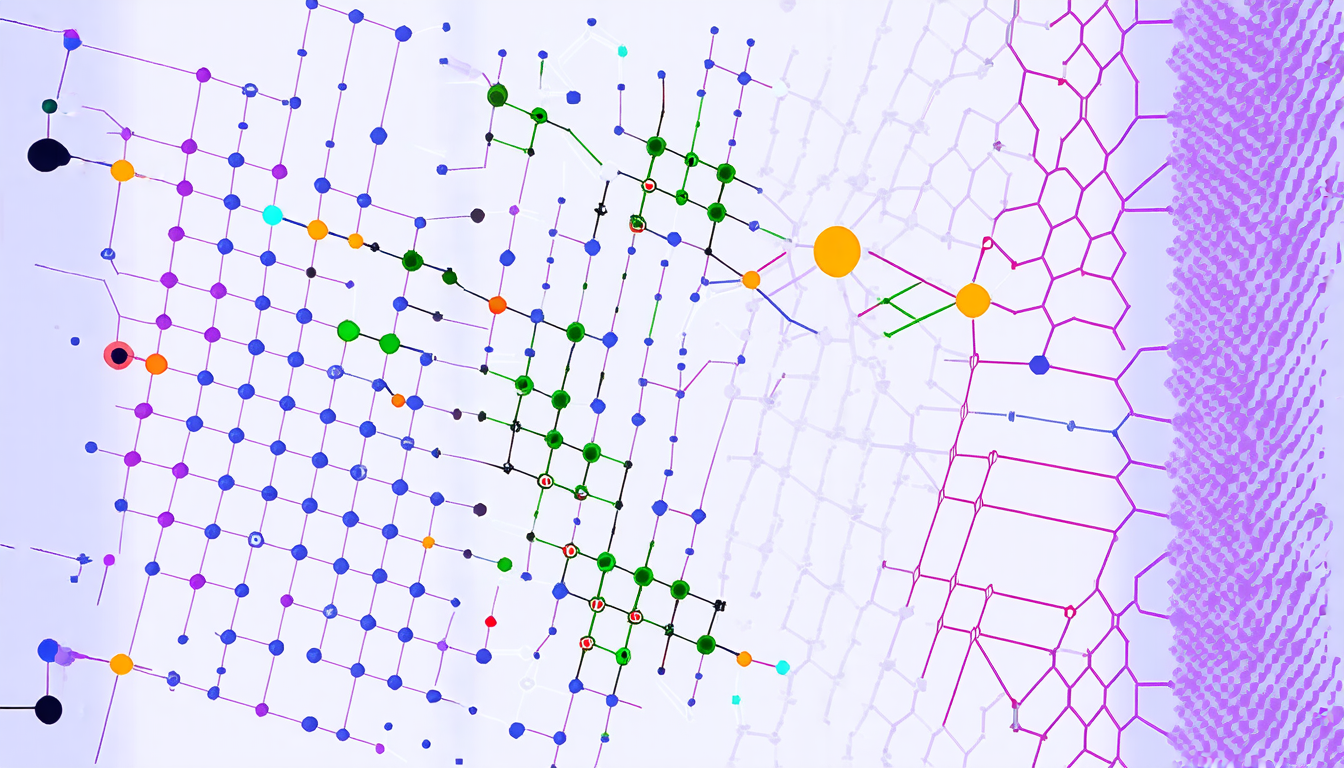
The latest breakthrough involves a new method for braiding Majorana modes, which is a process that allows scientists to manipulate the properties of these particles. The braiding process involves using a lattice defect to create a localized area where the Majorana modes can interact with each other. This interaction causes the particles to form a complex pattern, known as a non-Abelian anyon, which is essential for quantum computing.
The new method uses a combination of local driving and composite gate operations to braiding the Majorana modes. The local driving involves applying a specific type of energy to the lattice defect, while the composite gate operations involve using multiple pulses of energy to manipulate the particles. This approach allows scientists to create stable Majorana modes with high fidelity, which is essential for building a reliable quantum computer.
The implications of this breakthrough are significant. It could enable the creation of more efficient and powerful quantum computers, which would have far-reaching applications in fields such as medicine, finance, and materials science. The technology also has potential applications in the field of cryptography, where it could be used to create unbreakable codes that protect sensitive information.
In addition to its practical applications, this breakthrough also has significant theoretical implications. It provides new insights into the behavior of Majorana modes and their interactions with each other, which could have important implications for our understanding of quantum mechanics.
Cite this article: “Unlocking the Power of Majorana Modes: A New Path to Topological Quantum Computing”, The Science Archive, 2025.
Quantum Computing, Majorana Modes, Braiding, Quantum Mechanics, Non-Abelian Anyon, Lattice Defect, Local Driving, Composite Gate Operations, Stable Quantum Computer, Cryptography.
Reference: Fei Yu, P. Z. Zhao, Jiangbin Gong, “Nonadiabatic braiding of Majorana modes” (2025).





