

Saturday 05 April 2025
As we navigate our increasingly connected world, the need for efficient and reliable communication networks has become more pressing than ever. With the rise of IoT devices, smart cities, and Industry 4.0, the demand for low-power, low-latency data transfer solutions is skyrocketing. Enter a new protocol that’s revolutionizing the way we think about wireless communication: Opportunistic Edge Computing (OEC).
Developed by researchers at the University of Coruña in Spain, OEC combines two cutting-edge technologies – Bluetooth 5 and libp2p – to create a decentralized, mesh-like network that can adapt to changing environments. The result is a system capable of transmitting data with unprecedented speed, security, and reliability.
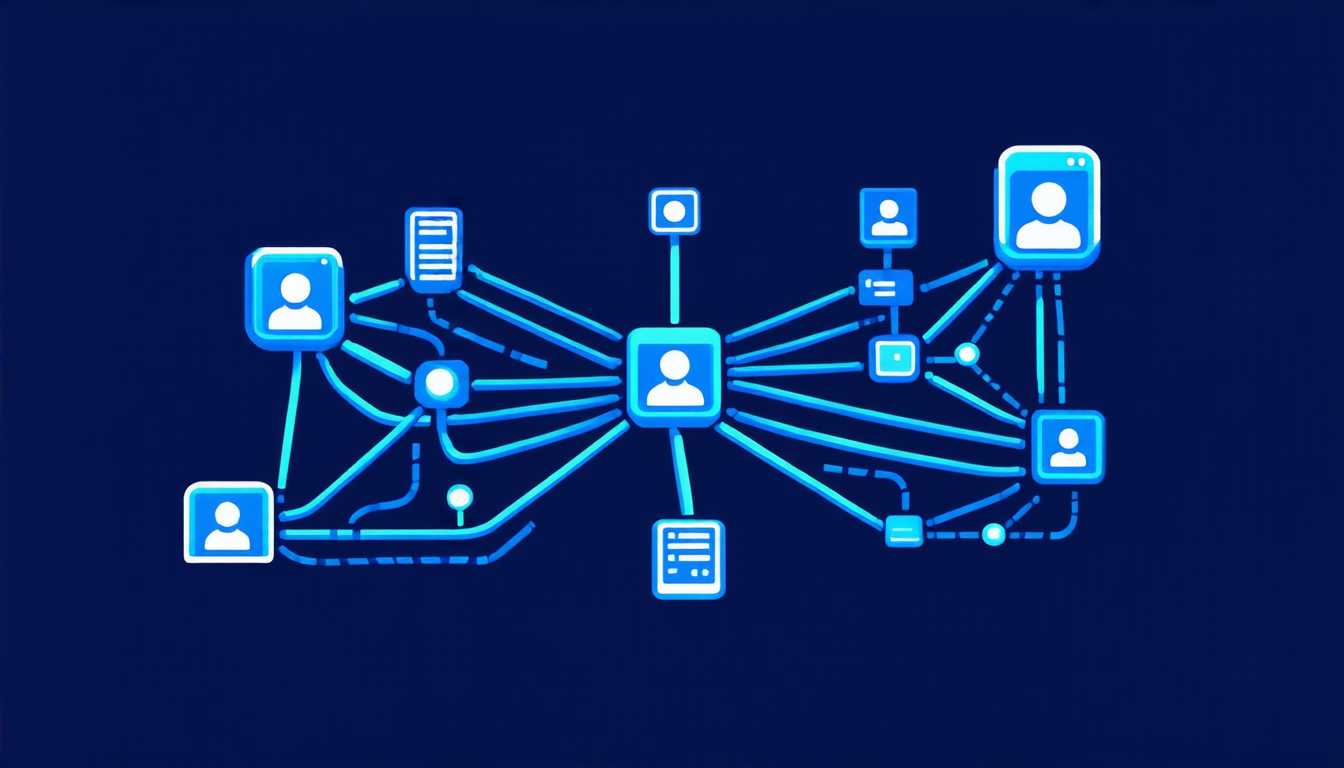
At its core, OEC uses Bluetooth 5’s low-power, long-range capabilities to enable devices to communicate with each other over short distances. This allows for the creation of ad-hoc networks, where devices can dynamically form connections and share resources without relying on traditional infrastructure. Meanwhile, libp2p – a peer-to-peer networking protocol – ensures that data is transmitted securely and efficiently, using advanced encryption and routing algorithms.
But what really sets OEC apart is its ability to adapt to changing environments. Unlike traditional wireless networks, which are fixed and rigid, OEC’s decentralized architecture allows devices to dynamically adjust their communication patterns based on the needs of the network. This means that data can be transmitted more quickly and efficiently, even in areas with limited connectivity.
The potential applications of OEC are vast. In industrial settings, it could enable real-time monitoring and control of equipment, reducing downtime and improving productivity. In smart cities, it could facilitate efficient data exchange between sensors and devices, creating a more responsive and resilient infrastructure. And in IoT scenarios, it could enable seamless communication between devices, unlocking new possibilities for automation and remote management.
But what about security? With the increasing threat of cyber attacks and data breaches, ensuring the integrity of OEC’s decentralized network is crucial. Fortunately, libp2p’s advanced encryption and routing algorithms provide a robust defense against unauthorized access and data tampering.
As OEC continues to evolve, it’s clear that this innovative protocol has the potential to transform the way we think about wireless communication. By providing a flexible, secure, and efficient solution for decentralized data transfer, OEC is poised to play a major role in shaping the future of IoT, Industry 4.0, and beyond.
Cite this article: “Unlocking the Potential of Opportunistic Edge Computing: A Bluetooth 5 and libp2p-Based System for Industrial IoT Applications”, The Science Archive, 2025.
Opportunistic Edge Computing, Bluetooth 5, Libp2P, Peer-To-Peer, Wireless Communication, Iot, Industry 4.0, Smart Cities, Decentralized Network, Data Transfer, Low-Power, Long-Range





