

Saturday 05 April 2025
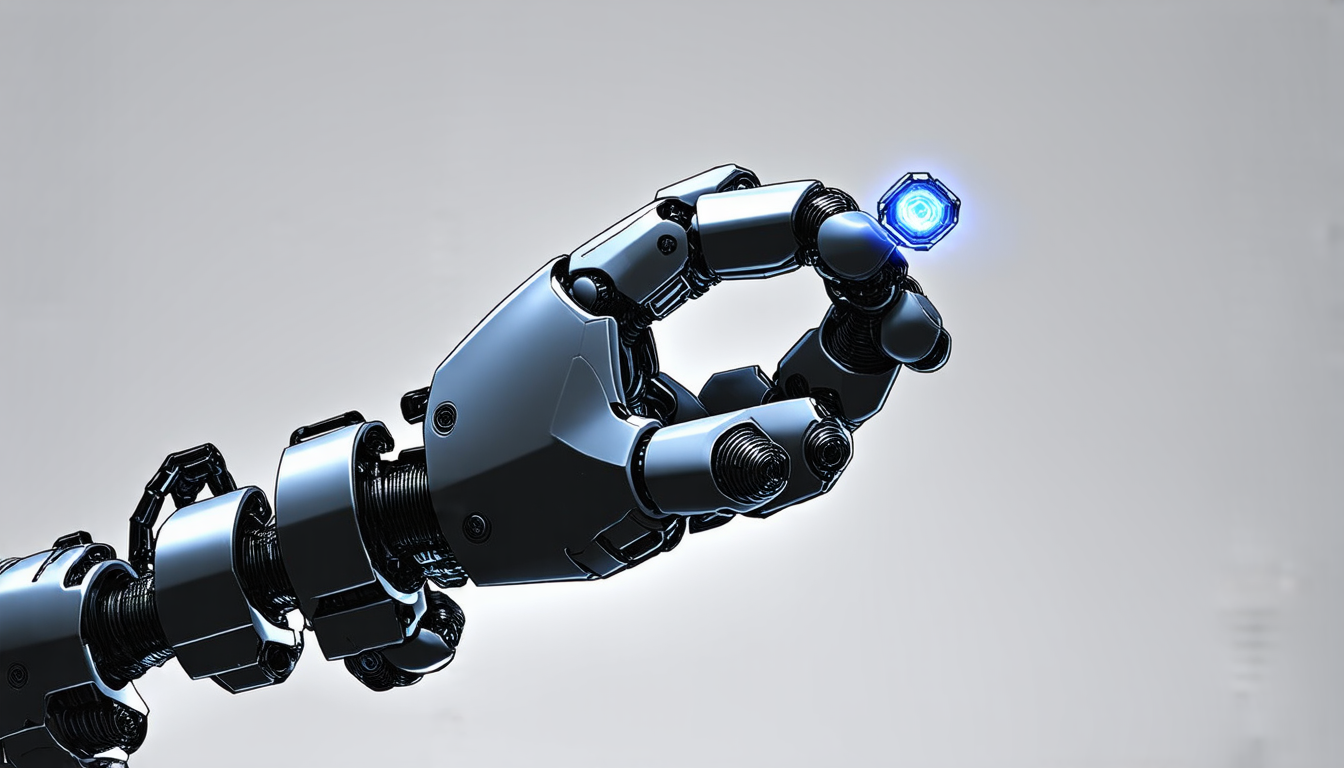
As we continue to push the boundaries of artificial intelligence, robotics, and human-computer interaction, a new frontier is emerging: tactile sensing. For decades, scientists have been working on developing sensors that can accurately detect the subtlest changes in texture, pressure, and vibration, allowing robots and machines to interact with their environment like humans do.
Recently, researchers from King’s College London and Imperial College London made significant strides in this field by introducing a new framework called GenForce. This innovative approach enables robots to learn force prediction capabilities across different tactile sensors, effectively bridging the gap between various sensing technologies.
The challenge lies in the complexity of tactile sensing, which requires not only precise detection but also accurate interpretation of subtle changes in texture and pressure. Traditional methods rely on vision-based or taxel-based sensors, each with its own strengths and limitations. However, when it comes to transferring learning from one sensor to another, the process becomes arduous and often inaccurate.
GenForce addresses this issue by introducing a novel technique called marker-based binary tactile images. By converting tactile signals into these images, researchers can unify the data across different sensors, allowing for seamless transfer of force labels between them. This breakthrough enables robots to learn from a single sensor and apply that knowledge to other sensors, greatly expanding their capabilities.
The benefits of GenForce are multifaceted. Firstly, it simplifies the process of developing tactile sensing systems, as manufacturers can now focus on creating high-quality sensors rather than worrying about complex data processing. Secondly, it enables robots to adapt more quickly to new environments and tasks, as they can learn from a single source and apply that knowledge across various situations.
Furthermore, GenForce has far-reaching implications for the field of robotics. Imagine a robot capable of grasping and manipulating objects with precision and dexterity, using tactile sensing to adjust its grip in real-time. This technology could revolutionize industries such as manufacturing, healthcare, and logistics, where precise manipulation is crucial.
The researchers behind GenForce have already demonstrated the effectiveness of their framework through extensive testing on various sensors and tasks. Their approach has shown remarkable accuracy and robustness, paving the way for widespread adoption in robotics and beyond.
As we continue to push the boundaries of tactile sensing, it’s clear that GenForce is a significant step forward in this exciting field. By bridging the gap between different sensing technologies, researchers have opened up new possibilities for robots and machines to interact with their environment like humans do.
Cite this article: “Soft Robotics: The Future of Tactile Sensing and Force Estimation”, The Science Archive, 2025.
Artificial Intelligence, Robotics, Tactile Sensing, Sensors, Force Prediction, Machine Learning, Robotic Grasping, Manipulation, Texture Detection, Pressure Sensing





