

Saturday 05 April 2025
A team of researchers has made significant strides in addressing a long-standing issue in medical imaging: hallucinations caused by deep learning-based image reconstruction methods. These hallucinations can lead to incorrect diagnoses and poor treatment outcomes, making it essential to develop more accurate and reliable techniques.
The problem arises when deep learning models are used to reconstruct images from noisy or incomplete data. While these models excel at generating plausible-looking images, they often introduce artificial structures that don’t exist in the real world. These hallucinations can be particularly problematic in medical imaging, where accuracy is paramount.
To tackle this issue, the researchers developed a novel framework called DynamicDPS, which combines the strengths of conditional and unconditional diffusion models. The approach leverages the power of unconditional diffusion models to reduce hallucinations while incorporating the advantages of conditional models for generating high-quality images.
The key innovation lies in the way DynamicDPS initializes its reverse process. Instead of starting from scratch, it uses a pre-trained conditional model to generate an initial reconstruction, which is then refined through a series of iterative updates. This approach allows the framework to selectively focus on areas where hallucinations are most likely to occur, reducing the likelihood of introducing artificial structures.
Another crucial component of DynamicDPS is its data consistency term, which enforces alignment with the original measurement data. This ensures that the reconstructed image remains faithful to the underlying reality, rather than deviating into hallucinated territories.
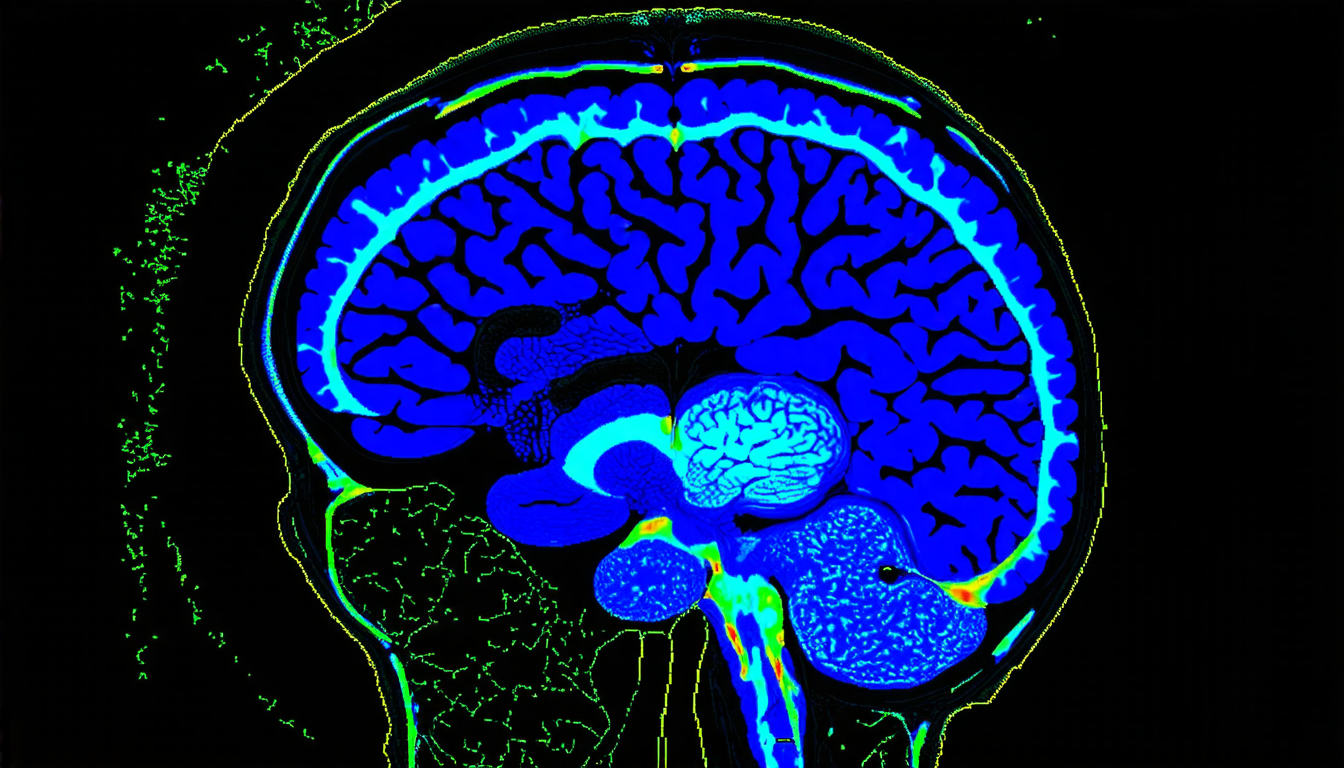
The researchers tested DynamicDPS on a range of synthetic and real-world medical imaging datasets, including MRI scans. The results were impressive: not only did the framework significantly reduce hallucinations, but it also achieved state-of-the-art performance in terms of image quality and accuracy.
One of the most striking aspects of DynamicDPS is its ability to adapt to different levels of degradation in the input data. Whether dealing with low-quality images or heavily undersampled scans, the framework consistently delivered high-quality reconstructions that were remarkably close to the truth.
The implications of this research are far-reaching, particularly in medical imaging where accurate diagnoses and treatments depend on reliable image reconstruction methods. By reducing hallucinations and improving overall image quality, DynamicDPS has the potential to revolutionize the field, enabling healthcare professionals to make more informed decisions and ultimately improve patient outcomes.
As researchers continue to push the boundaries of deep learning-based image reconstruction, DynamicDPS serves as a powerful reminder of the importance of addressing hallucinations in medical imaging.
Cite this article: “Revolutionizing Medical Imaging: A Novel Framework for Hallucination-Free Low-Field MRI Reconstruction”, The Science Archive, 2025.
Medical Imaging, Deep Learning, Image Reconstruction, Hallucinations, Diffusion Models, Conditional Models, Mri Scans, Image Quality, Accuracy, Artificial Intelligence





