

Saturday 05 April 2025
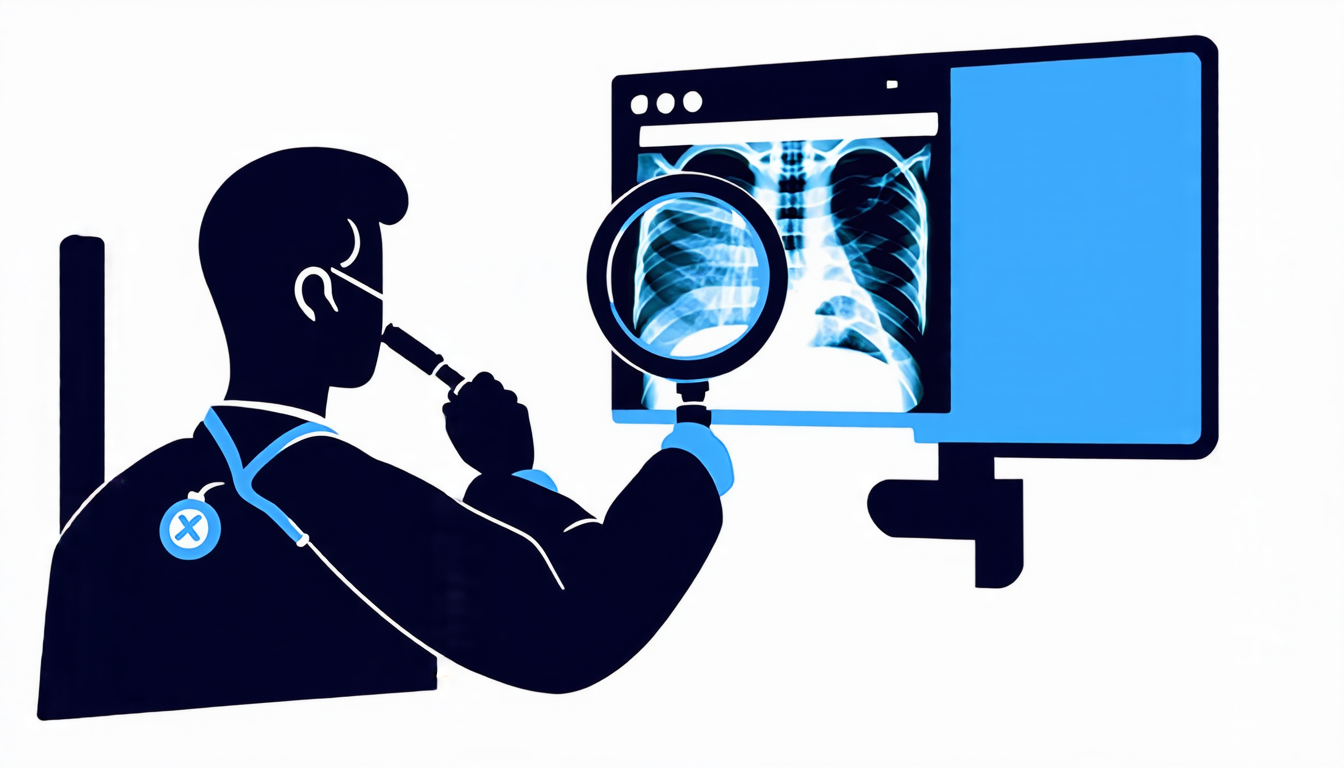
The quest for a universal medical AI model has been ongoing for years, with researchers striving to create a single, all-knowing system that can diagnose and treat various medical conditions with ease. Recently, scientists made a significant breakthrough in this pursuit by developing a new method called Med-LEGO, which allows them to merge multiple medical image diagnosis models into a single, powerful AI.
The idea behind Med-LEGO is simple yet ingenious. By combining the strengths of different models, researchers can create an AI that is capable of adapting to various medical conditions and imaging modalities with unprecedented accuracy. This is achieved through a process called SVD-LoRA, which stands for Singular Value Decomposition-Low-Rank Adaptation.
SVD-LoRA works by breaking down each model into its fundamental components, allowing researchers to identify the most important features that contribute to its accuracy. These features are then combined and reassembled into a new, hybrid AI that inherits the strengths of all the original models.
The benefits of Med-LEGO are numerous. For one, it allows researchers to create an AI that can diagnose medical conditions across multiple imaging modalities, such as X-rays, CT scans, and MRI scans. This is particularly useful in situations where a patient requires a diagnosis based on data from different sources.
Another advantage of Med-LEGO is its ability to adapt to new medical conditions and imaging techniques without requiring extensive retraining. This makes it an attractive solution for hospitals and clinics that need to stay up-to-date with the latest medical advancements.
The potential applications of Med-LEGO are vast, ranging from disease diagnosis and treatment to personalized medicine and precision healthcare. With its ability to merge multiple models into a single AI, Med-LEGO has the potential to revolutionize the field of medical imaging and improve patient outcomes worldwide.
In addition to its practical benefits, Med-LEGO also holds significant scientific value. By studying how different models interact and combine, researchers can gain insights into the fundamental mechanisms that underlie human intelligence and machine learning.
The development of Med-LEGO is a testament to the power of collaboration and innovation in medical research. As scientists continue to push the boundaries of what is possible, we can expect even more exciting breakthroughs in the years to come.
Cite this article: “Revolutionizing Medical AI with Med-LEGO: A Novel Framework for Efficient Model Editing”, The Science Archive, 2025.
Medical Ai, Image Diagnosis, Med-Lego, Svd-Lora, Singular Value Decomposition, Low-Rank Adaptation, Medical Imaging, Disease Diagnosis, Personalized Medicine, Precision Healthcare





