

Saturday 05 April 2025
A new technique has been developed that could significantly improve the accuracy of artificial intelligence systems, particularly in situations where a high degree of precision is crucial.
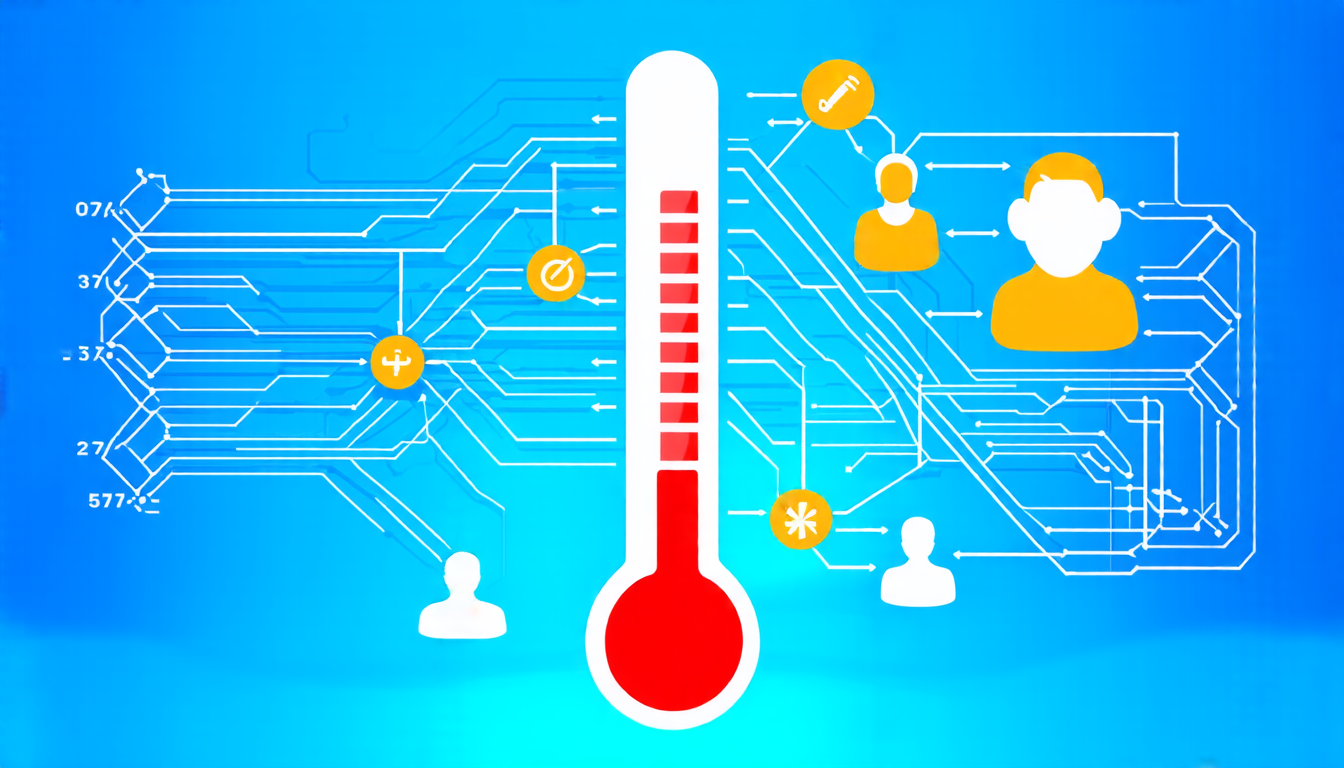
The approach, known as Temperature-Scaled Loss (TSL), involves adjusting the parameters of a neural network during training to ensure that it produces more accurate predictions. This is achieved by introducing a temperature parameter into the loss function, which allows the model to learn more about the relationships between different inputs and outputs.
One of the key benefits of TSL is its ability to improve the calibration of AI models. Calibration refers to the process of adjusting the confidence levels assigned to each prediction made by the model. Inaccurately calibrated models can lead to a range of problems, including poor decision-making and decreased trust in the system.
To address this issue, researchers have developed a range of techniques aimed at improving the calibration of AI models. However, these methods often rely on complex mathematical formulations and may not be effective in all situations.
The TSL approach is different in that it is based on a simple and intuitive principle. By introducing the temperature parameter into the loss function, the model learns to adjust its confidence levels based on the relationships between different inputs and outputs. This allows the model to produce more accurate predictions and improve its overall performance.
In addition to its ability to improve calibration, TSL has also been shown to be effective in a range of other applications. For example, it can be used to improve the robustness of AI models by making them less sensitive to noisy or incomplete data.
The potential benefits of TSL are significant, particularly in fields such as healthcare and finance where accurate predictions are crucial. By improving the calibration and performance of AI models, TSL could help to ensure that decisions made by these systems are more reliable and trustworthy.
In practical terms, the implementation of TSL is relatively straightforward. It involves modifying the loss function used during training to include a temperature parameter, which can then be adjusted based on the specific requirements of the application.
Overall, the development of TSL represents an important step forward in the field of AI research. By improving the accuracy and reliability of AI models, it has the potential to make a significant impact in a range of different applications.
Cite this article: “Calibrating Uncertainty: A Novel Approach to Improving Machine Learning Model Performance”, The Science Archive, 2025.
Artificial Intelligence, Temperature-Scaled Loss, Neural Network, Accuracy, Calibration, Confidence Levels, Predictions, Performance, Robustness, Decision-Making





