

Saturday 05 April 2025
A team of researchers has made a significant breakthrough in developing a new type of artificial intelligence that can learn from complex data sets by creating a foundation model for hypergraph neural networks.
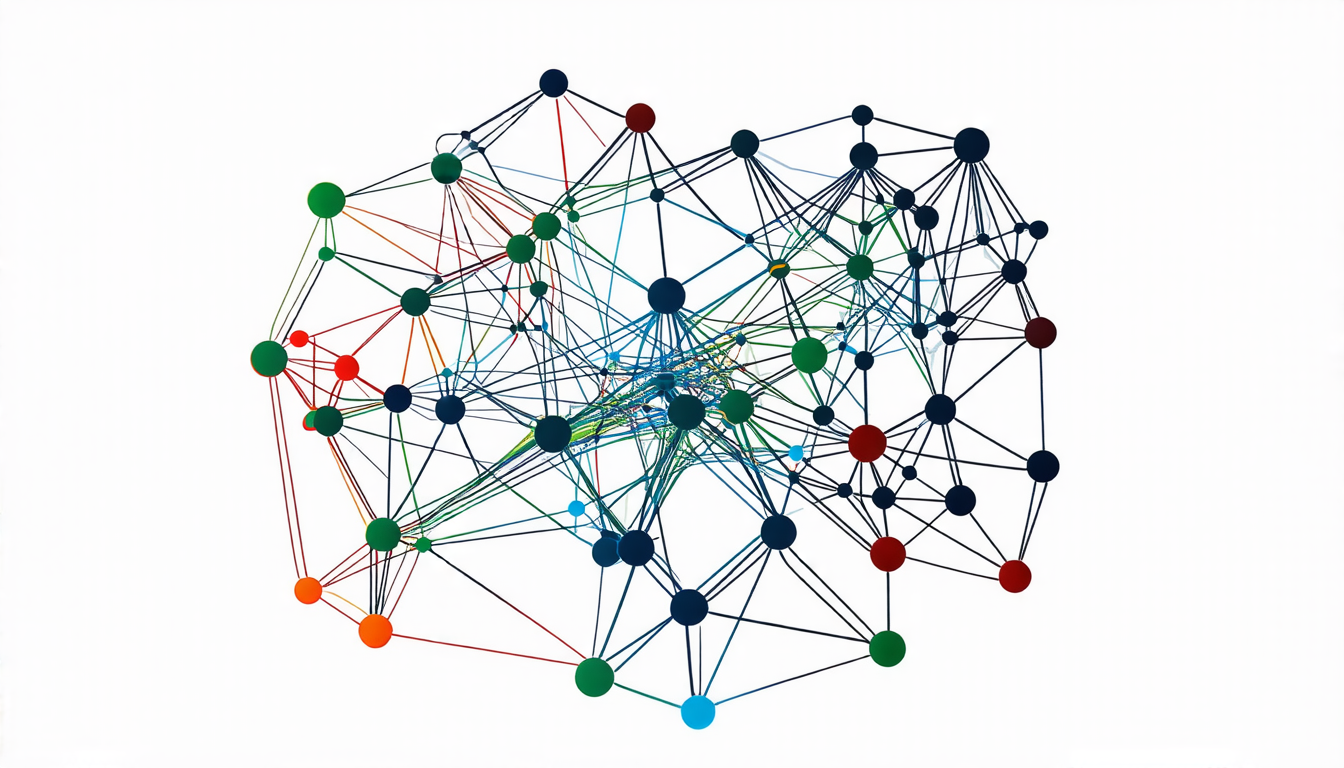
Hypergraphs are a type of mathematical structure that can represent relationships between multiple entities, such as people, places, and things. They have been used to model complex systems like social networks, protein interactions, and brain connectivity. However, training AI models on these types of data has proven challenging due to their intricate structures and the need for large amounts of labeled data.
The researchers developed a foundation model called Hyper- FM that can learn from multiple hypergraph datasets simultaneously. This is achieved by using a hierarchical approach, where the model first learns to represent individual vertices (nodes) and then combines this knowledge to understand the relationships between them.
One of the key challenges in developing this type of AI model is dealing with the sheer scale of the data. Hypergraphs can contain millions or even billions of edges, making it difficult for traditional machine learning algorithms to learn from them efficiently. The researchers addressed this issue by using a technique called hierarchical high-order neighbor guided vertex knowledge embedding, which allows the model to extract relevant features from the vertices and hyperedges.
The team also developed a method for scalable and efficient extraction of structural knowledge from diverse datasets, known as hierarchical multi-hypergraph guided structural knowledge extraction. This approach enables the model to learn from multiple sources of data simultaneously, without requiring extensive labeling or manual feature engineering.
To evaluate the effectiveness of Hyper-FM, the researchers trained it on 10 text-attributed hypergraph datasets and compared its performance with that of traditional graph neural networks. The results showed that Hyper-FM outperformed the baseline models by approximately 13%, demonstrating its ability to learn from complex relationships between entities.
The development of Hyper-FM has significant implications for various fields, including computer vision, natural language processing, and social network analysis. It could be used to analyze large-scale datasets, such as those found in medical imaging or social media platforms, to identify patterns and relationships that may not have been previously detected.
In addition, the researchers’ approach could be applied to other types of data, such as time-series data or genomic data, to gain insights into complex systems. The potential applications of Hyper-FM are vast, and it has the potential to revolutionize the field of artificial intelligence by enabling machines to learn from and make sense of complex data sets in a way that was previously not possible.
Cite this article: “Unveiling the Power of Hypergraph Foundation Models: A Breakthrough in Multi-Domain Knowledge Extraction”, The Science Archive, 2025.
Artificial Intelligence, Hypergraphs, Machine Learning, Neural Networks, Data Sets, Complex Systems, Social Networks, Computer Vision, Natural Language Processing, Scalability.





