

Saturday 05 April 2025
Researchers have made significant progress in bridging the gap between simulated and real-world robotic reinforcement learning. This achievement is crucial for developing robots that can adapt to complex environments and perform tasks autonomously.
Reinforcement learning is a type of machine learning where an agent learns by interacting with its environment and receiving rewards or penalties for its actions. In robotics, this approach has been successfully applied in simulations, but transferring the learned skills to real-world robots has proven challenging. The main obstacle is that simulated environments often don’t accurately reflect the complexities of the physical world.
A team of scientists has tackled this problem by introducing static friction into the training process. Static friction refers to the force that opposes motion between two surfaces when they are in contact. In robotics, it can significantly impact the performance of a robot’s joints and motors.
The researchers used a novel approach called domain randomization, which involves randomly varying certain parameters during training to make the simulation more representative of real-world conditions. They also incorporated static friction into the simulation, allowing the robot to learn how to adapt to its effects.
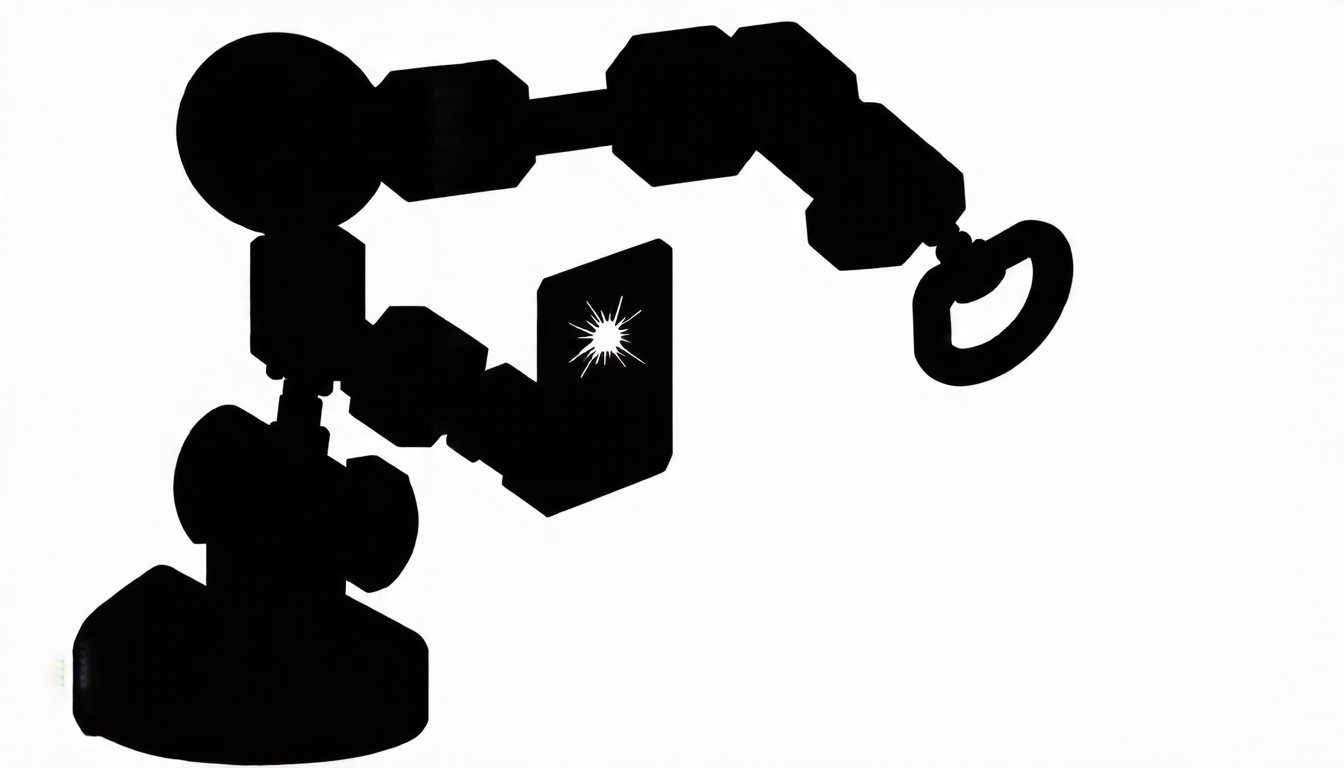
To test their method, the team trained a robotic arm to perform tasks such as grasping and manipulation in a simulated environment. The results showed that the robot was able to transfer its skills to the real world with remarkable success. The researchers also observed that the inclusion of static friction in the simulation improved the robot’s performance in real-world scenarios.
The study highlights the importance of accurately simulating real-world conditions in robotic reinforcement learning. By incorporating static friction into the training process, the robot is better equipped to handle the complexities of the physical world and adapt to unexpected situations.
This achievement has significant implications for the development of autonomous robots that can perform tasks such as assembly, maintenance, and search and rescue missions. The ability to learn from simulations and transfer those skills to real-world environments could revolutionize the field of robotics.
The researchers’ approach also paves the way for further improvements in robotic reinforcement learning. By incorporating more realistic simulations and adapting to real-world conditions, robots can become more versatile and capable of performing a wider range of tasks.
Overall, this study demonstrates the potential of domain randomization and static friction incorporation in bridging the gap between simulated and real-world robotic reinforcement learning. The results have significant implications for the development of autonomous robots and could lead to breakthroughs in various fields.
Cite this article: “Overcoming the Friction: A Novel Approach to Robotic Reinforcement Learning in Real-World Environments”, The Science Archive, 2025.
Reinforcement Learning, Robotic Reinforcement Learning, Simulation, Real-World, Robotics, Machine Learning, Static Friction, Domain Randomization, Autonomous Robots, Transfer Learning





