

Saturday 05 April 2025
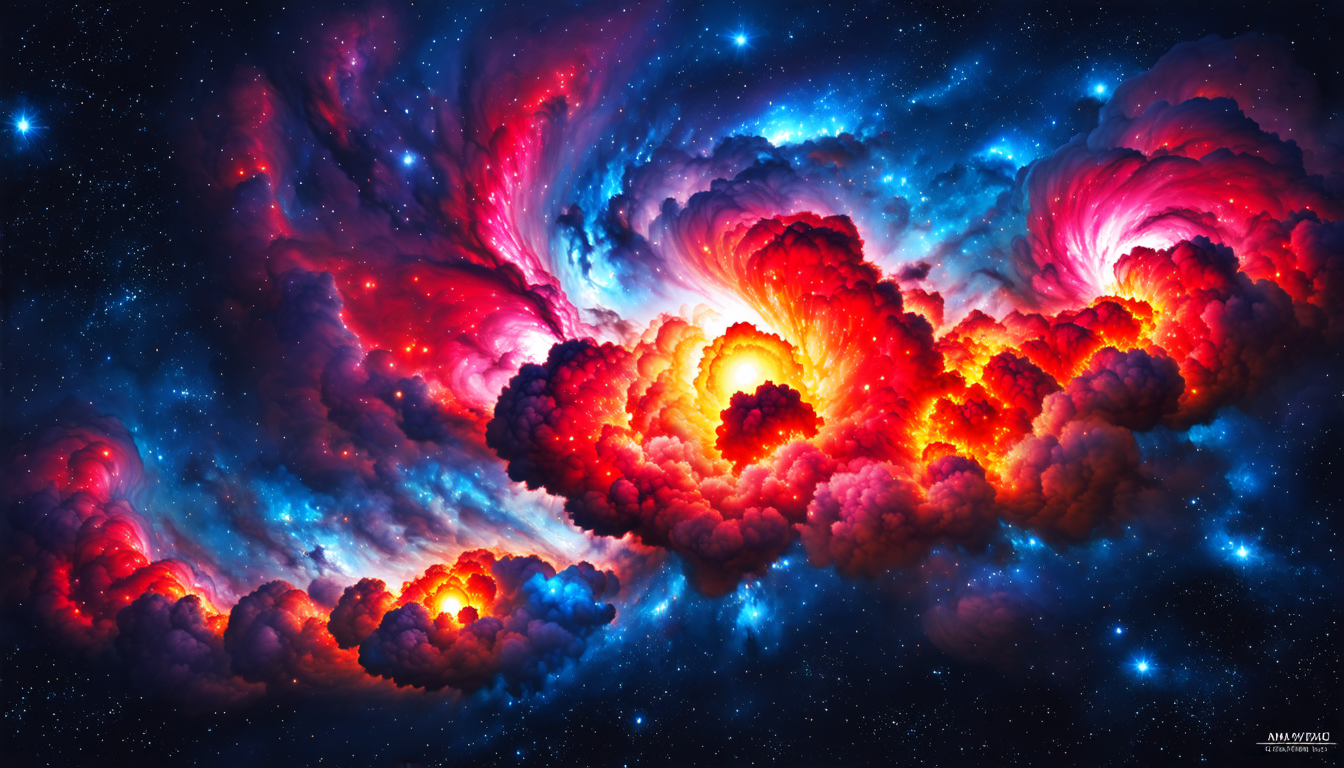
A new study has shed light on the mysterious origins of a stunning nebula surrounding a star cluster in the galaxy. The researchers, using advanced computer simulations, have discovered that the eerie glow is caused by the winds of massive stars blowing away gas and dust.
The star cluster, known as Westerlund 1, is located about 20,000 light-years from Earth and is one of the largest and most massive star clusters in the galaxy. Its central region is ablaze with a vibrant display of colors, created by the intense radiation from young stars and the gas and dust they’ve shed.
For years, astronomers have been puzzled by the origins of this nebula. Some thought it might be primordial gas left over from the formation of the universe, while others believed it could be the result of supernovae explosions. But a new study published in a leading scientific journal suggests that neither theory is correct.
Instead, researchers used computer simulations to model the behavior of massive stars within the cluster. They found that these stars, known as red supergiants, are responsible for blowing away gas and dust through their powerful winds. As this material is swept up by the hot radiation from surrounding stars, it becomes ionized, creating the vibrant colors we see in the nebula.
The researchers used a specialized computer code to simulate the behavior of these massive stars over millions of years. They found that the red supergiants are the primary source of mass loss within the cluster, with their winds responsible for entraining and heating up surrounding gas and dust.
This discovery has significant implications for our understanding of star formation and evolution. It suggests that massive stars play a crucial role in shaping their surroundings, not just through their intense radiation but also through their powerful winds.
The study’s findings also have practical applications for astronomers studying distant galaxies. By understanding the origins of nebulae like Westerlund 1, researchers can better understand how star clusters form and evolve over time.
In this stunning display of celestial fireworks, we’re not just witnessing the raw power of the universe – we’re seeing the intricate dance between massive stars and their surroundings, a cosmic ballet that’s been playing out for millions of years.
Cite this article: “Unveiling the Secrets of Red Supergiants: A New Study Reveals the Role of Dusty Outflows in Shaping Star Clusters”, The Science Archive, 2025.
Westerlund 1, Nebula, Star Cluster, Galaxy, Massive Stars, Red Supergiants, Radiation, Gas And Dust, Star Formation, Evolution





