

Saturday 05 April 2025
A team of researchers has made a significant breakthrough in understanding how our brains process information, shedding light on the complex workings of distributed learning algorithms.
In recent years, machine learning has become increasingly prevalent in our daily lives, from personal assistants to medical diagnosis. However, as these systems rely more heavily on data collected from multiple sources, a new challenge emerges: ensuring that the information is processed accurately and efficiently across different devices or networks.
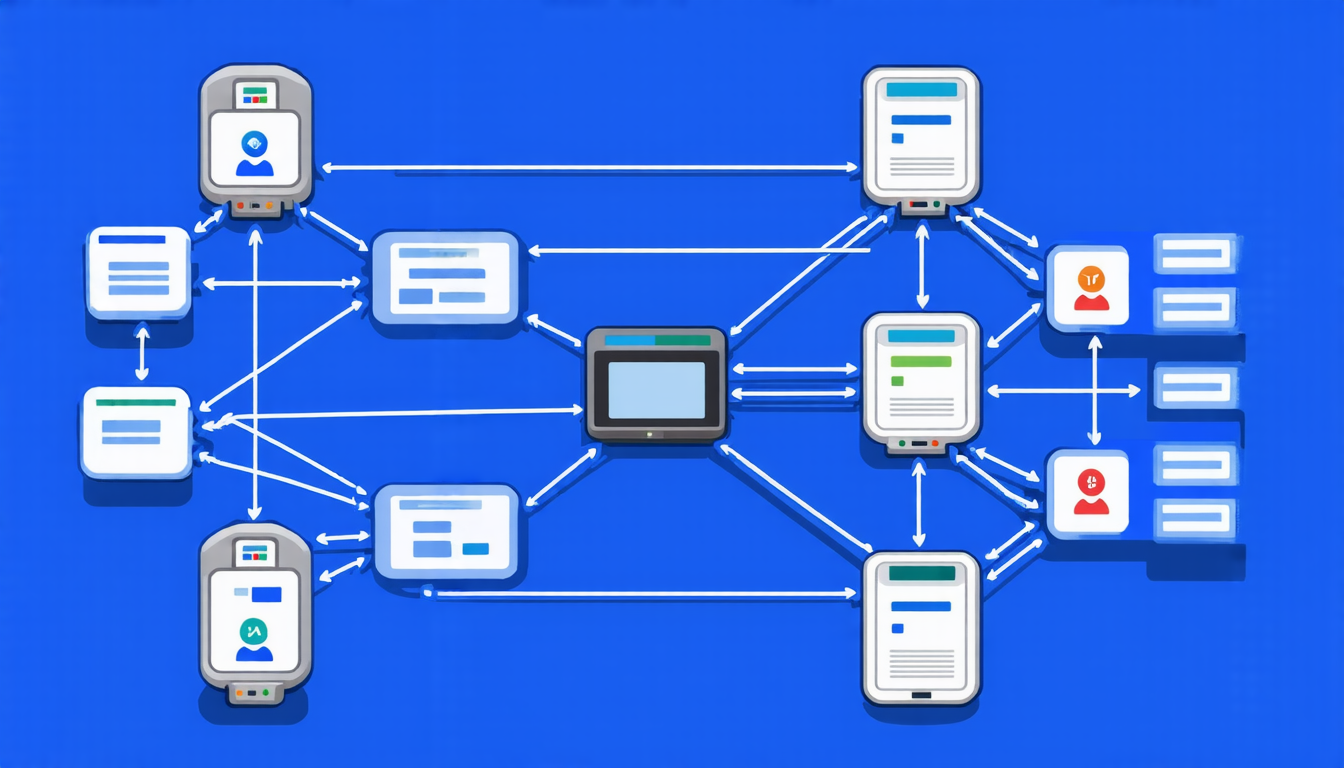
To tackle this issue, scientists have been studying distributed learning algorithms, which allow multiple machines to collaborate in processing large amounts of data. These algorithms are crucial for applications like federated learning, where individual devices learn from their own data without sharing it with a central authority.
The researchers’ breakthrough comes from their discovery that the performance of these distributed learning algorithms is heavily influenced by the degree of heterogeneity between the devices involved. Heterogeneity refers to the differences in the types and amounts of data collected by each device, as well as variations in the devices themselves.
In other words, when devices have different types of data or work differently, it can lead to a decrease in the overall performance of the algorithm. This is because the algorithm needs to account for these differences, which can slow down the learning process.
The team’s findings suggest that, surprisingly, more heterogeneous devices may actually perform better than homogeneous ones. This is because the algorithm can learn to adapt to and compensate for the differences between devices, leading to a more accurate and efficient processing of information.
For instance, in a federated learning scenario where each device has its own unique characteristics, such as different sensor types or data collection frequencies, the algorithm may be able to combine the strengths of each device to produce better results.
The implications of this research are far-reaching. It could lead to more effective and efficient machine learning systems that can learn from diverse data sources, making them more accurate and reliable.
Moreover, this breakthrough has significant potential in fields like healthcare, where patient data is often collected through various devices and networks. By developing more sophisticated distributed learning algorithms, researchers may be able to create systems that can accurately analyze and combine this data to improve diagnosis and treatment outcomes.
In the long run, this research could pave the way for a new generation of machine learning systems that are better equipped to handle complex, real-world data scenarios.
Cite this article: “Universal Rate-Distortion Tradeoffs in Machine Learning”, The Science Archive, 2025.
Machine Learning, Distributed Learning Algorithms, Heterogeneity, Federated Learning, Data Processing, Information Processing, Algorithm Performance, Accuracy, Efficiency, Complexity





