

Saturday 05 April 2025
The dance of dust and gas in planet-forming disks is a complex one, full of twists and turns that can make or break the chances of life taking hold on distant worlds. Now, new research has shed light on the crucial role played by turbulence in these swirling systems.
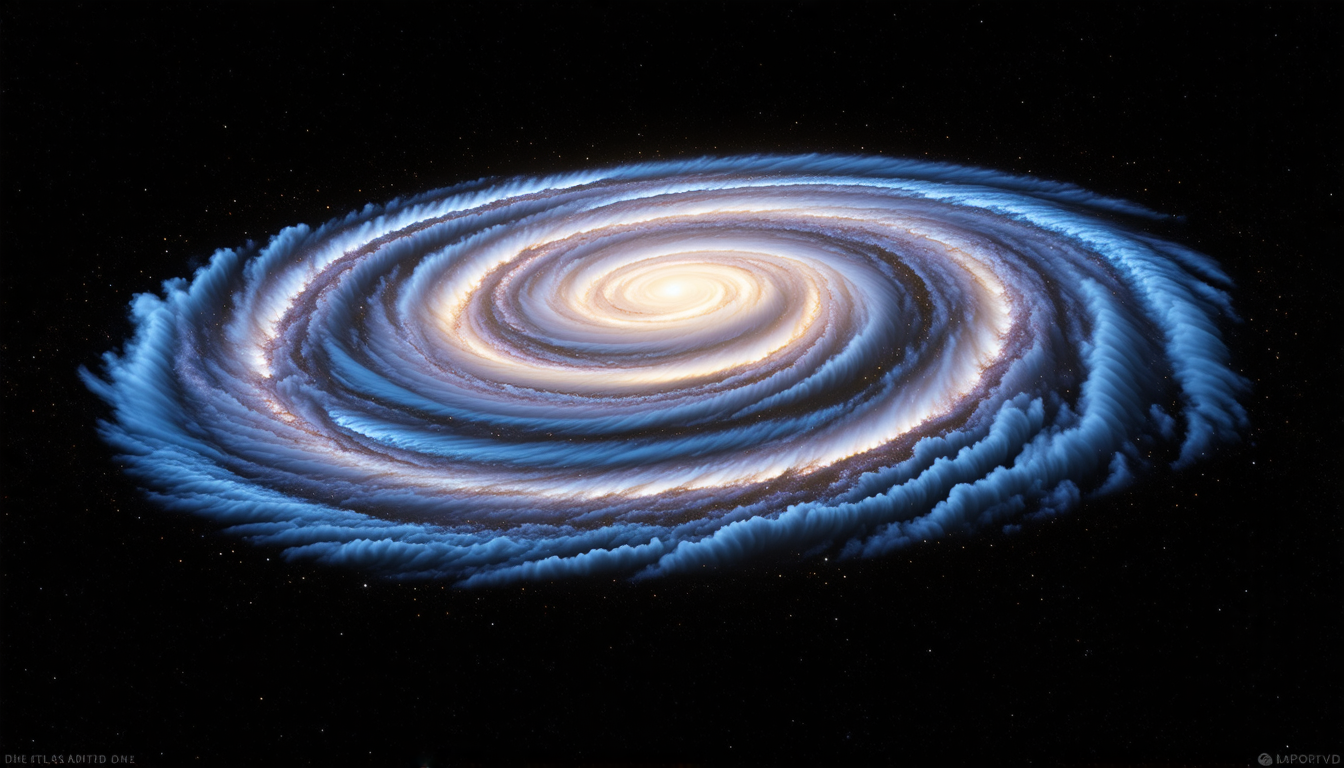
At the heart of any planetary system lies a disk of gas and dust, spinning around its central star like a cosmic pinwheel. As this material spirals inward, it begins to clump together under gravity’s gentle tug, eventually forming planets. But before that can happen, there are many obstacles to overcome – including the turbulence that churns through these disks.
Turbulence is the bumpy ride that occurs when different layers of gas and dust move at different speeds. This churning creates whirlpools and eddies that can either help or hinder the formation of planets, depending on how they interact with the clumps of material trying to coalesce.
Scientists have long suspected that turbulence plays a key role in shaping the development of these planet-forming disks. But until now, it’s been difficult to study this phenomenon directly, as the scales involved are so vast and complex. That’s why researchers have turned to computer simulations to get a better grasp on what’s happening.
One team used the powerful Athena++ code to model the behavior of gas and dust in these disks, taking into account the effects of turbulence. They found that the whirling motion can actually help dust clumps grow by stirring up the surrounding material and bringing it together. This is especially important for small, rocky planets like those in our own solar system.
On the other hand, too much turbulence can be a problem. It can disrupt the delicate balance needed for planet-forming clumps to take hold, or even destroy them altogether. By better understanding these turbulent dynamics, scientists hope to gain insights into how planet formation occurs – and perhaps even uncover new clues about the origins of our own solar system.
The research is just one piece of a larger puzzle, but it highlights the crucial importance of turbulence in shaping the outcome of planet formation. As scientists continue to explore this complex dance between dust and gas, they may yet uncover more surprises waiting to be discovered in the swirling disks that give birth to new worlds.
Cite this article: “Unraveling the Mystery of Turbulent Planet Formation: A Study on Dust Dynamics in VSI Turbulence”, The Science Archive, 2025.
Planet-Formation, Turbulence, Gas, Dust, Disk, Planetary System, Simulation, Computer Model, Astronomy, Cosmology





