

Saturday 05 April 2025
Scientists have been studying how our brains process language for decades, but a recent discovery has shed new light on this complex process. Researchers from the University of Tokyo and MBZUAI have been exploring the capabilities of neural networks, specifically echo state networks (ESNs), to understand how they learn language.
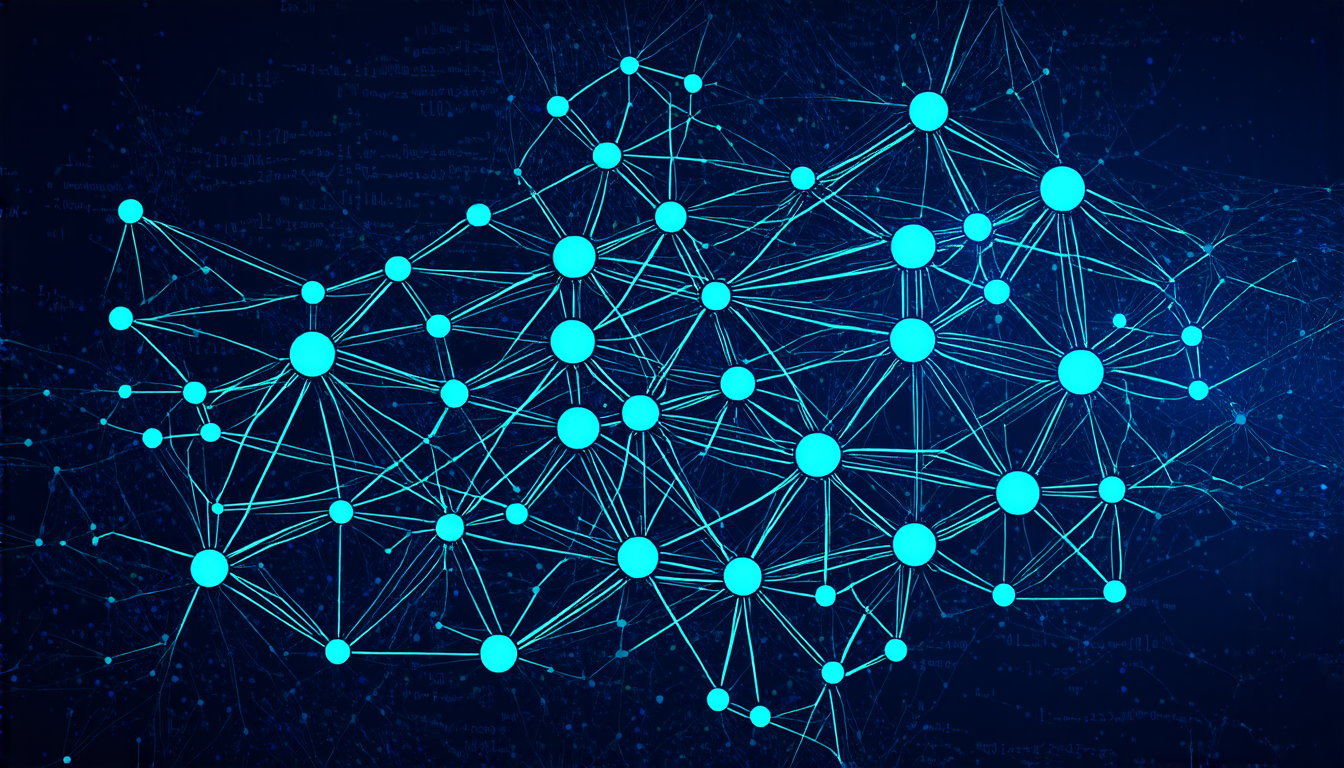
The study focused on the architecture of ESNs, which are a type of recurrent neural network that uses a fixed reservoir of nodes to process input sequences. Unlike traditional deep learning models, ESNs don’t require backpropagation through time, making them more efficient and easier to train.
To test their hypothesis, the researchers trained several ESNs with different settings and compared their performance on various language tasks. They found that even simple ESNs with a large hidden state could learn core syntactic phenomena, such as grammatical structures, at a scale similar to that of more complex models like Transformers.
One of the most surprising findings was that the performance of the ESNs improved when they were trained with sparse connectivity. This means that instead of connecting every node in the network, the researchers only connected a subset of them. This approach allowed the networks to learn language more efficiently and accurately.
Another key discovery was the importance of leaking rates in ESNs. Leaking rates determine how much information is retained from previous time steps. By adjusting these rates, the researchers found that they could fine-tune the performance of their models.
The study’s findings have significant implications for our understanding of language processing in the brain. It suggests that our brains may not need to process every detail of a sentence to understand its meaning, but rather can focus on key patterns and structures.
The research also has practical applications in natural language processing. ESNs could be used in chatbots or virtual assistants to improve their ability to understand and respond to user input. Additionally, the discovery of sparse connectivity and leaking rates could lead to more efficient and effective training methods for neural networks.
Overall, this study highlights the potential of echo state networks to learn language and process complex patterns. The findings offer new insights into how our brains process language and have significant implications for both scientific research and practical applications.
Cite this article: “Unlocking the Secrets of Language: Echo State Networks Reveal Surprising Insights into Human Comprehension”, The Science Archive, 2025.
Neural Networks, Echo State Networks, Language Processing, Brain Function, Natural Language Processing, Chatbots, Virtual Assistants, Sparse Connectivity, Leaking Rates, Recurrent Neural Networks





