

Saturday 05 April 2025
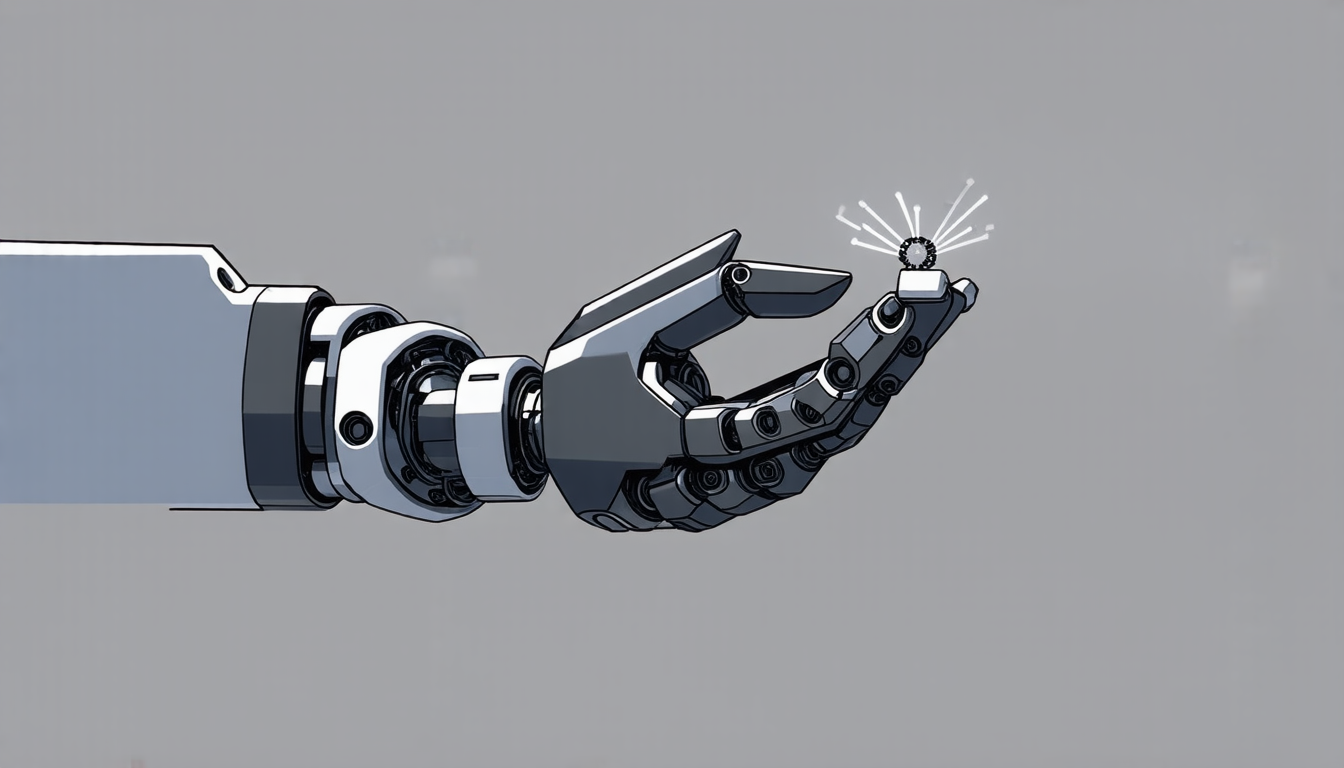
A wearable tactile sensor that can seamlessly transfer human dexterity to robots has been developed by a team of researchers. The TacCap sensor, which uses Fiber Bragg Grating technology, is lightweight, durable, and immune to electromagnetic interference, making it ideal for real-world data collection.
The TacCap sensor is designed to capture the intricate details of human grasping and manipulation, allowing robots to learn from human demonstrations in a more accurate and efficient manner. The sensor’s small size and flexibility make it easy to integrate into various wearable devices, such as gloves or sleeves.
In tests, the TacCap sensor demonstrated high sensitivity, fast response time, and repeatability, making it well-suited for grasping and manipulation tasks. The researchers also evaluated the sensor’s performance in a grasp stability prediction task, where it was able to accurately predict the likelihood of a successful grasp based on tactile feedback.
One of the key challenges in developing a wearable tactile sensor is ensuring that it can accurately capture the complex movements and interactions between the human hand and the environment. To address this challenge, the researchers used a combination of machine learning algorithms and sensor data to develop an accurate model of human grasping and manipulation.
The TacCap sensor has potential applications in various fields, including robotics, prosthetics, and virtual reality. For example, it could be used to enable robots to learn from human demonstrations in a more accurate and efficient manner, or to provide tactile feedback to users of virtual reality systems.
Overall, the TacCap sensor represents a significant advance in wearable tactile sensing technology, with potential applications that go beyond just robotics and prosthetics. Its ability to accurately capture human grasping and manipulation movements makes it an important tool for researchers and developers working in these fields.
The researchers’ approach to developing the TacCap sensor is noteworthy for its focus on practicality and usability. Rather than simply building a complex system, they designed the sensor with real-world applications in mind, taking into account factors such as size, weight, and durability.
In addition to its technical merits, the TacCap sensor also has potential implications for fields beyond robotics and prosthetics. For example, it could be used to develop more advanced virtual reality systems that provide a sense of touch and immersion.
Overall, the development of the TacCap sensor is an important step forward in wearable tactile sensing technology, with potential applications that go beyond just robotics and prosthetics.
Cite this article: “Seamless Tactile Transfer: A Wearable Fiber Bragg Grating Sensor for Human-to-Robot Skill Acquisition”, The Science Archive, 2025.
Wearable, Tactile Sensor, Robotics, Prosthetics, Virtual Reality, Fiber Bragg Grating, Machine Learning, Grasping, Manipulation, Haptic Feedback





