

Saturday 05 April 2025
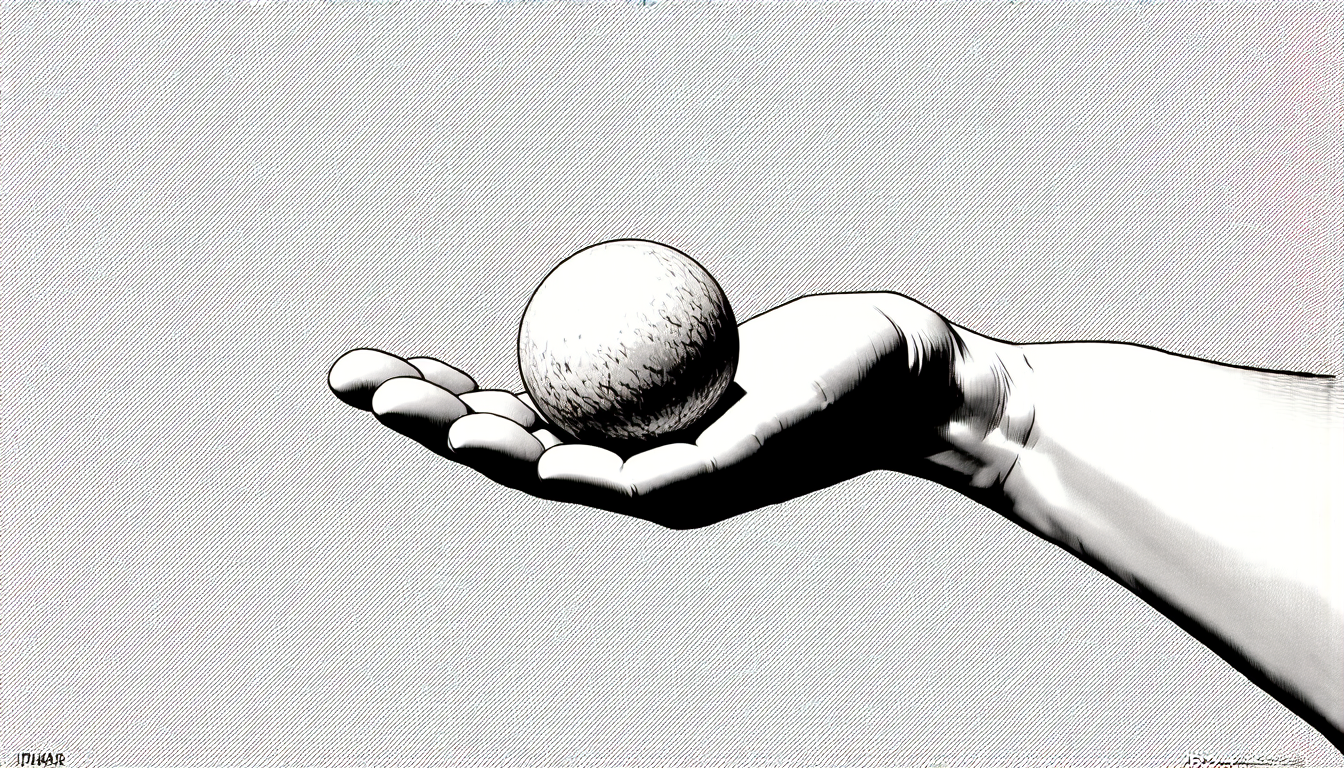
A significant breakthrough in artificial intelligence has been achieved, allowing for more realistic and accurate generation of human hands in images. This advancement is a major step forward in the development of computer vision and machine learning technologies.
The researchers behind this achievement have created a new module called HanDrawer, which can extract complex spatial information from hand gestures and use it to guide the generation of realistic hand movements in images. This technology has the potential to revolutionize various fields, including virtual reality, gaming, and accessibility.
To achieve this breakthrough, the team developed a novel approach that combines traditional computer vision techniques with machine learning algorithms. They created a dataset of high-quality multimodal local context data, which includes text captions, depth maps, and 3D mesh vertices with hand bounding boxes. This data is used to train the HanDrawer module, allowing it to learn the intrinsic spatial structure of hand gestures.
The researchers then integrated the HanDrawer module into a diffusion model, which is a type of machine learning algorithm that can generate realistic images from text prompts. The resulting system is capable of generating highly detailed and accurate images of human hands in various poses and movements.
One of the key advantages of this technology is its ability to produce more realistic hand movements than previous methods. This is achieved by using complex spatial information extracted from the hand gestures to guide the generation of hand movements in the images. This approach allows for a more accurate representation of human movement, which can be particularly important in applications such as virtual reality and gaming.
The potential applications of this technology are vast and varied. In virtual reality, it could enable the creation of more realistic avatars that can interact with users in a more natural way. In gaming, it could allow for the development of more immersive and interactive game environments. Additionally, this technology has the potential to improve accessibility for individuals with disabilities by allowing them to control devices with their hands.
The achievement is also significant because it demonstrates the power of combining traditional computer vision techniques with machine learning algorithms. This approach can be applied to a wide range of problems in artificial intelligence, from object recognition to facial recognition.
In summary, this breakthrough in artificial intelligence has the potential to revolutionize various fields by enabling the generation of more realistic and accurate images of human hands. The HanDrawer module is a significant achievement that demonstrates the power of combining traditional computer vision techniques with machine learning algorithms.
Cite this article: “Revolutionizing Hand Gesture Generation with HanDrawer: A Novel Approach to Enhance Realism and Accuracy in Diffusion Models”, The Science Archive, 2025.
Artificial Intelligence, Hand Gestures, Computer Vision, Machine Learning, Handrawer, Image Generation, Virtual Reality, Gaming, Accessibility, Diffusion Model.





