

Saturday 05 April 2025
Text entry on touchscreens is a ubiquitous part of modern life, but it can be slow and error-prone. A new approach has been developed that could revolutionize the way we type on our devices.
The traditional method of text entry on touchscreens involves tapping individual keys with your thumbs. However, this can be frustratingly slow, especially for those who are not familiar with QWERTY keyboards. To overcome these limitations, researchers have been exploring alternative methods of text entry that don’t rely on tapping individual keys.
One approach has been to use gestures to enter text. This involves moving your fingers in specific patterns over the touchscreen to form words and sentences. While this can be faster than traditional typing, it still requires a significant amount of practice and training to become proficient.
Another approach is to use a combination of gesture and muscle memory to enter text. This involves using a combination of finger movements and gestures to form words and sentences. This method has been shown to be faster and more accurate than traditional typing, but it still requires some level of practice and training to master.
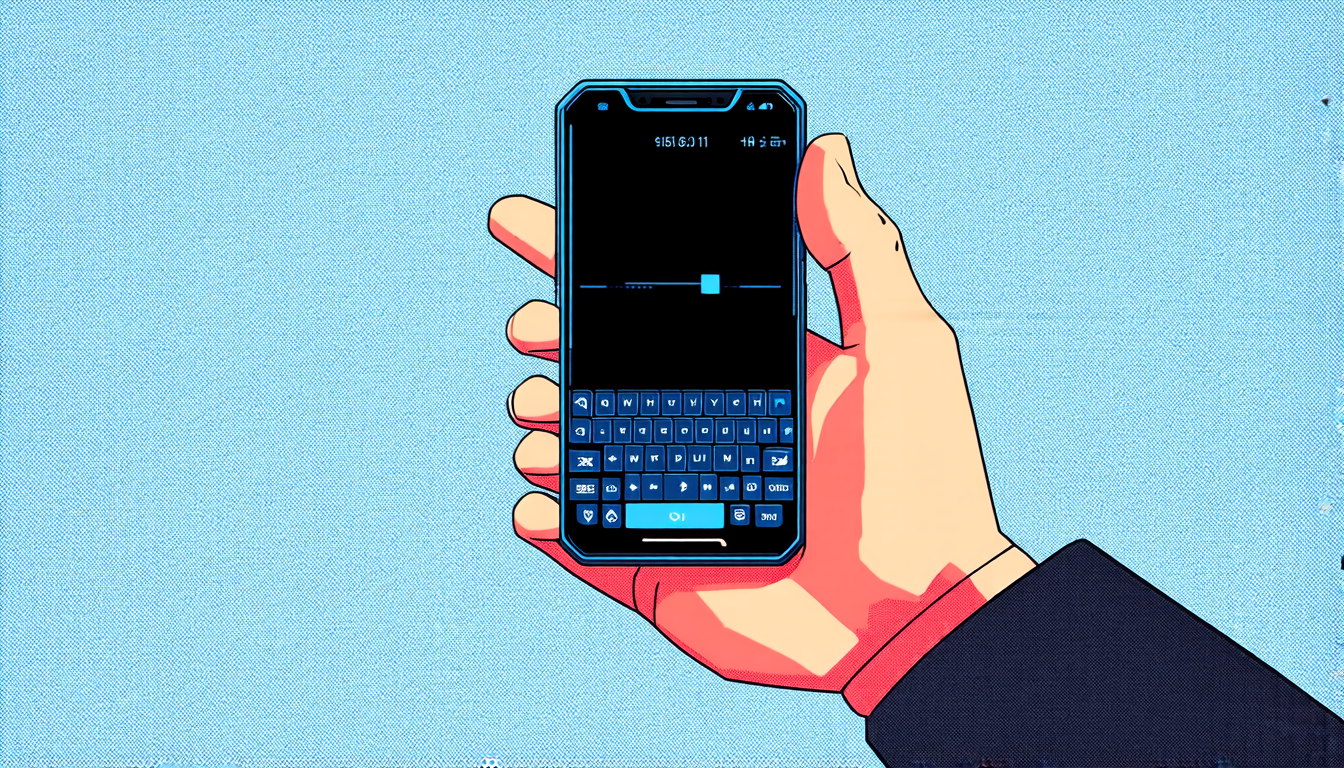
The new approach developed by researchers takes a different tack altogether. It involves using two thumbs to enter text on the touchscreen, with each thumb controlling a separate set of keys. This allows for much faster and more accurate text entry, as each thumb can be used independently to form words and sentences.
In a study published recently, researchers tested this new approach with a group of participants who were unfamiliar with QWERTY keyboards. They found that the participants were able to enter text at speeds comparable to those of experienced typists using traditional methods. Furthermore, the participants reported feeling more comfortable and confident when using the new approach.
The implications of this technology are significant. It could potentially revolutionize the way we communicate on our devices, making it faster and more efficient for people to send messages, emails, and other forms of communication. It could also have important applications in fields such as gaming and virtual reality, where fast and accurate text entry is crucial.
Overall, this new approach to text entry on touchscreens has the potential to transform the way we interact with our devices. With its combination of speed, accuracy, and ease of use, it’s likely to become an essential tool for anyone who uses a touchscreen regularly.
Cite this article: “Faster Eyes-Free Typing on Touchpads: A Breakthrough in Indirect Text Entry”, The Science Archive, 2025.
Touchscreen, Text Entry, Qwerty Keyboard, Gestures, Muscle Memory, Thumbs, Independent Control, Accuracy, Speed, Revolutionize





