

Sunday 06 April 2025
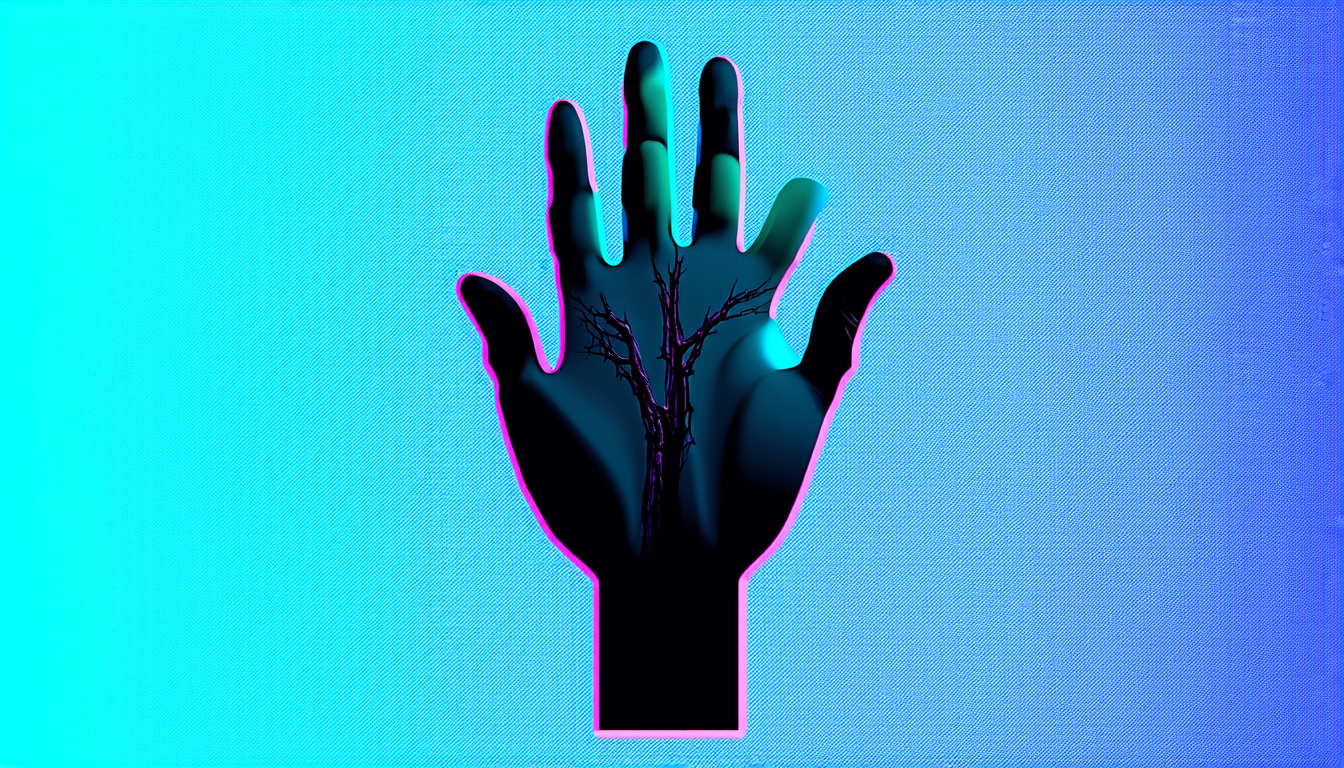
Scientists have developed a new method for generating synthetic palm vein images that can be used to improve biometric recognition systems. These systems are designed to identify individuals by analyzing unique features of their palms, such as the patterns of veins beneath the skin.
The problem is that collecting and labeling large datasets of real palm vein images is time-consuming and expensive. This makes it difficult to train accurate machine learning models for recognition purposes. To address this issue, researchers have turned to generating synthetic data using artificial intelligence algorithms.
The new method, called PVTree, uses a two-stage approach to generate realistic palm vein images. The first stage involves creating 3D models of the vascular tree structures in the hand, which are then projected onto a 2D plane to create synthetic images. The second stage involves adding noise and variations to these images to make them more realistic.
The resulting synthetic images can be used to train machine learning models for palm vein recognition, allowing researchers to test and improve their algorithms without relying on expensive and time-consuming data collection. This could lead to more accurate and efficient biometric systems in the future.
One of the key challenges in generating synthetic palm vein images is creating realistic patterns and variations that mimic those found in real-world data. PVTree addresses this challenge by using a combination of techniques, including random perturbations and image enhancement algorithms, to create diverse and realistic synthetic images.
The researchers tested their method on several publicly available datasets and found that the generated synthetic images were indistinguishable from real images. They also trained machine learning models on these synthetic data and compared them to models trained on real data, finding that the synthetic models performed almost as well.
The potential applications of PVTree are vast. In addition to improving biometric recognition systems, it could be used in medical imaging to create realistic simulations for training and testing diagnostic algorithms. It could also be applied to other areas where generating realistic synthetic data is important, such as in computer vision or robotics.
Overall, the development of PVTree represents a significant step forward in the field of synthetic data generation, with far-reaching implications for a range of applications. By creating realistic and diverse synthetic images, researchers can improve the accuracy and efficiency of machine learning models without relying on expensive and time-consuming data collection methods.
Cite this article: “Revolutionizing Palm Vein Recognition: A Novel Two-Stage Generation Method for Realistic and Diverse Synthetic Data”, The Science Archive, 2025.
Synthetic Palm Vein Images, Biometric Recognition Systems, Machine Learning Models, Artificial Intelligence Algorithms, 3D Modeling, Vascular Tree Structures, Image Enhancement, Random Perturbations, Computer Vision, Robotics





