

Sunday 06 April 2025
As robots and autonomous systems become increasingly prevalent in our daily lives, ensuring their safety and reliability is crucial. A team of researchers has developed a new method that could help achieve this by detecting anomalies in a system’s behavior, allowing it to adapt and correct course if necessary.
The approach relies on world models, which are essentially simulations of how the system should behave in different scenarios. By comparing these simulated behaviors to the actual actions of the system, researchers can identify when something is amiss. This could be due to changes in the environment, malfunctions, or even deliberate attempts to hack or manipulate the system.
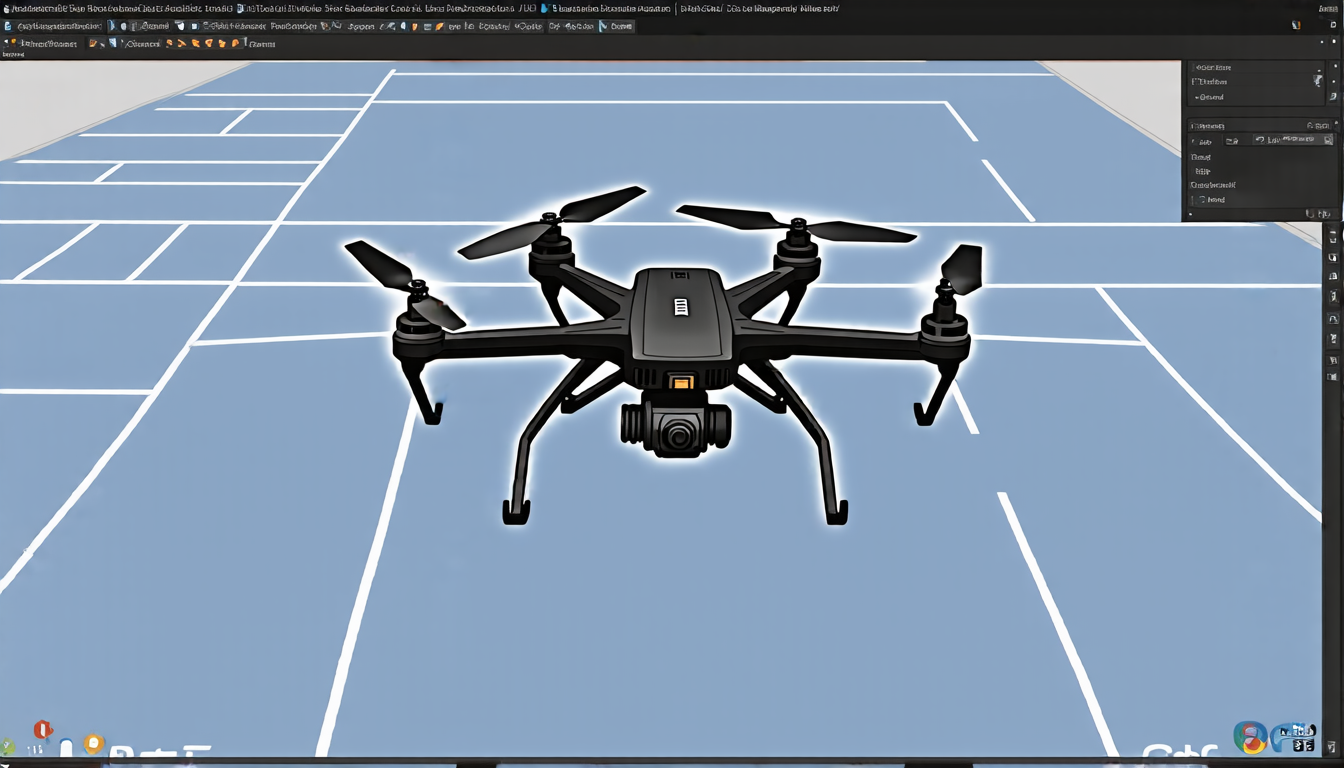
The team tested their method using a quadcopter drone, which was tasked with navigating a square course. As the drone flew, its behavior was monitored and compared to the simulated world model. When an unexpected force was applied to the drone, such as a sudden gust of wind or a deliberate nudge from a researcher, the system quickly detected the anomaly and adapted accordingly.
One of the key advantages of this approach is that it can be used in real-world scenarios, even when the underlying dynamics are complex and difficult to model. The team’s method is able to learn from experience and improve its accuracy over time, making it more effective at detecting anomalies and adapting to changing situations.
The implications of this research are significant, particularly for applications such as autonomous vehicles or robotics. By allowing systems to detect and respond to anomalies in real-time, the risk of accidents or malfunctions can be greatly reduced. Additionally, this approach could enable systems to learn from their experiences and improve over time, leading to more effective and efficient operation.
The team’s research also highlights the importance of world models in AI development. By creating simulations of how a system should behave, researchers can better understand its limitations and potential vulnerabilities, allowing them to develop more robust and reliable systems. This approach could have far-reaching implications for many areas of AI research, from robotics to finance and healthcare.
In practical terms, this technology has the potential to be used in a wide range of applications, from autonomous vehicles to medical devices. By enabling systems to detect and adapt to anomalies in real-time, it could greatly improve their safety and reliability, leading to more effective and efficient operation.
Cite this article: “Unlocking AIs Potential: A Novel Approach to Anomaly Detection and World Modeling in Reinforcement Learning Environments”, The Science Archive, 2025.
Robotics, Ai, Safety, Reliability, Anomaly Detection, World Models, Simulation, Autonomous Systems, Machine Learning, Cybersecurity





