

Sunday 06 April 2025
Scientists have long been fascinated by the behavior of particles that can move on their own, known as active matter. These particles can be found in a variety of natural systems, such as flocks of birds or schools of fish, and they are also being engineered into new materials with unique properties.
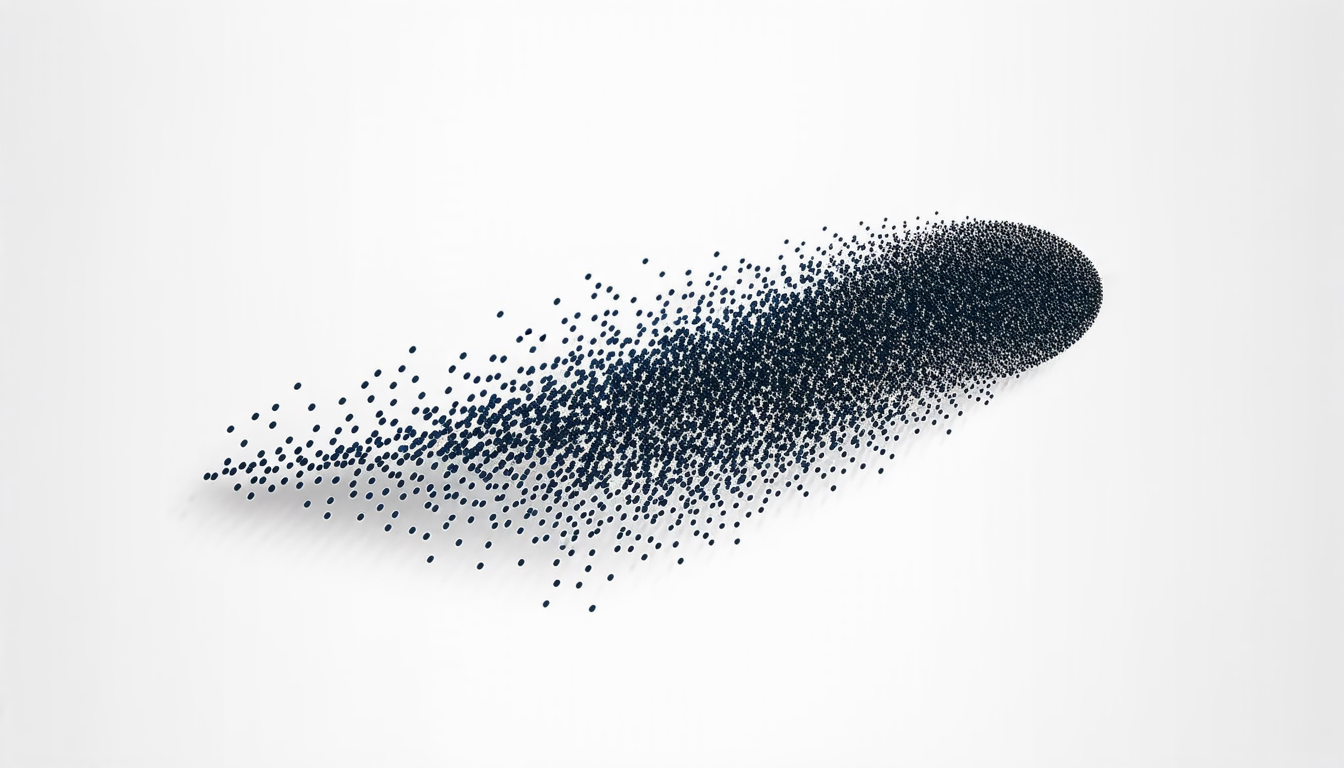
Recently, researchers have been studying a type of active matter that is particularly interesting – self-propelled disks that can interact with each other through game-theoretical rules. These disks are like tiny robots that can change direction based on the actions of their neighbors, and they can be used to model complex systems such as biological tissues or social networks.
The scientists behind this research have been using computer simulations to study how these disks behave in different scenarios. They have found that the disks can exhibit a range of fascinating phenomena, including clustering, segregation, and even extinction.
One of the most interesting findings is that the disks can become extinct if they are introduced into a system where there are already more disks of a different type. This happens because the invading disks are less likely to survive in a environment dominated by the other type of disk. The researchers have also found that the rate at which the disks interact with each other can affect their behavior, with stronger interactions leading to faster extinction.
Another fascinating aspect of this research is that it has implications for our understanding of biological systems. For example, the study of self-propelled disks can help us understand how cells move and interact in tissues, or how populations of bacteria or viruses spread through a system.
The researchers are also exploring the potential applications of these self-propelled disks in fields such as materials science and engineering. By studying their behavior and properties, they may be able to design new materials with unique properties that can be used in a variety of applications.
Overall, this research is an exciting example of how scientists can use simple rules and simulations to understand complex systems and behaviors. The study of self-propelled disks has the potential to reveal new insights into the workings of biological systems and to inspire innovative technologies.
Cite this article: “Game-Changing Dynamics: How Social Interactions Shape Population Outcomes”, The Science Archive, 2025.
Active Matter, Self-Propelled Disks, Game-Theoretical Rules, Computer Simulations, Clustering, Segregation, Extinction, Biological Systems, Materials Science, Engineering





