

Sunday 06 April 2025
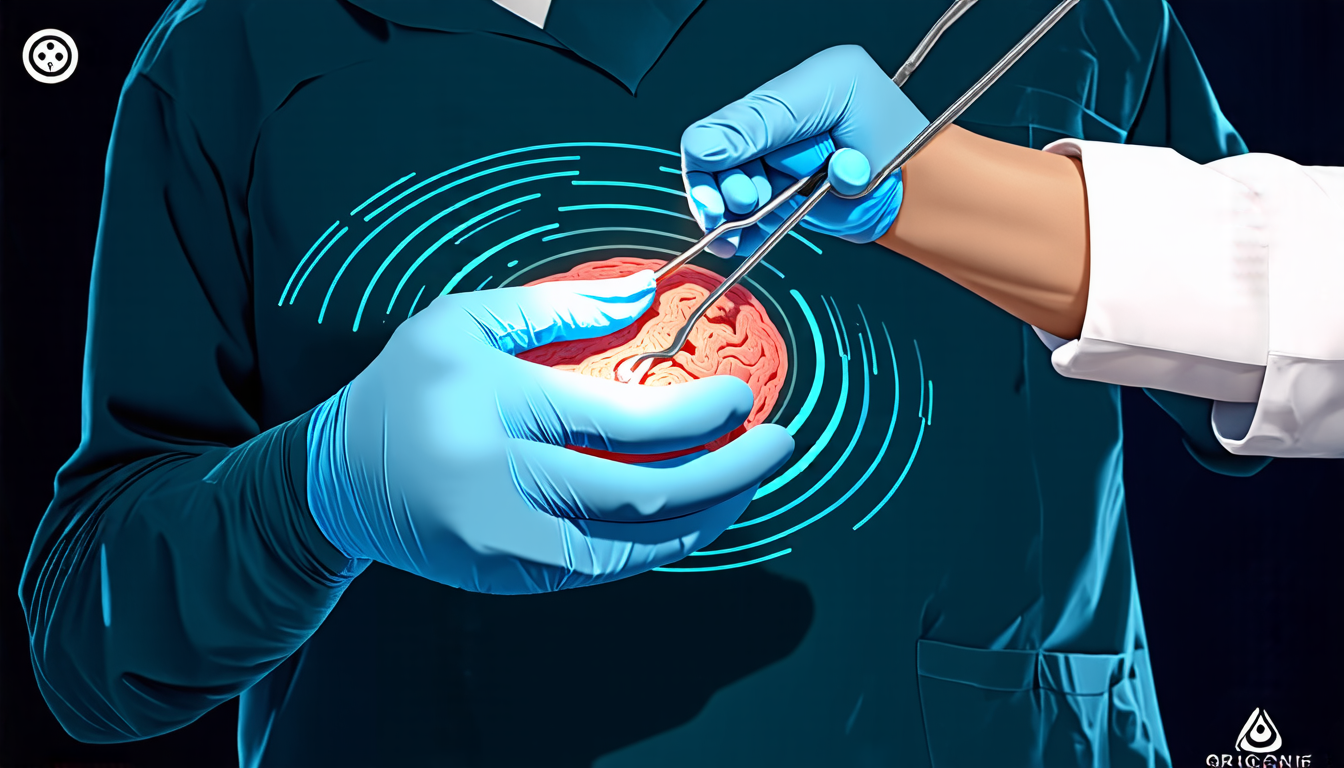
Scientists have made a significant breakthrough in developing a new technology that allows them to accurately track and predict the deformation of soft tissues during surgical procedures. This innovative system, known as Tracking-Aware Deformation Field (TADF), has the potential to revolutionize the way surgeons operate and improve patient outcomes.
During surgery, soft tissues such as skin, muscles, and organs can deform in unpredictable ways, making it challenging for surgeons to navigate and perform procedures accurately. Current methods of tracking tissue deformation are often limited by their ability to capture only a narrow range of motion or rely on manual annotation, which is time-consuming and prone to errors.
TADF addresses these limitations by using a combination of computer vision and machine learning algorithms to track key points on the surface of soft tissues in real-time. This information is then used to estimate the deformation of the tissue over time, allowing surgeons to better understand how the tissue will behave during procedures.
One of the key advantages of TADF is its ability to accurately capture complex deformations, such as those that occur when a surgeon manipulates or resects soft tissues. By tracking these deformations in real-time, surgeons can gain valuable insights into the behavior of the tissue and make more informed decisions about how to proceed with the procedure.
TADF has been tested on two public datasets and shown to outperform existing methods in terms of accuracy and robustness. The technology has also been demonstrated to be effective in a range of surgical scenarios, including laparoscopic and robotic-assisted procedures.
The potential benefits of TADF are significant. By providing surgeons with more accurate and real-time information about tissue deformation, the technology could help reduce complications and improve patient outcomes. Additionally, TADF could enable the development of new surgical techniques and instruments that take into account the complex behavior of soft tissues.
While TADF is still in its early stages, it has the potential to transform the field of surgery and improve the lives of millions of patients around the world. As researchers continue to refine and develop this technology, we can expect to see even more innovative applications in the years to come.
Cite this article: “Accurate Tissue Deformation Estimation in Surgical Robotics using Co-Tracker and Neural Radiance Fields”, The Science Archive, 2025.
Surgery, Soft Tissues, Deformation, Tracking, Technology, Computer Vision, Machine Learning, Real-Time, Accuracy, Robustness





