

Sunday 06 April 2025
Researchers have made a significant breakthrough in understanding how tiny, ultra-fast charges move through exotic materials known as van der Waals heterostructures. These structures are essentially sandwiches of two-dimensional materials, like graphene and transition metal dichalcogenides, that can exhibit unique electronic properties.
By using a technique called time- and angle-resolved photoemission spectroscopy (trARPES), scientists were able to study the behavior of these charges in real-time. trARPES is like taking a snapshot of the material’s electrons as they move through it. The team was able to excite the material with different energies, then watch how the charges responded.
The results showed that when the material was excited with higher-energy photons, the charges moved faster and farther than when it was excited with lower-energy photons. This is because the higher-energy photons were able to create a more direct pathway for the charges to flow through the material.
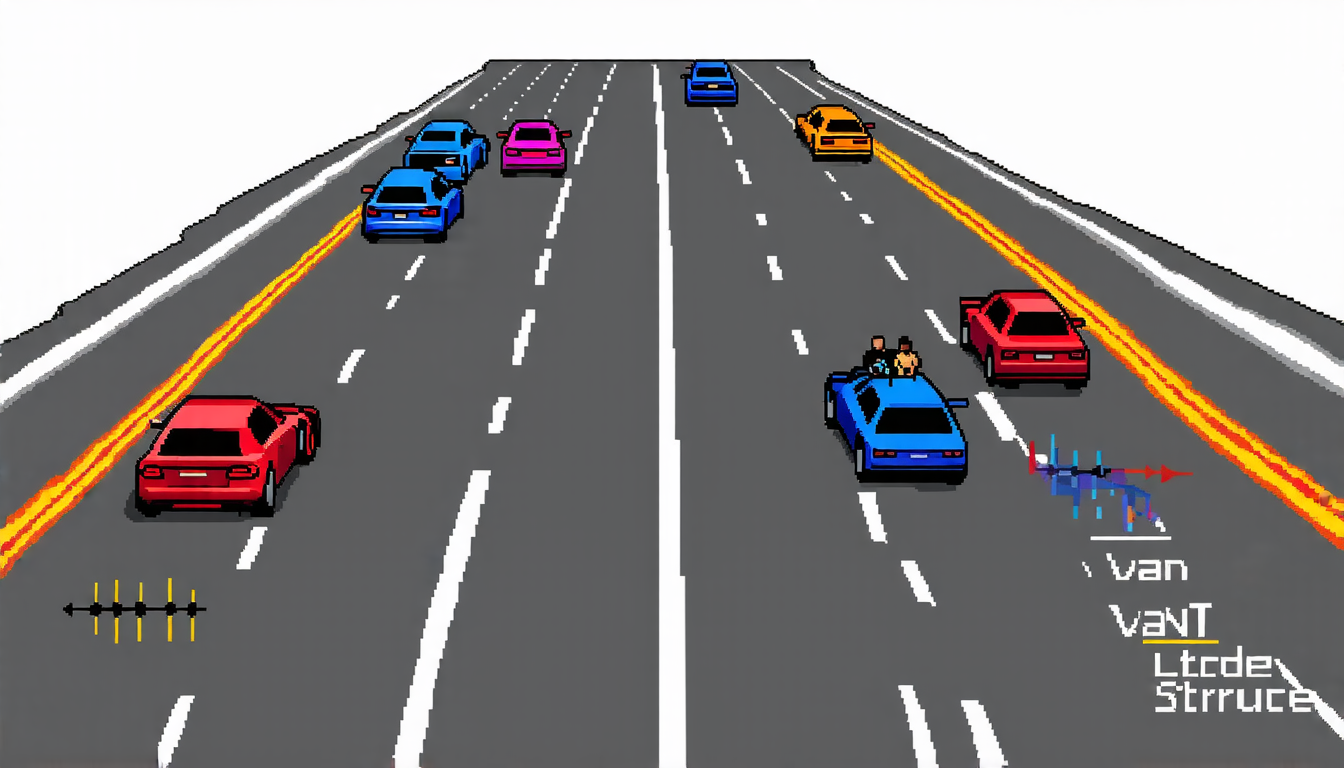
But here’s the really cool part: the researchers found that by adjusting the energy of the excitation photons, they could actually steer the direction of the charge flow. It’s like being able to control the traffic flow on a highway, but instead of cars, it’s tiny electrons moving through a material.
This breakthrough has significant implications for the development of new electronic devices and technologies. For example, it could lead to the creation of more efficient solar cells or faster computer chips. The ability to control charge flow in these materials could also enable the development of new types of sensors or storage devices.
The research is still in its early stages, but the potential applications are vast. Scientists are excited about the possibilities and are already working on further experiments to explore the capabilities of these exotic materials.
Cite this article: “Unlocking Ultrafast Charge Transfer in 2D Heterostructures: A Quantum Leap Forward”, The Science Archive, 2025.
Van Der Waals Heterostructures, Graphene, Transition Metal Dichalcogenides, Trarpes, Photoemission Spectroscopy, Charge Flow, Electron Movement, Solar Cells, Computer Chips, Sensors, Storage Devices





