

Sunday 06 April 2025
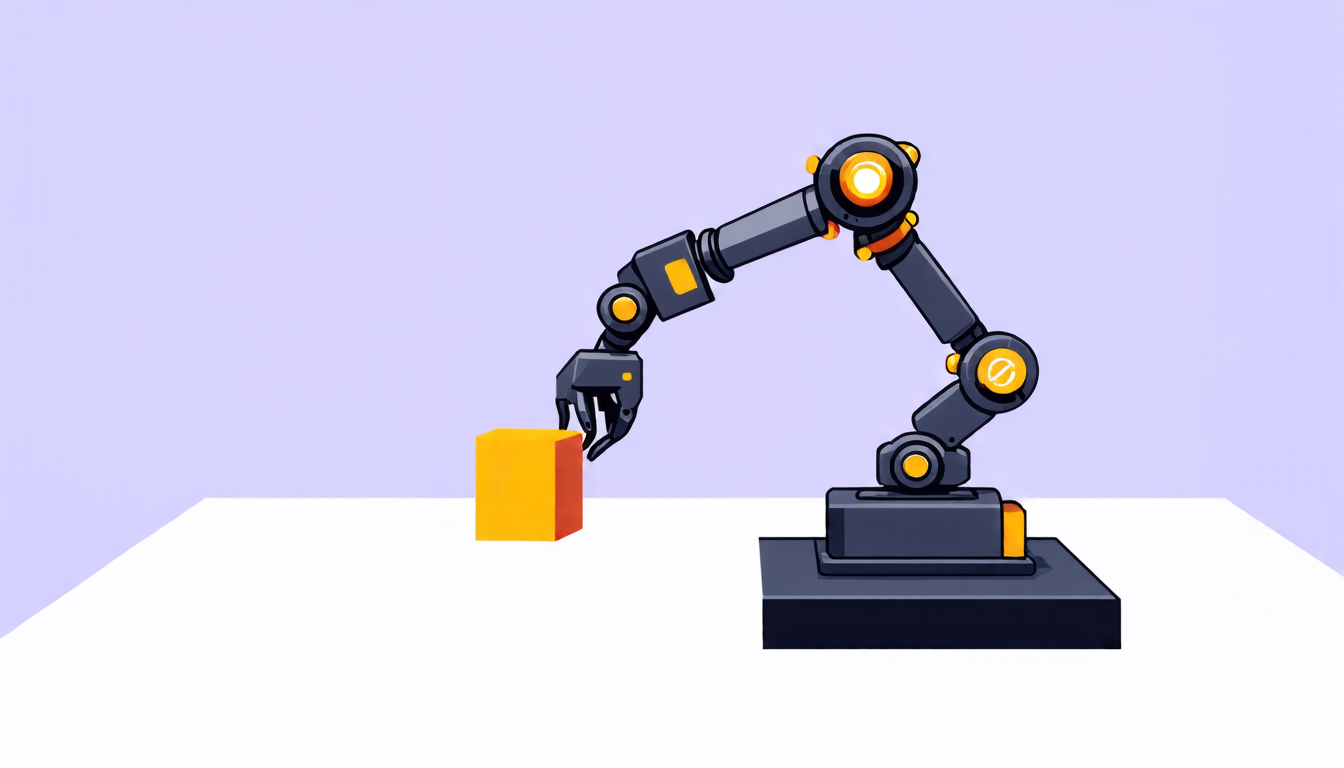
Robotics has made tremendous progress in recent years, enabling machines to perform complex tasks such as assembly line work and even space exploration. But what about robots that can interact with their environment without relying on precise velocity measurements? This is where a team of researchers comes into play.
Using internal models – essentially mental simulations of the system being controlled – the scientists developed a novel approach to control robotic arms without requiring knowledge of their velocity. This breakthrough has significant implications for real-world applications, as it allows robots to adapt to changing environments and unexpected disturbances.
The concept is based on the idea that by modeling the behavior of the robotic arm, researchers can create an internal representation of how it moves in response to external forces. This internal model can then be used to predict the arm’s future movements, allowing for precise control even without velocity measurements.
To test their theory, the team designed a simulation using a two-link planar manipulator – essentially a simplified robotic arm with two joints. They introduced sinusoidal disturbances into the system and observed how well the internal model-based controller performed in rejecting these disturbances.
The results were impressive: despite the presence of external forces, the robot was able to accurately track its desired trajectory, demonstrating the effectiveness of the internal model approach. Moreover, the controller’s performance remained robust even when faced with unknown frequencies and amplitudes of the sinusoidal disturbances.
But what does this mean for real-world applications? For one, it opens up new possibilities for robotic arms in industries such as manufacturing, where precise control is crucial but velocity measurements may not always be available. It also paves the way for more advanced forms of robot-human interaction, where robots can adapt to changing environments and unexpected disturbances.
Furthermore, this research has implications beyond robotics itself. The internal model approach can be applied to other complex systems that require precise control, such as aircraft or spacecraft. By developing better models of these systems, researchers can create more efficient and reliable control algorithms, leading to improved performance and safety.
In the end, this breakthrough is a testament to human ingenuity and our ability to push the boundaries of what is thought possible. By leveraging internal models, researchers have cracked open new possibilities for robotic control, paving the way for a future where machines can interact with their environment in even more sophisticated ways.
Cite this article: “Robust Task-Space Regulation of Robot Manipulators: A Novel Internal Model-Based Approach”, The Science Archive, 2025.
Robotics, Internal Models, Robotic Arms, Control Algorithms, Precise Control, Velocity Measurements, Disturbances, Simulation, Manufacturing, Aircraft, Spacecraft





