

Sunday 06 April 2025
The molecular building blocks of crystals have long been a subject of fascination and study in the scientific community. For decades, researchers have sought to understand how these tiny particles assemble into complex structures, like zeolites, which are used in everything from cat litter to fuel cells.
A recent paper published in the journal Chemistry Reviews sheds new light on this process, revealing the crucial role that charged clusters play in the formation of these crystalline materials. By using a combination of advanced spectroscopic techniques and computational models, scientists were able to observe and analyze the early stages of crystal growth in unprecedented detail.
The study focused on zeolitic imidazolate frameworks (ZIFs), a class of porous materials that are prized for their unique properties. ZIFs are made up of metal ions linked together by organic molecules, forming a network of tiny cages and channels. These structures have numerous applications, from water filtration to carbon capture.
The researchers used harmonic light scattering, a technique that measures the way light interacts with particles at the molecular level, to observe the formation of these clusters. They found that small, charged clusters – known as prenucleation clusters (PNCs) – are the first step in the crystal growth process.
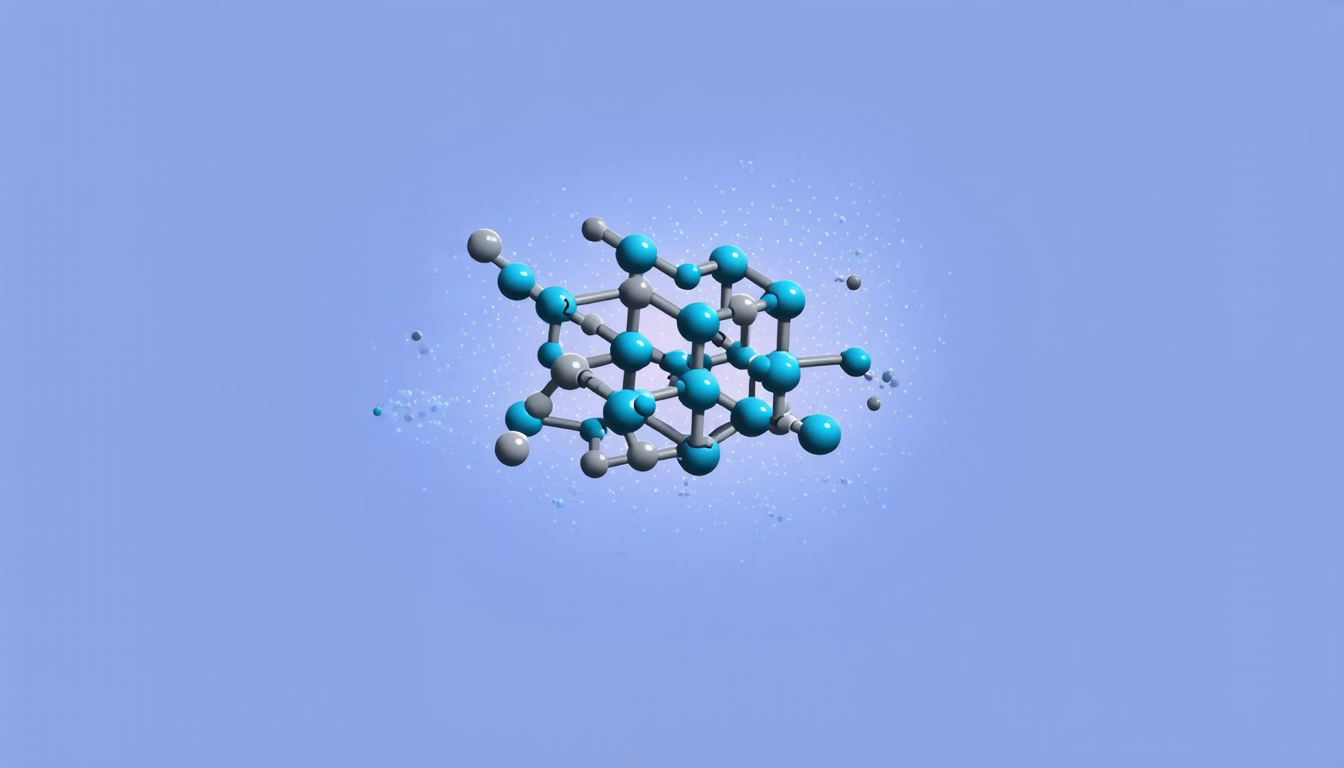
These PNCs are made up of metal ions and organic molecules that have bonded together in a specific way, giving them an electric charge. As they accumulate, they attract more molecules and ions, forming larger aggregates. Eventually, these aggregates coalesce into the crystalline structure we’re familiar with.
But here’s the fascinating part: the researchers discovered that PNCs play a crucial role in determining the final shape and properties of the crystal. By tweaking the conditions under which the clusters form, they can influence the growth of the crystal, allowing for more precise control over its characteristics.
This finding has significant implications for materials science and engineering. By understanding how PNCs assemble into crystals, scientists can design new materials with specific properties, such as improved catalytic activity or enhanced thermal stability.
The study also highlights the power of interdisciplinary research, combining techniques from physics, chemistry, and biology to gain a deeper understanding of complex processes. The authors’ use of advanced spectroscopic methods and computational models demonstrates the value of integrating multiple approaches to tackle challenging problems.
In the end, this research offers a new perspective on the intricate dance of molecules that occurs during crystal growth.
Cite this article: “Unlocking the Secrets of Zeolitic Imidazolate Frameworks: A Journey into the Heart of Crystallization”, The Science Archive, 2025.
Crystal Growth, Zeolites, Molecular Building Blocks, Charged Clusters, Prenucleation Clusters, Harmonic Light Scattering, Spectroscopy, Computational Models, Materials Science, Nanotechnology





