

Sunday 06 April 2025
Scientists have long been fascinated by the human brain’s incredible ability to learn, remember, and make decisions. One key component of this process is something called attention – our brains’ ability to focus on certain stimuli while ignoring others. Now, a team of researchers has successfully developed a new type of artificial intelligence that mimics this crucial aspect of human cognition.
The innovation is called Spatial-Temporal Attention Aggregator (STAA-SNN), and it’s designed for use in Spiking Neural Networks (SNNs). These networks are inspired by the way our brains process information, using electrical impulses instead of traditional digital computing. The goal is to create machines that can learn and adapt more efficiently, just like we do.
The STAA-SNN uses a combination of two key components: spatial attention and temporal attention. Spatial attention allows the network to focus on specific parts of an image or signal, while temporal attention enables it to pay attention to certain patterns over time. This dual approach is what sets STAA-SNN apart from previous AI systems.
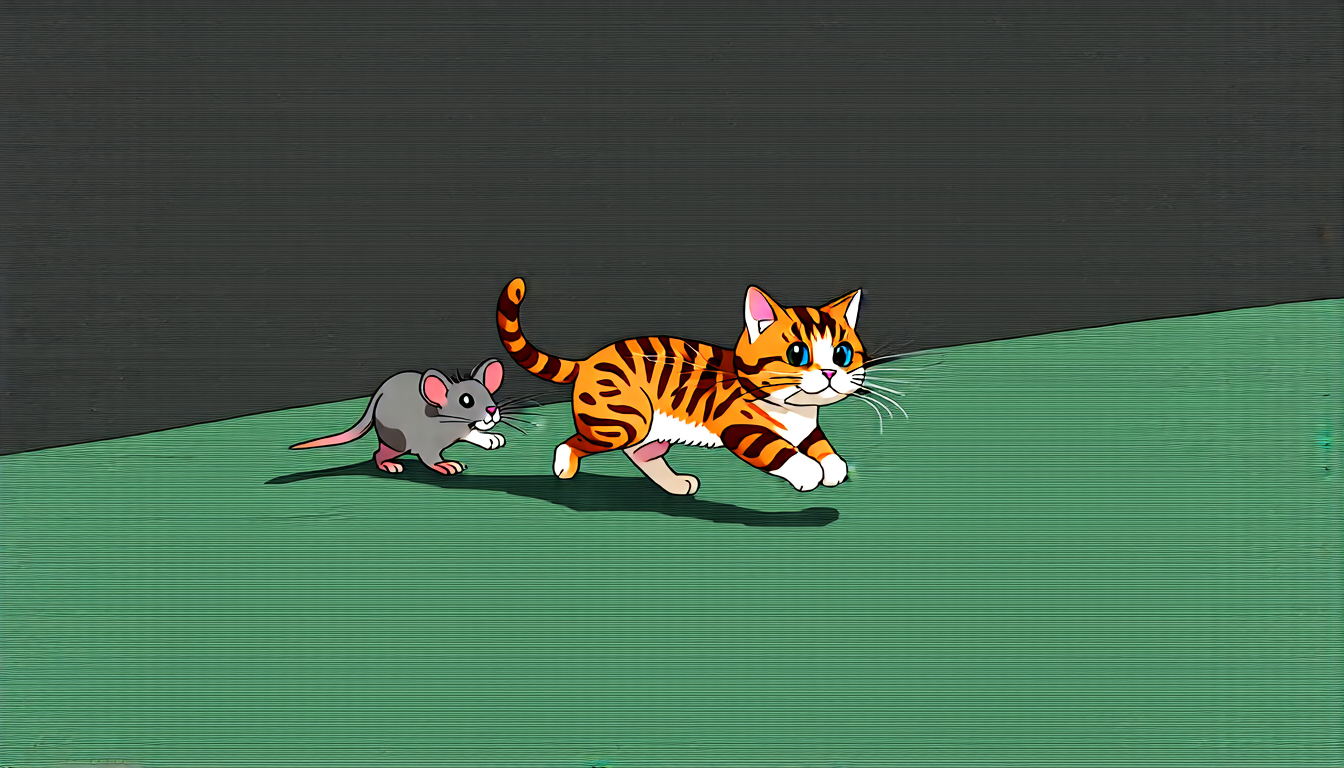
To understand how this works, think about watching a video of a cat chasing a mouse. A traditional computer would process every frame of the video equally, but our brains are able to focus on the cat’s movements and ignore the background noise. The STAA-SNN can do the same thing, allowing it to prioritize important information and filter out distractions.
The potential applications of this technology are vast. For example, it could be used in self-driving cars to quickly identify pedestrians or obstacles, or in medical imaging to highlight areas of interest for diagnosis. The possibilities are endless.
One of the most impressive aspects of STAA-SNN is its ability to learn and adapt at an incredible pace. In tests, the network was able to achieve state-of-the-art results on a range of tasks, from image recognition to video analysis. This level of performance is unprecedented in AI research.
The development of STAA-SNN marks a significant step forward in the quest for more human-like artificial intelligence. By mimicking our own brains’ ability to focus and prioritize information, this technology has the potential to revolutionize the way we interact with machines. As researchers continue to refine and expand on this innovation, we can expect to see even more remarkable advancements in the years to come.
Cite this article: “Unlocking the Power of Spiking Neural Networks: A Comprehensive Survey and Future Directions”, The Science Archive, 2025.
Artificial Intelligence, Attention, Spatial-Temporal Attention Aggregator, Spiking Neural Networks, Brain-Inspired Computing, Machine Learning, Image Recognition, Video Analysis, Self-Driving Cars, Medical Imaging





