

Sunday 06 April 2025
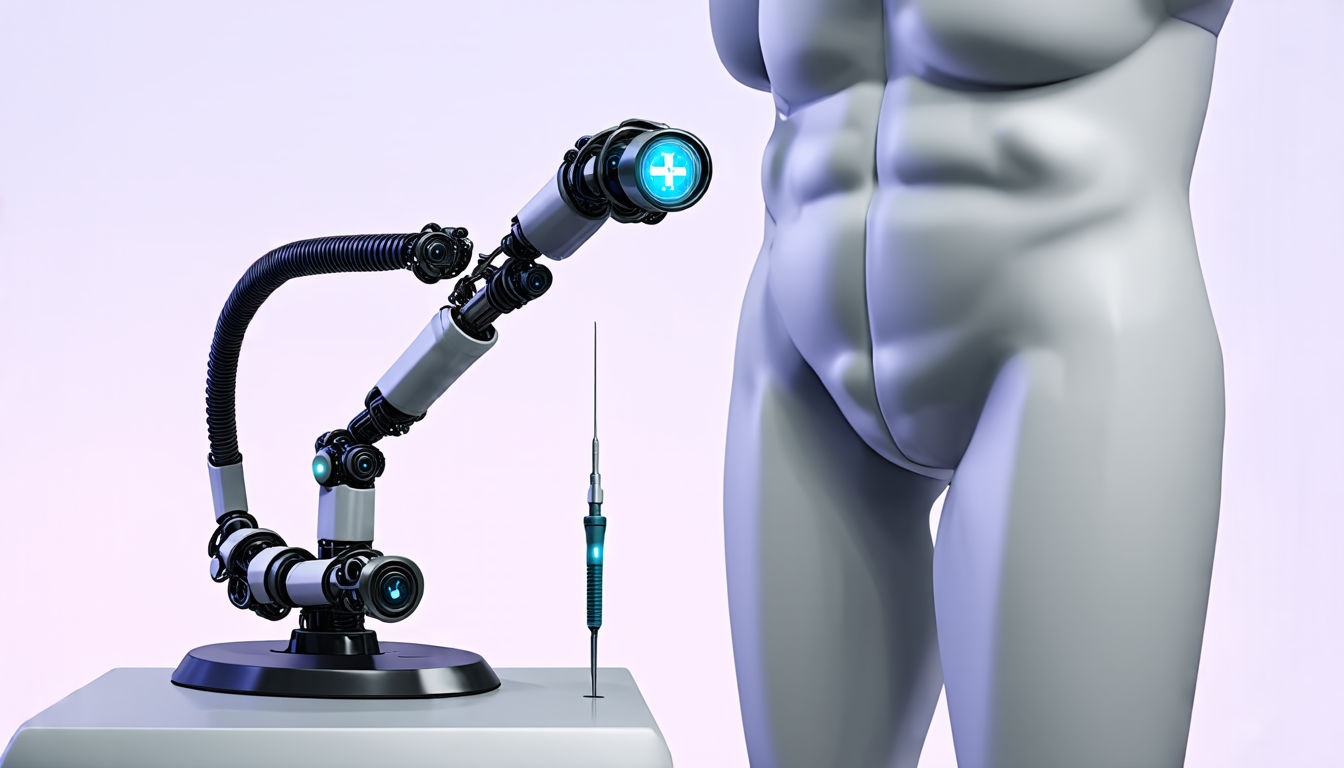
Scientists have long struggled to tame the unruly hysteresis effects that plague tendon-driven robots, those flexible machines designed to navigate the twists and turns of our insides during minimally invasive surgeries. Hysteresis is a phenomenon where the robot’s movement lags behind its intended path, causing it to deviate from the desired trajectory. This can lead to inaccurate positioning and compromised surgical outcomes.
A team of researchers has now developed a novel approach to mitigate hysteresis in tendon-driven robots. The key innovation lies in applying controlled vibrational motion along the tendon’s direction of movement. By doing so, the scientists were able to significantly reduce the effects of hysteresis, resulting in more accurate and precise robot movements.
The team used a combination of experimental and computational methods to study the phenomenon. They created a tendon-sheath mechanism, which is the core component of these robots, and applied controlled vibrations to it while measuring its movement under various conditions. The researchers also developed a deep learning-based model to predict and compensate for hysteresis.
The results were impressive: without vibration, the robot’s position tracking accuracy was limited by hysteresis, with an average error of around 1.3 millimeters. However, when the vibration-assisted approach was used, this error decreased by a whopping 85% to just 0.2 millimeters. The team also found that the smaller the model, the more pronounced the benefits of vibration.
The implications of this research are significant for the development of next-generation minimally invasive surgical robots. By reducing hysteresis, these robots will be able to navigate complex bodily cavities with greater precision and accuracy, allowing surgeons to perform procedures with increased safety and efficacy.
The scientists’ approach also opens up new avenues for studying the behavior of tendon-driven mechanisms under various conditions. Understanding how vibrations interact with hysteresis can lead to the development of more sophisticated control algorithms and improved robot performance in general.
While this research is still in its early stages, it has already sparked excitement among experts in the field. The potential benefits of vibration-assisted hysteresis mitigation are too great to ignore, and further investigation is likely to yield even more impressive results. As researchers continue to refine their approach, we can expect to see significant advancements in the development of tendon-driven robots for minimally invasive surgery.
Cite this article: “Vibration-Assisted Hysteresis Mitigation in Tendon-Driven Continuum Manipulators”, The Science Archive, 2025.
Minimally Invasive Surgery, Tendon-Driven Robots, Hysteresis, Vibrations, Robot Movement, Accuracy, Precision, Surgical Outcomes, Deep Learning, Control Algorithms





