
Sunday 06 April 2025
The intricate dance of animal social dynamics has long fascinated scientists and the general public alike. From the majestic migrations of birds to the intricate hierarchies of ant colonies, these complex behaviors are a testament to the remarkable adaptability of life on Earth.
A recent study published in the journal New Scientist delves into the fascinating world of patch foraging, where animals collectively search for food in a given area. Researchers have long sought to understand how individual animals make decisions about when to leave a patch and move on to another, often relying on simple rules-of-thumb or observing the actions of others.
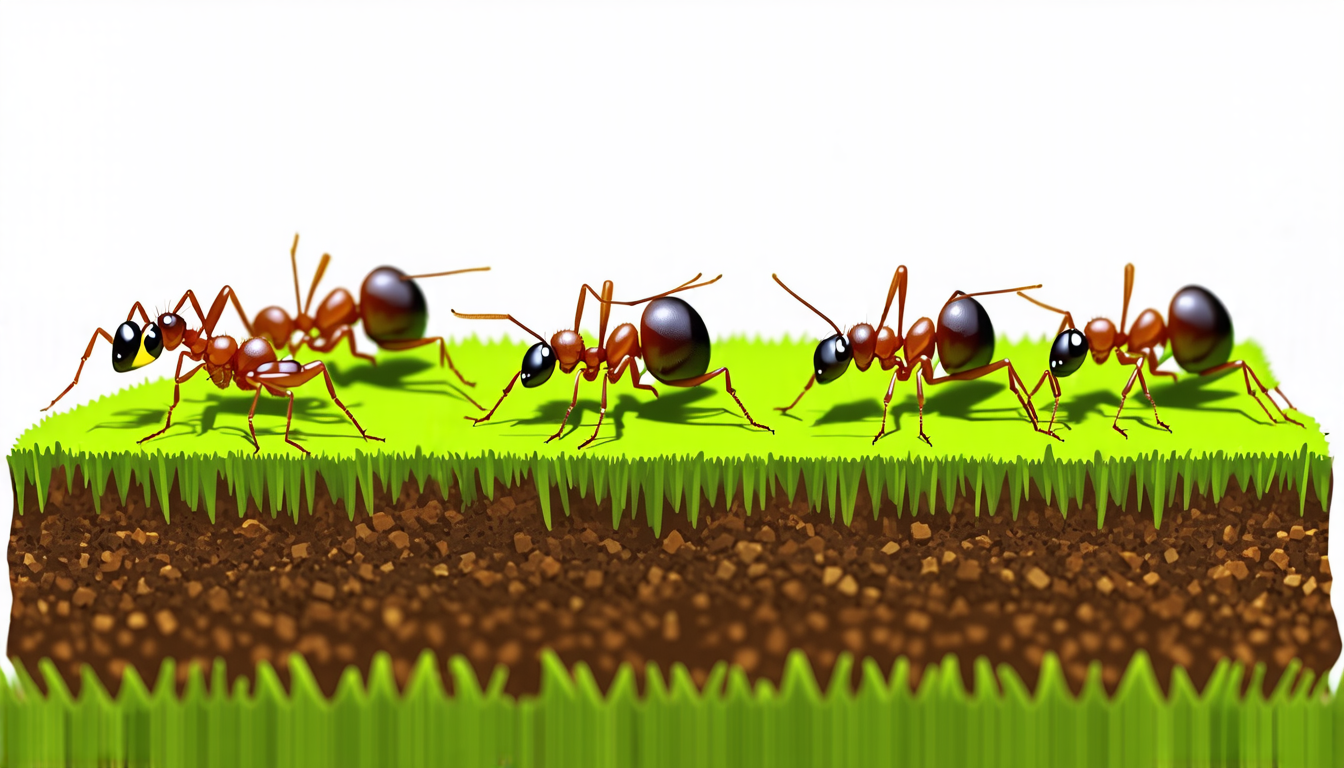
However, this latest research takes a more nuanced approach by examining the role of social hierarchy in shaping these decision-making processes. By studying the behavior of ants, birds, and other species, scientists have discovered that when animals follow leaders, they tend to make different choices about where to forage than those who don’t.
One key finding is that follower animals often benefit from following leaders, particularly if those leaders are skilled at finding food-rich patches. This is because leaders can provide valuable information about the location and quality of resources, allowing followers to adjust their own search strategies accordingly.
But there’s more to it than just simple information transfer. The study also reveals that social hierarchy plays a crucial role in shaping the way animals make decisions about when to leave a patch. In particular, researchers found that follower animals tend to stay longer in patches where they perceive a high level of competition from other followers.
This phenomenon is thought to be driven by a desire to avoid being outcompeted for limited resources. By staying put, follower animals can increase their chances of finding food before others do, thereby reducing the risk of going hungry.
The study also explored how different types of social interactions – such as counting how many leaders are in a patch or observing leader movements – influence decision-making. These findings have important implications for our understanding of animal behavior and social dynamics, suggesting that even simple actions can have profound effects on collective behavior.
This research has far-reaching implications for fields beyond biology, too. For instance, the study’s insights into how social hierarchy shapes decision-making could inform strategies for managing complex systems, such as transportation networks or financial markets.
As our understanding of animal social behavior continues to evolve, we’re reminded that even in the simplest-seeming behaviors, there lies a rich tapestry of complexity and subtlety.
Cite this article: “Unlocking the Secrets of Social Foraging: How Animals Make Collective Decisions”, The Science Archive, 2025.
Animal Social Dynamics, Patch Foraging, Decision-Making, Social Hierarchy, Leadership, Follower Behavior, Information Transfer, Competition, Resource Management, Collective Behavior
Reference: Lisa Blum Moyse, Ahmed El Hady, “Social hierarchy shapes foraging decisions” (2025).