

Sunday 06 April 2025
Scientists have made a significant breakthrough in developing an artificial intelligence system that can detect anomalies in industrial processes, potentially revolutionizing the way we monitor and maintain complex systems.
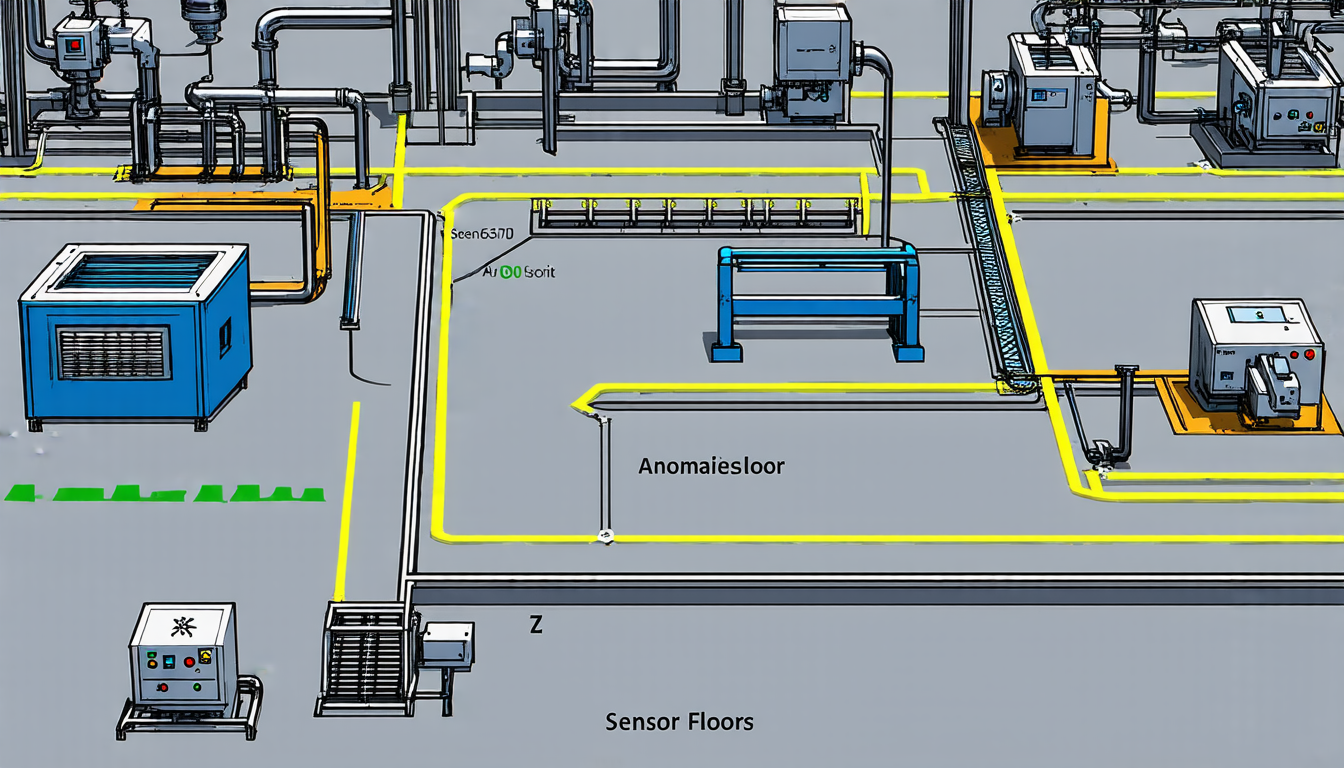
The new system, known as RAAD-LLM, uses large language models to analyze data from sensors and machines in real-time, identifying patterns and anomalies that could indicate potential problems before they occur. This technology has far-reaching implications for industries such as manufacturing, energy, and healthcare, where reliable operation is critical.
Traditionally, anomaly detection systems rely on manual inspection or rule-based approaches, which can be time-consuming and prone to human error. RAAD-LLM, on the other hand, uses machine learning algorithms to automatically identify patterns in data and detect anomalies that may not be immediately apparent to humans.
The system’s capabilities were demonstrated through a series of experiments using real-world industrial data. In one test, RAAD-LLM was used to analyze data from a plastics manufacturing plant, identifying anomalies that human operators had missed. In another experiment, the system detected anomalies in energy consumption patterns at a power plant, allowing maintenance crews to take proactive measures to prevent equipment failure.
The benefits of RAAD-LLM are numerous. By detecting anomalies early on, industrial operators can reduce downtime and maintenance costs, improving overall efficiency and productivity. Additionally, the system’s ability to analyze large amounts of data in real-time enables more accurate predictions and better decision-making.
The development of RAAD-LLM is a significant step forward for artificial intelligence research, demonstrating the potential for machines to learn from complex data sets and make decisions without human intervention. As the technology continues to evolve, it’s likely that we’ll see widespread adoption across various industries, leading to improved reliability, efficiency, and safety.
One of the key advantages of RAAD-LLM is its ability to adapt to changing conditions and learn from new data. This means that as industrial processes evolve or new equipment is installed, the system can adjust its algorithms to ensure continued accuracy and effectiveness.
While there are still challenges to overcome before widespread adoption, the potential benefits of RAAD-LLM are significant. As industries continue to rely on complex systems and machines, the need for reliable anomaly detection becomes increasingly important. With RAAD-LLM, scientists have taken a major step towards meeting this challenge, paving the way for more efficient, productive, and safe industrial operations in the future.
Cite this article: “Revolutionizing Anomaly Detection: A Novel Framework for Industrial Time Series Data Using Large Language Models”, The Science Archive, 2025.
Artificial Intelligence, Anomaly Detection, Industrial Processes, Machine Learning, Language Models, Sensor Data, Real-Time Analysis, Predictive Maintenance, Industrial Efficiency, Reliability.





