

Sunday 06 April 2025
The quest for better question-answering tools has been a longstanding challenge in the world of artificial intelligence. Recently, researchers have made significant progress in developing a new approach that combines graph-based retrieval and augmented generation to tackle this problem.
Traditional methods for answering open-domain questions often rely on large language models (LLMs) to generate responses based on their training data. However, these models can struggle with nuanced, multi-document synthesis tasks, which require a deeper understanding of the context and relationships between different pieces of information.
To address this limitation, researchers have turned to graph-based retrieval methods that structure knowledge as graphs, allowing for more effective retrieval of relevant context. This approach has shown promise in improving the accuracy and coherence of generated responses.
In a recent study, scientists combined these graph-based retrieval techniques with augmented generation methods to create a new system called GraphRAG (Graph-Based Retrieval Augmented Generation). The resulting tool demonstrated significant improvements over traditional LLMs in handling complex question-answering tasks.
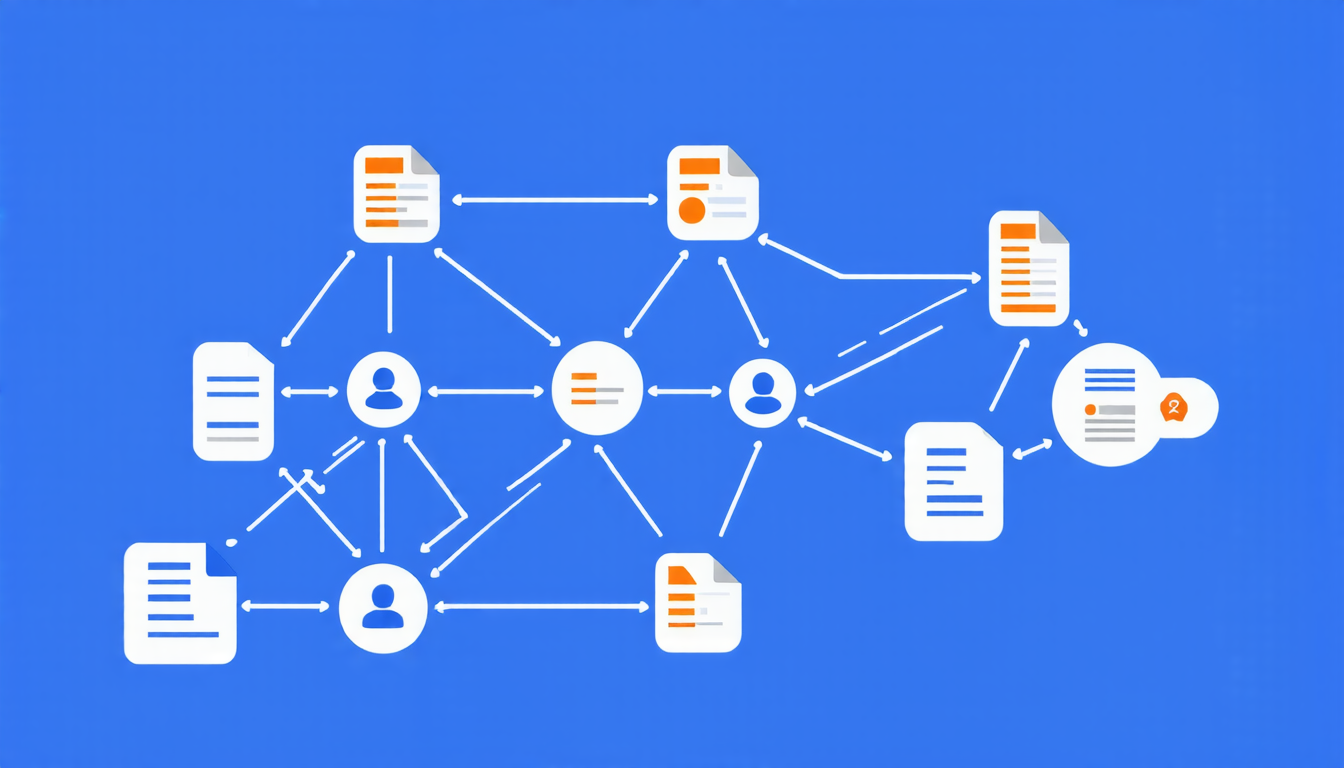
The researchers’ approach involved creating a large-scale knowledge graph that represents relationships between entities, concepts, and documents. When a user poses a question, the system uses this graph to identify relevant pieces of information and retrieve them from a vast corpus of text.
Next, the system employs an augmented generation method to combine these retrieved fragments into a coherent response. This process allows the model to generate responses that are not only accurate but also tailored to the specific context of the question.
One key benefit of this approach is its ability to handle multi-document synthesis tasks more effectively. By considering the relationships between different pieces of information, the system can generate responses that are more nuanced and informative.
To test the efficacy of GraphRAG, the researchers conducted a series of experiments using a range of question-answering benchmarks. The results showed significant improvements over traditional LLMs in terms of accuracy, coherence, and overall performance.
The implications of this research are far-reaching. GraphRAG has the potential to revolutionize the way we approach open-domain question answering, enabling machines to provide more accurate and helpful responses to complex queries.
While there is still much work to be done, the development of GraphRAG represents a significant step forward in the quest for better AI-powered question-answering tools. As researchers continue to refine this technology, it may ultimately enable machines to assist humans in a wide range of applications, from customer support and educational resources to scientific research and healthcare.
Cite this article: “Unlocking the Potential of Graph-Based Retrieval-Augmented Generation in Open-Domain Question Answering”, The Science Archive, 2025.
Artificial Intelligence, Question Answering, Graph-Based Retrieval, Augmented Generation, Language Models, Knowledge Graph, Text Corpus, Multi-Document Synthesis, Accuracy, Coherence





