

Sunday 06 April 2025
The art of generating realistic time series data has long been a challenge for scientists and researchers. From simulating financial markets to modeling complex biological systems, accurately predicting future events relies on our ability to create reliable and diverse datasets. Recently, a team of experts has made significant strides in this field by developing a novel approach that harnesses the power of Schrödinger bridges.
At its core, the method involves solving a type of mathematical problem known as an optimal transport problem. This is where two probability distributions – one representing the real data and the other the synthetic data – are matched in such a way that their differences are minimized. In essence, the algorithm seeks to find the most efficient way to transform the synthetic data into a distribution that closely resembles the real thing.
The team’s approach has several advantages over existing methods. For instance, it can handle complex and high-dimensional datasets with ease, and is capable of generating multiple sequences simultaneously. This makes it particularly useful for applications such as financial modeling, where multiple scenarios need to be considered.
One of the key innovations is the use of a stochastic differential equation (SDE) to model the time series data. This equation describes how the data evolves over time, taking into account various factors such as volatility and mean reversion. By solving this equation, the algorithm can generate realistic paths that capture the underlying dynamics of the system.
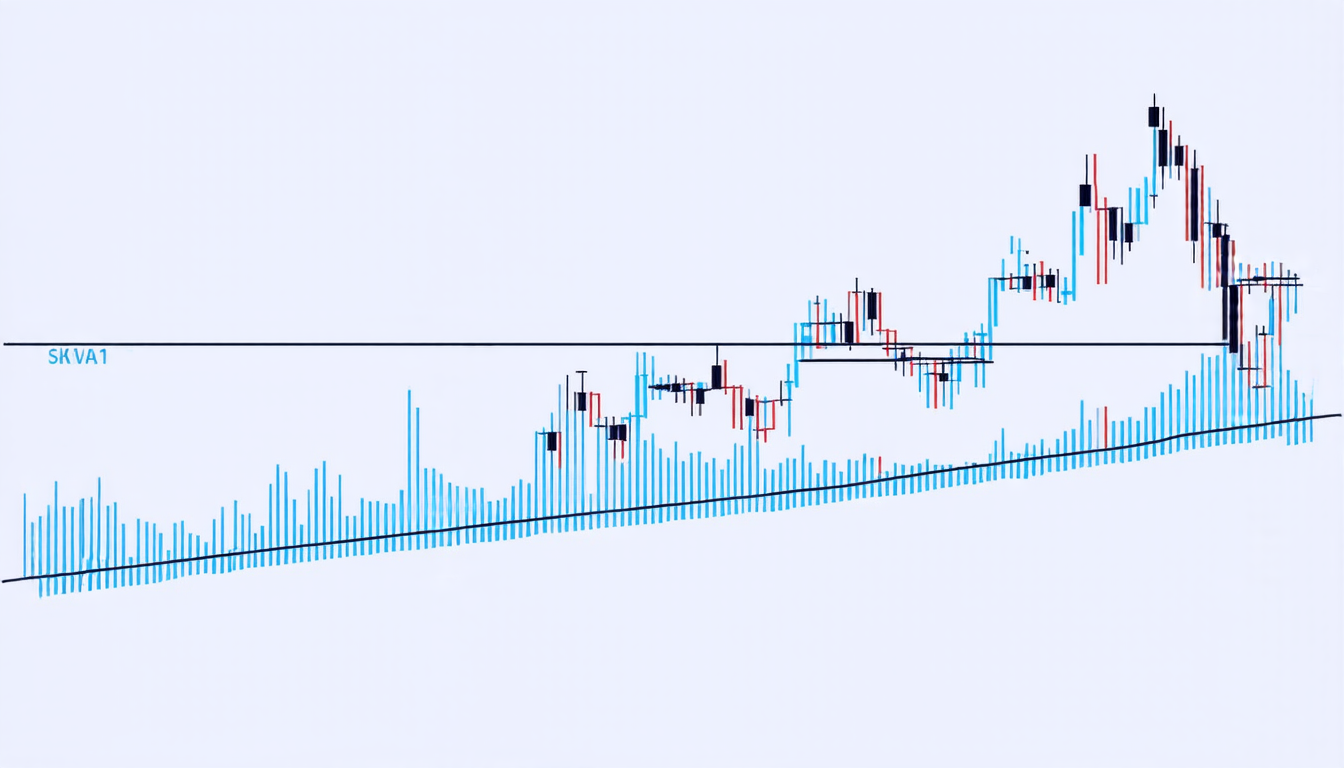
The team has tested their approach on a range of datasets, including financial time series and biological sequences. The results are impressive, with the synthetic data closely matching the real data in terms of both statistical properties and visual appearance. This is particularly evident when looking at the plots of the data, where the generated sequences exhibit similar patterns and fluctuations to the original data.
The implications of this work are far-reaching. For instance, it could be used to improve financial models by generating realistic scenarios for risk assessment and portfolio optimization. In biology, it could help researchers simulate complex systems such as gene regulatory networks or protein interactions. The possibilities are endless, and it will be exciting to see how this technology is applied in the years to come.
The algorithm’s potential has also sparked interest among machine learning practitioners, who see the method as a way to generate more realistic data for training neural networks. This could lead to significant improvements in areas such as image recognition or natural language processing, where large amounts of high-quality data are essential for achieving good performance.
Cite this article: “Revolutionizing Time Series Generation: A Novel Schrödinger Bridge Approach”, The Science Archive, 2025.
Time Series Data, Schrödinger Bridges, Optimal Transport Problem, Synthetic Data, Probability Distributions, Stochastic Differential Equation, Financial Modeling, Biological Sequences, Machine Learning, Neural Networks





