

Sunday 06 April 2025
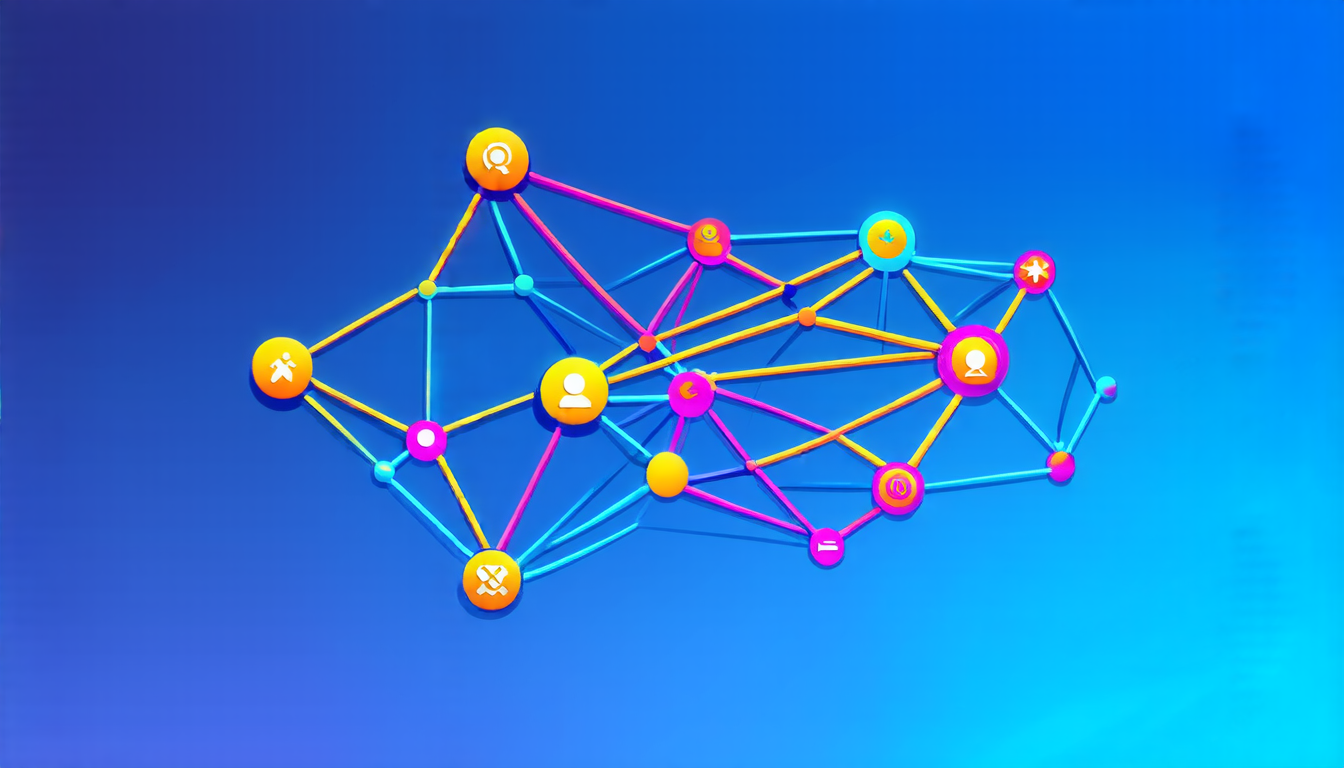
A team of researchers has developed a new method for processing large amounts of data on complex networks, such as social media platforms and molecular structures. The approach, known as distributed graph neural network inference, enables computers to quickly analyze vast amounts of information by breaking it down into smaller chunks and processing them in parallel.
The key innovation lies in the way the system distributes the computational workload across multiple nodes in a cluster, allowing for significant speed-ups compared to traditional methods. This is particularly important when dealing with large-scale networks that contain millions or even billions of nodes and edges.
One of the main challenges in processing complex networks is the sheer volume of data involved. Traditional approaches often require computers to process entire networks at once, which can be time-consuming and inefficient. The new method, on the other hand, breaks down the network into smaller sub-networks and processes each one independently. This allows for parallel processing, where multiple nodes in the cluster work together to analyze different parts of the network.
The system is designed to be highly scalable, meaning it can handle increasingly large amounts of data as needed. This makes it particularly well-suited for applications such as social media analysis, recommendation systems, and molecular modeling.
In addition to its speed and scalability, the new method also offers improved accuracy compared to traditional approaches. By processing smaller sub-networks independently, the system can avoid errors that might occur when trying to analyze entire networks at once.
The researchers have tested their approach on a range of real-world datasets, including social media networks and molecular structures. The results show significant speed-ups and improvements in accuracy compared to traditional methods.
The potential applications of this technology are vast. It could be used to improve the performance of complex systems such as power grids, transportation networks, and financial markets. It could also enable new forms of data analysis and visualization that would be impossible with traditional methods.
Overall, the development of distributed graph neural network inference represents a significant advance in the field of data processing. Its ability to handle large-scale networks efficiently and accurately makes it an attractive solution for a wide range of applications.
Cite this article: “Scaling Up Graph Neural Networks: A Survey of Distributed Training Techniques”, The Science Archive, 2025.
Data Processing, Complex Networks, Graph Neural Network, Distributed Inference, Parallel Processing, Scalability, Accuracy, Social Media Analysis, Molecular Modeling, Big Data.





