

Sunday 06 April 2025
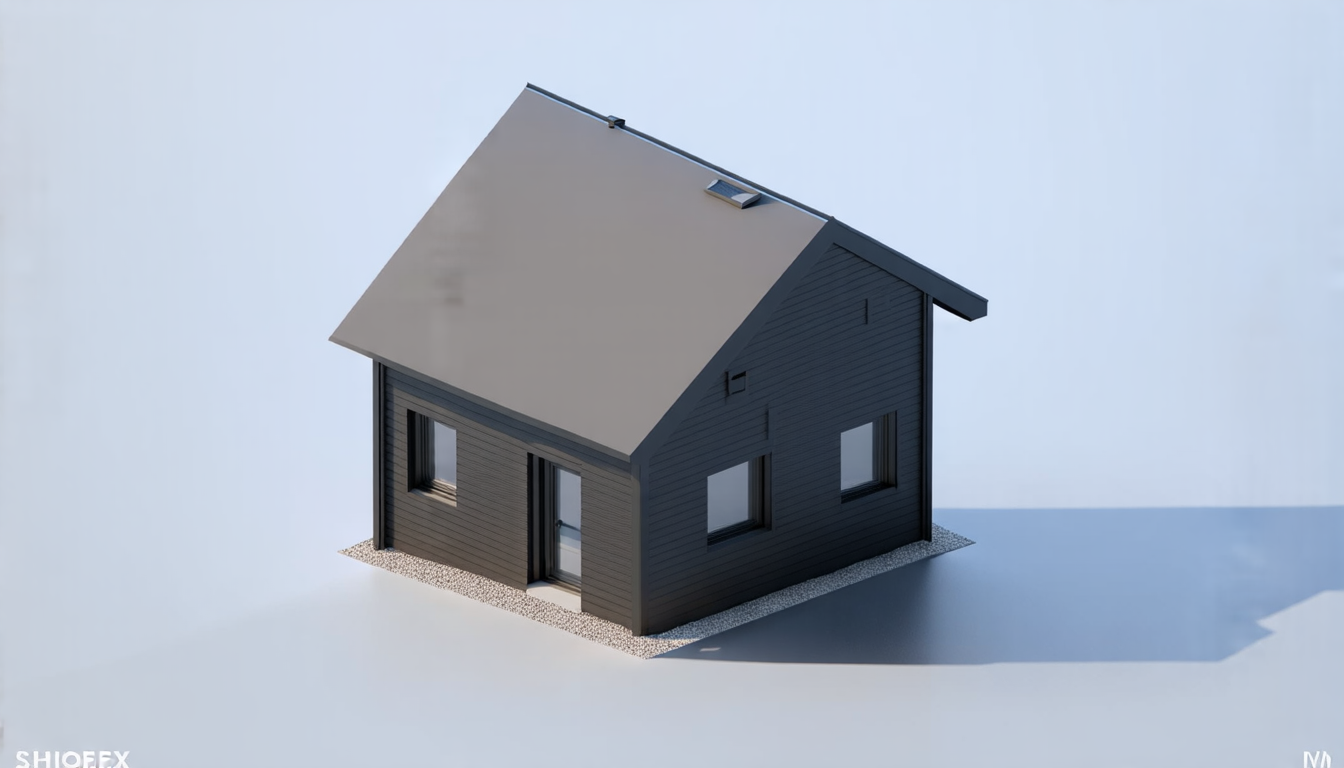
A team of researchers has made significant progress in developing a new method for generating realistic architectural designs using artificial intelligence (AI). The approach, which combines generative models and multi-view depth consistency, enables the creation of detailed and coherent images of buildings from simple shoebox models.
The study begins by analyzing the complexity of architectural design, where designers often struggle to create consistent and accurate visual representations of buildings. To address this challenge, the researchers developed a novel method that leverages AI to generate multi-view consistent architectural renderings.
The method starts with the creation of a shoebox model, which is then used as input for the generative model. The model, based on control diffusion networks, generates intermediate architectural designs by gradually refining the initial shoebox model. This process allows for the capture of essential structural elements and detailed features.
To ensure consistency across different views, the researchers incorporated multi-view depth consistency loss into the training process. This module compares the generated images with real-world reference images, ensuring that the produced design exhibits similar style, structure, and depth information.
In addition to reconstruction experiments, the team also conducted generation experiments using unseen input data. The results demonstrate the model’s ability to generalize effectively, producing high-quality architectural designs with consistent style and structural integrity.
The study’s findings have significant implications for the field of architecture, particularly in terms of streamlining the design process and reducing errors. By automating the creation of detailed visual representations, designers can focus on higher-level creative decisions, such as exploring new design possibilities or refining their ideas.
Moreover, the proposed method has potential applications beyond architectural visualization. Its ability to generate realistic images from simple inputs could be applied to various fields, including product design, interior design, and even video game development.
The researchers’ achievement is a testament to the power of AI in revolutionizing traditional design practices. As the field continues to evolve, it will be exciting to see how this technology is further developed and integrated into real-world applications.
Cite this article: “Unveiling Architectural Secrets: AI-Generated Multi-View Designs Revolutionize Building Visualization”, The Science Archive, 2025.
Artificial Intelligence, Architectural Design, Generative Models, Multi-View Depth Consistency, Shoebox Models, Control Diffusion Networks, Image Generation, Visual Representation, Architectural Visualization, Product Design





