

Sunday 06 April 2025
Scientists have made a significant breakthrough in the field of artificial intelligence, allowing for the generation of detailed and realistic architectural designs directly from rough sketches. This innovative technology has the potential to revolutionize the way architects and designers work, making it easier and faster to create complex buildings.
The new method uses a combination of artificial intelligence and machine learning algorithms to generate high-quality images of buildings based on simple sketches. The system is able to understand the underlying structure and design elements of the sketch, and then use this information to create a detailed and accurate representation of the building.
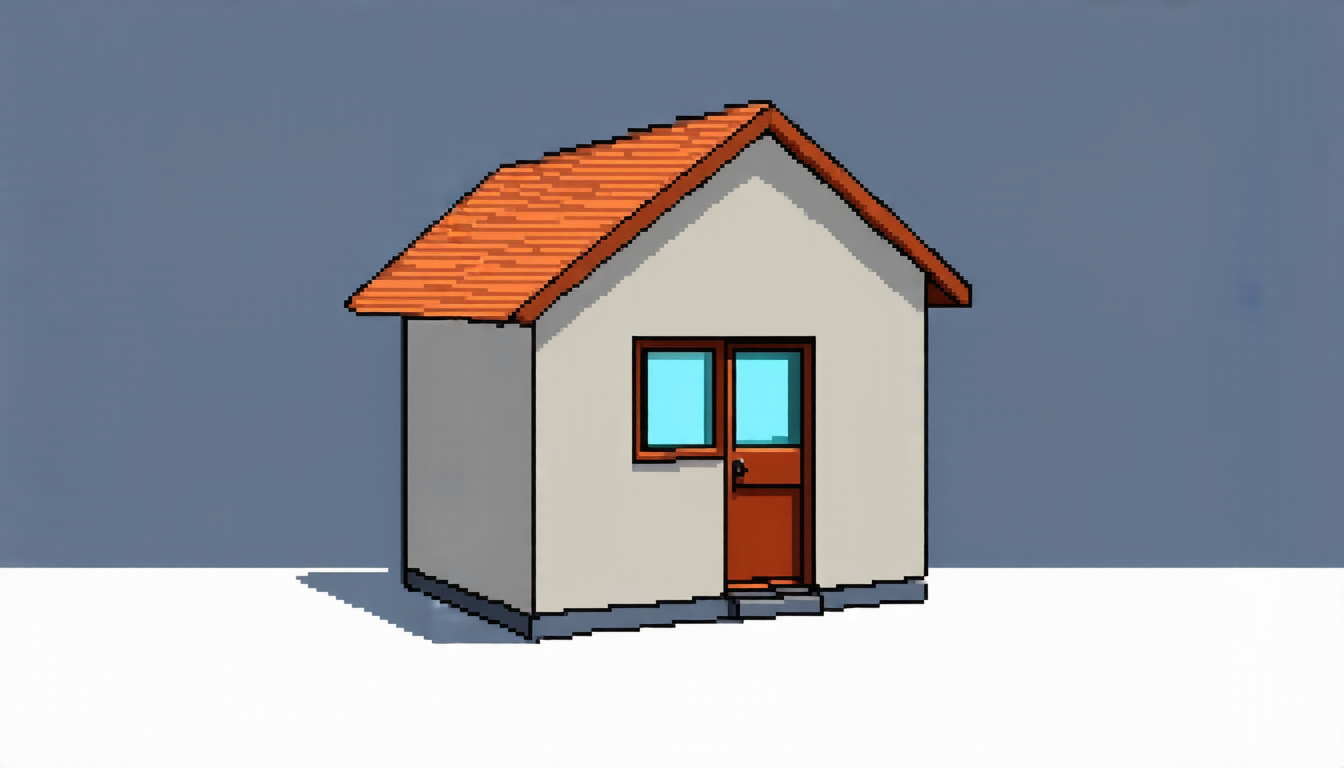
One of the key advantages of this technology is its ability to incorporate specific architectural components, such as windows and doors, into the generated image. This allows architects and designers to have more control over the final product, ensuring that the design meets their exact specifications.
The system has been tested on a variety of different buildings, including schools, and has shown impressive results. The generated images are not only visually stunning but also accurately reflect the underlying design elements of the original sketch.
This technology has significant implications for the architecture industry, as it allows designers to quickly and easily generate multiple design options for a project. This can help speed up the design process, reduce costs, and improve communication with clients.
The system is also capable of learning from its mistakes, allowing it to continuously improve its performance over time. This means that as more data is fed into the system, it will become increasingly accurate and effective at generating high-quality images.
One potential application of this technology is in the design of complex buildings, such as skyscrapers or stadiums. The ability to quickly generate multiple design options could help architects and designers identify potential issues with a building’s design before it is built.
The system has also been tested on a variety of different styles and architectural designs, showing that it is capable of adapting to a wide range of different aesthetics.
While this technology is still in its early stages, it has the potential to revolutionize the way we approach architecture and design. Its ability to quickly generate high-quality images and incorporate specific components into the design makes it an invaluable tool for architects and designers.
The system’s potential applications go beyond just architectural design, as it could also be used in a variety of other fields such as product design or interior design. The possibilities are endless, and it will be exciting to see how this technology evolves over time.
Cite this article: “Revolutionizing Architectural Design: AI-Powered Sketch-to-Image Generation for School Buildings”, The Science Archive, 2025.
Artificial Intelligence, Machine Learning, Architectural Design, Building Design, Sketch-To-Building Technology, Architecture Industry, Design Process, Communication, Product Design, Interior Design





