

Sunday 06 April 2025
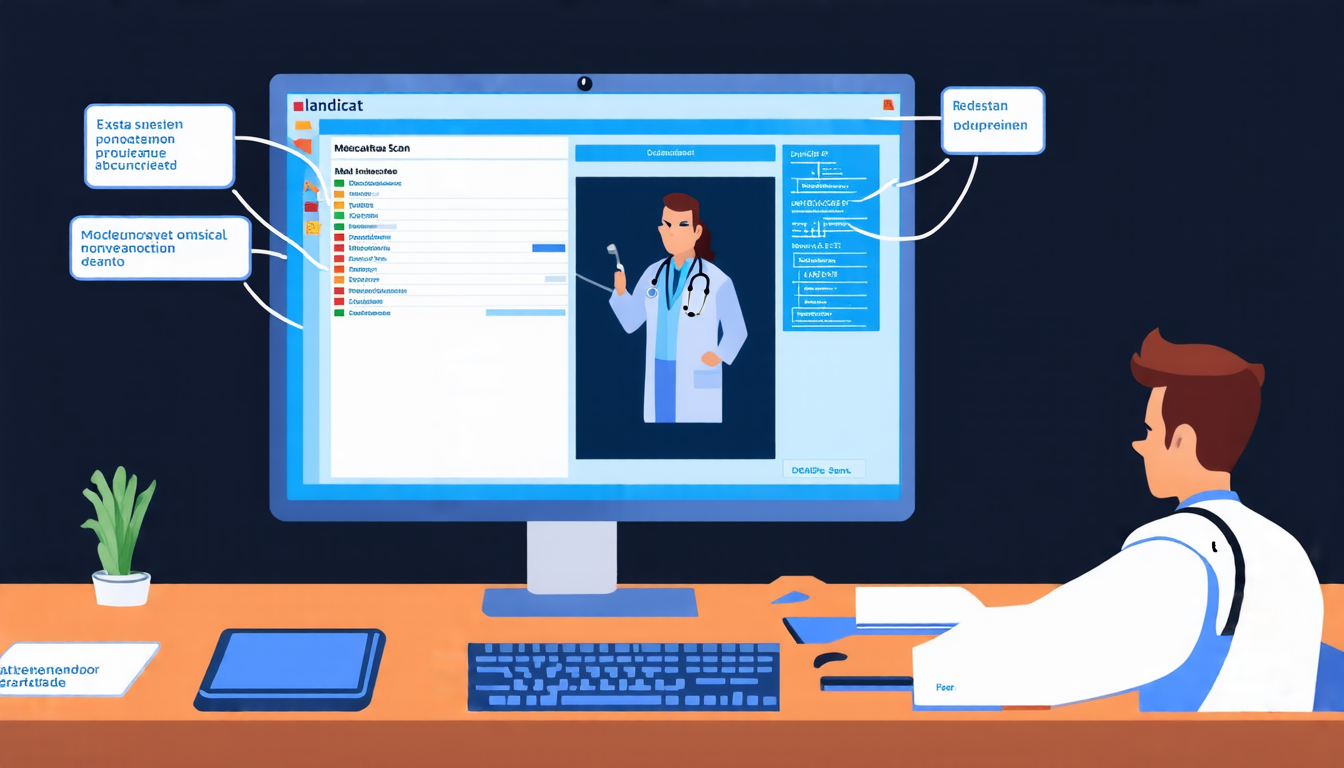
A new tool has been developed that aims to make image labeling more efficient and accurate, particularly in specialized domains where domain experts are scarce or expensive to recruit. The tool, called HEPHA, is a mixed-initiative system that uses inductive logic learning to elicit labeling knowledge from these experts and then applies it to unlabeled images.
Image labeling is a crucial step in the development of computer vision models, as it provides the data needed for training. However, this process can be time-consuming and expensive, especially when dealing with specialized domains such as healthcare or aerospace, where domain experts are required to provide accurate labels. To address this challenge, researchers have developed various solutions, including crowdsourcing and active learning.
HEPHA takes a different approach by leveraging the expertise of domain specialists through a mixed-initiative system. The tool starts with a small set of labeled images, which are used to generate labeling rules. These rules are then applied to all unlabeled images, allowing users to iteratively refine them by either directly editing the rules or providing additional labels.
One of the key benefits of HEPHA is its ability to recommend which rule to edit and which predicate to update, making it easier for users to refine the labeling process. This is particularly useful in specialized domains where domain experts may not have extensive experience with machine learning or data annotation.
The system has been tested on various image datasets, including those from healthcare and aerospace, and has shown promising results. In one study, HEPHA outperformed a deep learning-based approach and a variant of itself that did not use the mixed-initiative feature.
HEPHA’s developers believe that their tool could have significant implications for industries where domain expertise is scarce or expensive. By leveraging the knowledge of these experts in a more efficient and cost-effective way, they hope to improve the accuracy and speed of image labeling, ultimately leading to better computer vision models.
The development of HEPHA also highlights the importance of human-in-the-loop machine learning systems. While deep learning models have made significant progress in recent years, they still require human expertise to provide accurate labels and interpret their results. By combining these two approaches, researchers can create more effective and efficient machine learning systems that are better suited for real-world applications.
Overall, HEPHA represents an important step forward in the development of image labeling tools, particularly in specialized domains where domain experts are scarce or expensive.
Cite this article: “Unveiling the Power of Mixed-Initiative Image Labeling: A Novel Approach to Data Annotation in Specialized Domains”, The Science Archive, 2025.
Image Labeling, Mixed-Initiative System, Hepha, Computer Vision, Machine Learning, Deep Learning, Data Annotation, Domain Experts, Healthcare, Aerospace.





