

Sunday 06 April 2025
The quest for a more efficient way to send updates over wireless networks has led scientists to explore innovative methods that take into account the inherent correlations between devices. Correlated devices, which share similar information or observations, can significantly improve the speed and reliability of data transmission.
One such approach is the Age of Information (AoI) optimization technique, which prioritizes the most critical updates based on their freshness. By focusing on the AoI, researchers have been able to develop more efficient algorithms for managing data traffic in wireless networks. In a recent study, scientists demonstrated that by optimizing AoI, they could significantly reduce the delay and latency associated with transmitting information over these networks.
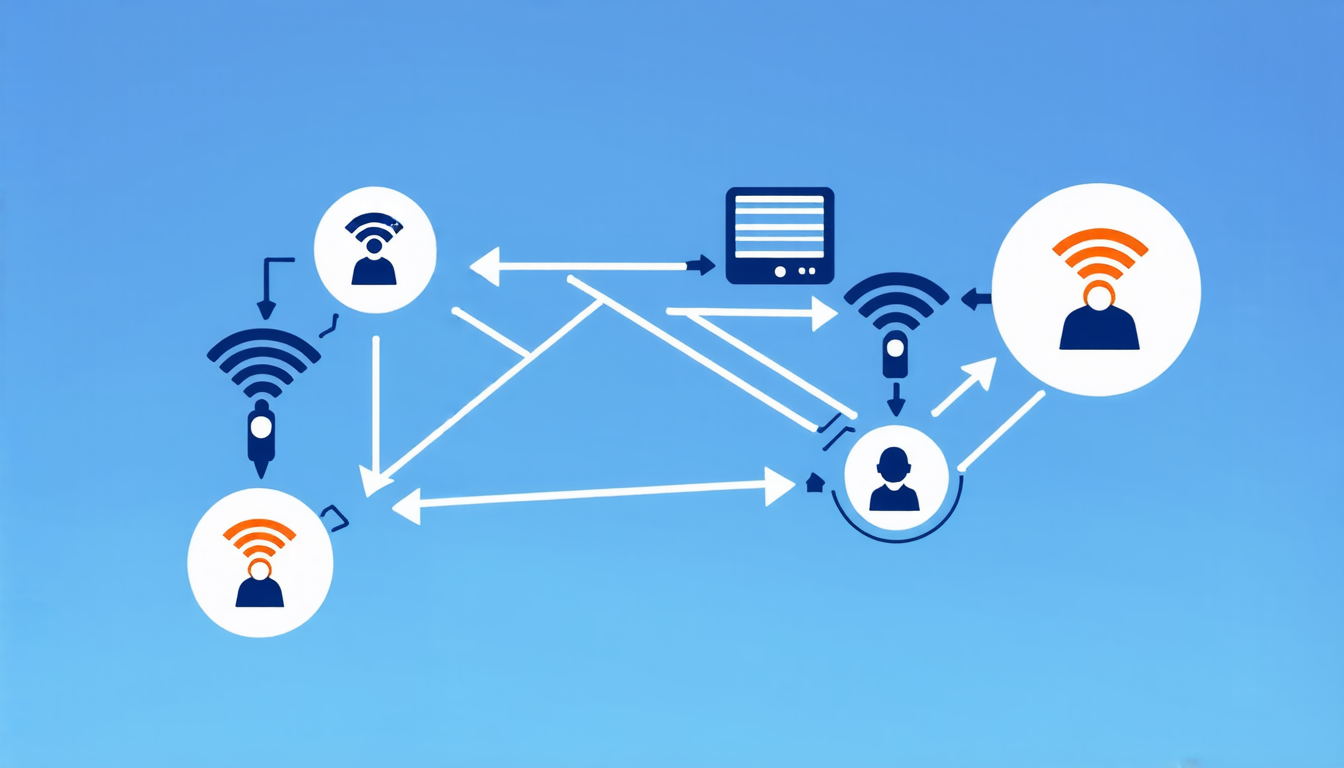
The concept of correlated devices is particularly relevant in the context of IoT (Internet of Things) systems, where numerous sensors and devices are constantly generating and exchanging data. When multiple devices share similar observations or information, their transmissions can be coordinated to minimize interference and optimize network utilization.
Researchers have been exploring various methods for optimizing AoI in wireless networks, including the use of machine learning algorithms and optimization techniques. One such approach involves using projected gradient descent (PGD) to optimize the transmission probabilities of devices in a heterogeneous network.
In this method, each device is assigned a unique transmission probability based on its correlation with other devices. The PGD algorithm iteratively adjusts these probabilities to minimize the AoI while ensuring that the overall network performance is optimized. By leveraging the correlations between devices, this approach can significantly improve the efficiency of data transmission and reduce latency.
The implications of this research are far-reaching, particularly in applications where timely updates are critical. For example, in industrial automation systems, where sensors monitor and control physical processes, optimizing AoI can help ensure that critical information is transmitted quickly and reliably.
Furthermore, the use of correlated devices and AoI optimization techniques has significant potential for improving the performance of wireless networks in IoT systems. By leveraging these correlations, researchers hope to develop more efficient algorithms for managing data traffic and reducing latency in these networks.
In the future, scientists plan to continue exploring innovative methods for optimizing AoI in wireless networks. By combining machine learning algorithms with optimization techniques, they aim to develop even more efficient solutions that can be applied to a wide range of applications. As our reliance on wireless networks continues to grow, the development of more advanced and efficient methods for managing data transmission is crucial for ensuring seamless communication and reliable information exchange.
Cite this article: “Unveiling the Secrets of Correlated Status Updates: A Novel Approach to Enhancing Information Freshness in Random Access Networks”, The Science Archive, 2025.
Age Of Information, Wireless Networks, Iot Systems, Correlated Devices, Machine Learning Algorithms, Optimization Techniques, Projected Gradient Descent, Latency, Data Transmission, Network Performance.





