

Sunday 06 April 2025
Scientists have long sought ways to precisely manipulate and arrange individual cells, a crucial step in understanding how they interact and respond to their environment. A new technique, developed by researchers at Brown University, takes this approach to the next level by using lasers to trap and arrange bacteria into intricate patterns.
The method, called selective tweezing and immobilization of colloids (STIC), leverages the power of femtosecond lasers to create a platform capable of manipulating cells with unprecedented precision. By harnessing the unique properties of these ultra-fast pulses, scientists can not only trap individual cells but also assemble them into complex patterns and structures.
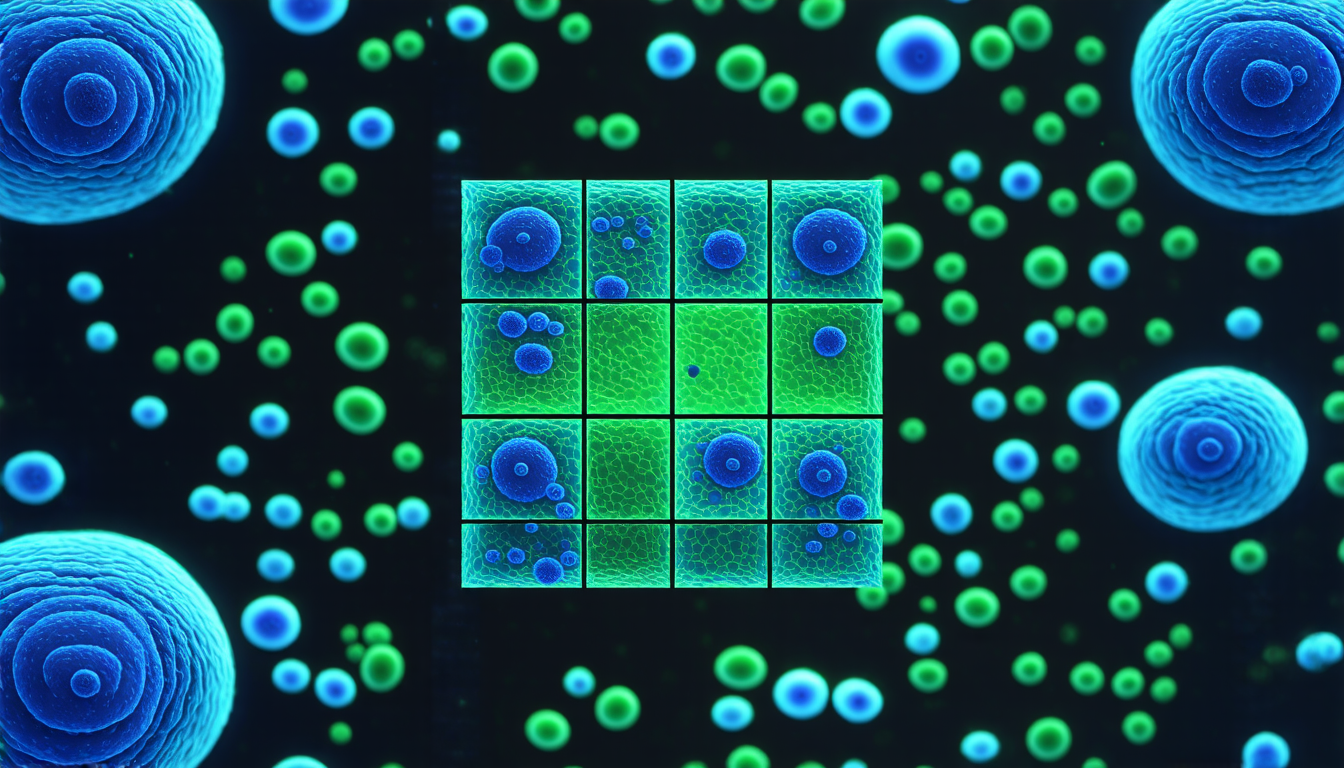
The researchers demonstrated this technique by creating a 3×3 grid of Staphylococcus aureus bacteria, each cell carefully positioned just 1 micrometer apart from its neighbors. This level of control allows for the creation of microenvironments that mimic the intricate structures found in nature, such as biofilms or tissue clusters.
But STIC’s capabilities don’t stop there. The technique also enables the fabrication of complex three-dimensional structures using a process called two-photon polymerization (TPP). By focusing the laser pulses onto a photosensitive resin, scientists can create intricate patterns and shapes, including microgrooves and cylindrical constructs.
These structures are not just mere curiosities – they have significant implications for our understanding of cell biology. For instance, researchers can now study how cells interact with their environment in a more controlled and precise manner. This could shed light on how pathogens spread or how cancer cells grow and metastasize.
The potential applications of STIC are vast and varied. In the realm of medicine, it could be used to create custom-designed scaffolds for tissue engineering or to develop new methods for studying disease progression. In the field of biophysics, it could enable researchers to explore complex biological systems in a more precise and controlled manner.
The Brown University team’s achievement is a testament to the power of interdisciplinary research and the innovative spirit that drives scientists to push the boundaries of what is possible. By combining cutting-edge laser technology with a deep understanding of cell biology, they have created a platform capable of revolutionizing our understanding of the intricate dance between cells and their environment.
As researchers continue to refine and expand upon this technique, we can expect to see new breakthroughs in fields ranging from medicine to biotechnology.
Cite this article: “Unlocking the Secrets of Microbial Behavior: A Revolutionary Technique for Manipulating Bacterial Cells”, The Science Archive, 2025.
Laser Technology, Cell Biology, Precision Manipulation, Bacteria, Femtosecond Lasers, Selective Tweezing, Immobilization Of Colloids, Stic, Two-Photon Polymerization, Tissue Engineering.





