

Sunday 06 April 2025
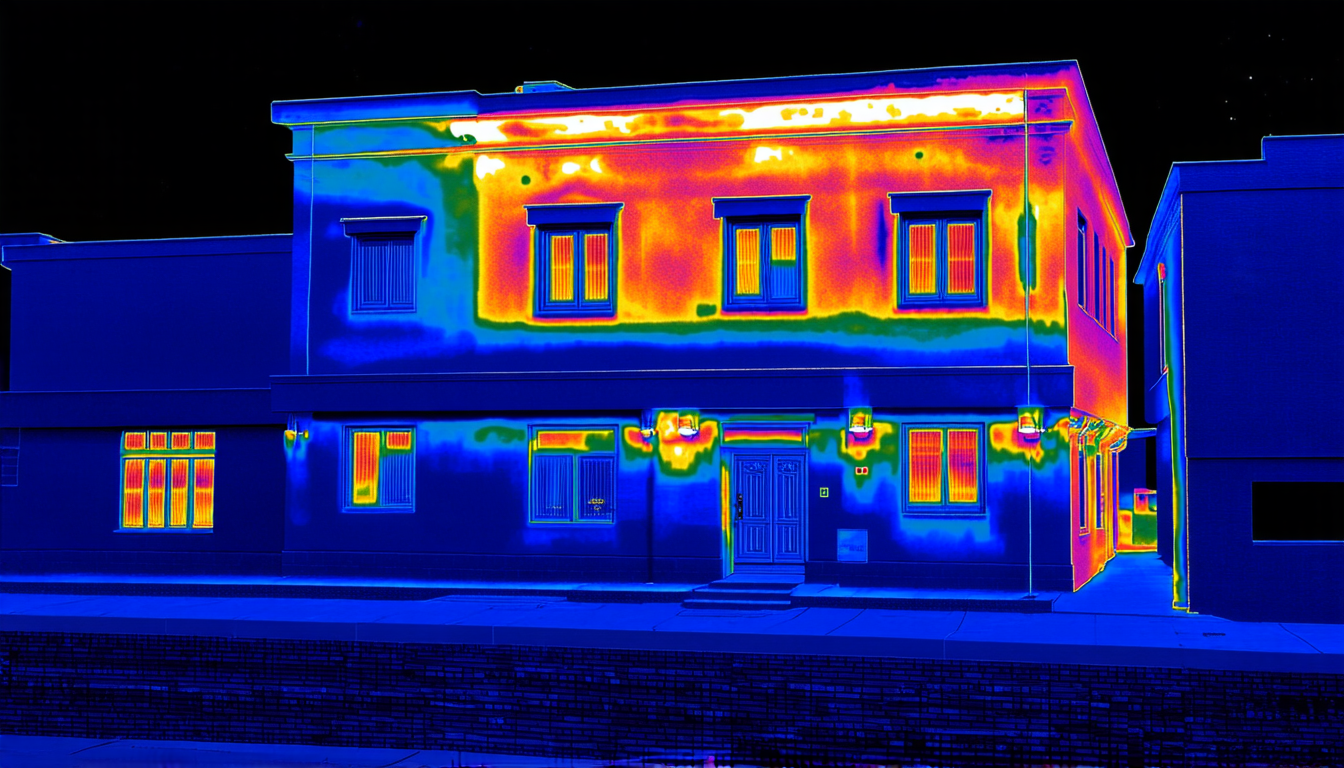
As we venture into the world of thermal imaging, a new era of precision has dawned upon us. The latest breakthrough in this field is a method that enables the reconstruction of dynamic temperature fields at night, allowing for unprecedented accuracy and resolution. This innovative approach, dubbed NTR-Gaussian, has far-reaching implications for various industries, from architecture to environmental monitoring.
The key innovation lies in the integration of Gaussian splatting with thermal infrared imaging. Traditional methods often rely on static images or manual measurements, which are limited by their inability to capture dynamic temperature changes over time. In contrast, NTR-Gaussian employs a 4D Gaussian splatting technique that combines thermal infrared images with temporal information to reconstruct high-resolution temperature fields.
The process begins with the collection of thermal infrared images using a specialized drone equipped with an H20T camera. These images are then processed using a proprietary algorithm that converts them into raw radiation data. This data is subsequently registered to a pre-constructed 3D model, allowing for precise estimation of the absolute orientation of each image.
The next step involves generating physical quantities such as emissivity, convective heat transfer coefficient, and heat capacity. These values are critical in determining the radiative temperature of the scene. Unlike traditional methods that rely on artificial settings, NTR-Gaussian obtains these values through a neural network, ensuring a more accurate representation of real-world conditions.
The results are nothing short of astonishing. When tested against various scenes, NTR-Gaussian consistently outperformed competing methods in terms of precision and resolution. The method’s ability to capture dynamic temperature changes over time enables the creation of highly detailed thermal maps that can be used for a wide range of applications.
One of the most significant implications of this technology is its potential to revolutionize building monitoring and energy management. By providing high-resolution thermal images, NTR-Gaussian can help identify areas of heat loss and optimize energy consumption. This could lead to substantial cost savings and reduced carbon emissions.
Furthermore, NTR-Gaussian has far-reaching applications in environmental monitoring and research. The method’s ability to capture dynamic temperature changes over time makes it an ideal tool for studying climate change and tracking the effects of global warming.
In summary, NTR-Gaussian represents a major leap forward in thermal imaging technology. Its innovative approach combines the strengths of Gaussian splatting and thermal infrared imaging to create high-resolution temperature fields that can be used for a wide range of applications.
Cite this article: “Revolutionizing Nighttime Temperature Mapping: A Novel Approach to Dynamic Thermal Reconstruction”, The Science Archive, 2025.
Thermal Imaging, Ntr-Gaussian, Gaussian Splatting, Thermal Infrared, Dynamic Temperature Fields, Night-Time Monitoring, Environmental Monitoring, Climate Change, Energy Management, Building Monitoring.





