

Sunday 06 April 2025
Scientists have long been fascinated by the properties of materials that can conduct electricity and heat efficiently. These materials, known as thermoelectrics, are crucial for a wide range of applications, from powering electronic devices to generating electricity in cars. However, most thermoelectric materials have one major flaw: they tend to lose their effectiveness at low temperatures.
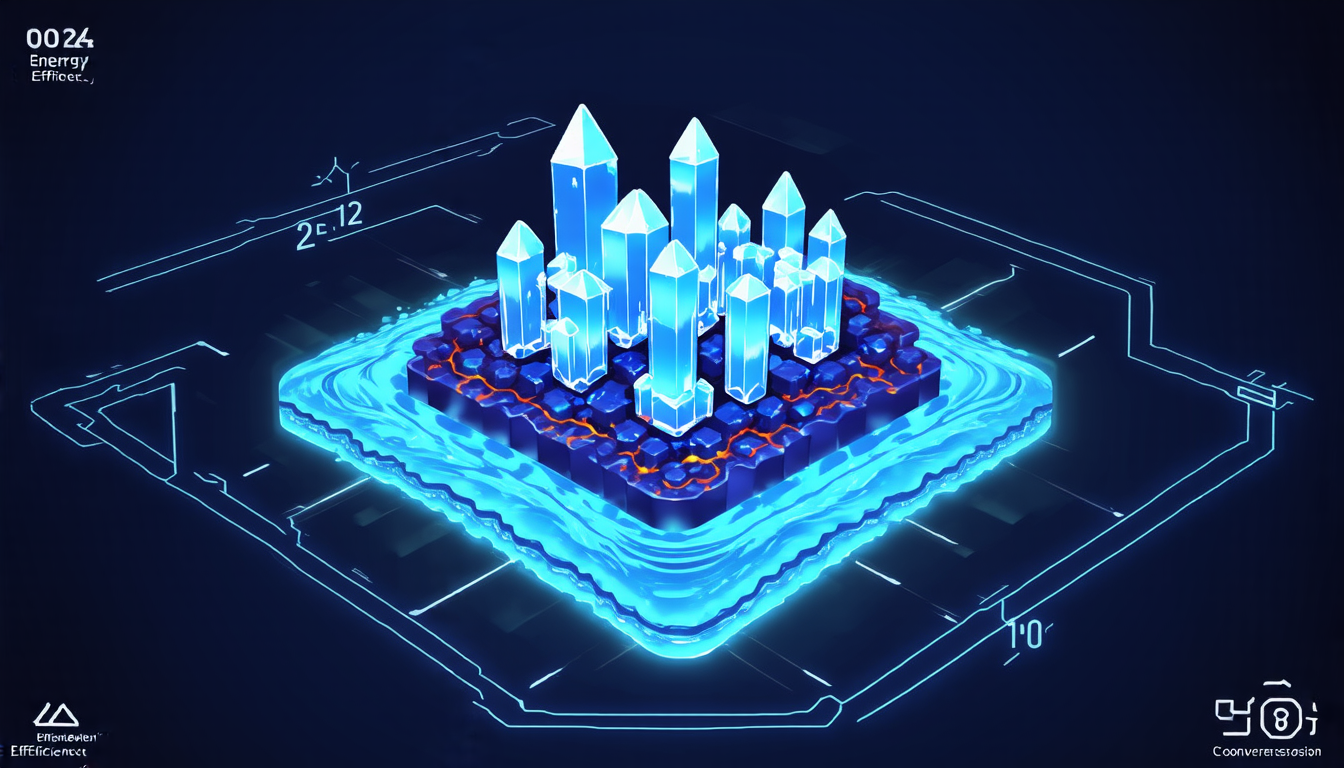
A team of researchers has now discovered a new class of thermoelectric materials that can defy this trend and maintain their efficiency even at extremely low temperatures. These materials, known as chimney ladder crystals, are made up of layers of atoms arranged in a unique pattern.
The secret to the chimney ladder crystals’ exceptional properties lies in the way they absorb and release heat. Unlike traditional thermoelectrics, which rely on vibrations within the material to generate electricity, chimney ladder crystals use soft optical modes to do the trick. These soft modes are like gentle waves that ripple through the material, allowing it to efficiently convert heat into electricity.
The researchers used a combination of experimental measurements and theoretical calculations to study the properties of these materials. They found that the chimney ladder crystals exhibited a range of unusual behaviors, including an anomalous increase in their electrical conductivity at low temperatures.
One of the most striking features of the chimney ladder crystals is their ability to maintain their efficiency even when cooled to extremely low temperatures. This is because the soft optical modes continue to play a crucial role in generating electricity, even as the material approaches absolute zero.
The discovery of these materials has significant implications for a wide range of applications, from energy generation and storage to electronic devices and medical equipment. By harnessing the unique properties of chimney ladder crystals, scientists may be able to develop more efficient and sustainable ways to generate power and control heat flow.
The researchers’ findings have also shed new light on the fundamental physics underlying thermoelectricity. Their work has shown that soft optical modes can play a key role in generating electricity, even in materials that are not typically thought of as being thermoelectric.
Overall, the discovery of chimney ladder crystals represents an important breakthrough in the field of thermoelectrics. It has the potential to revolutionize our understanding of how materials convert heat into electricity and could lead to the development of new technologies with significant practical applications.
Cite this article: “Unlocking the Secrets of Superconductors: A Revolutionary Breakthrough in Understanding Anomalous Thermal Conductivity”, The Science Archive, 2025.
Thermoelectrics, Materials Science, Electrical Conductivity, Low Temperatures, Heat Transfer, Soft Optical Modes, Energy Generation, Sustainable Power, Absolute Zero, Physics





