

Sunday 06 April 2025
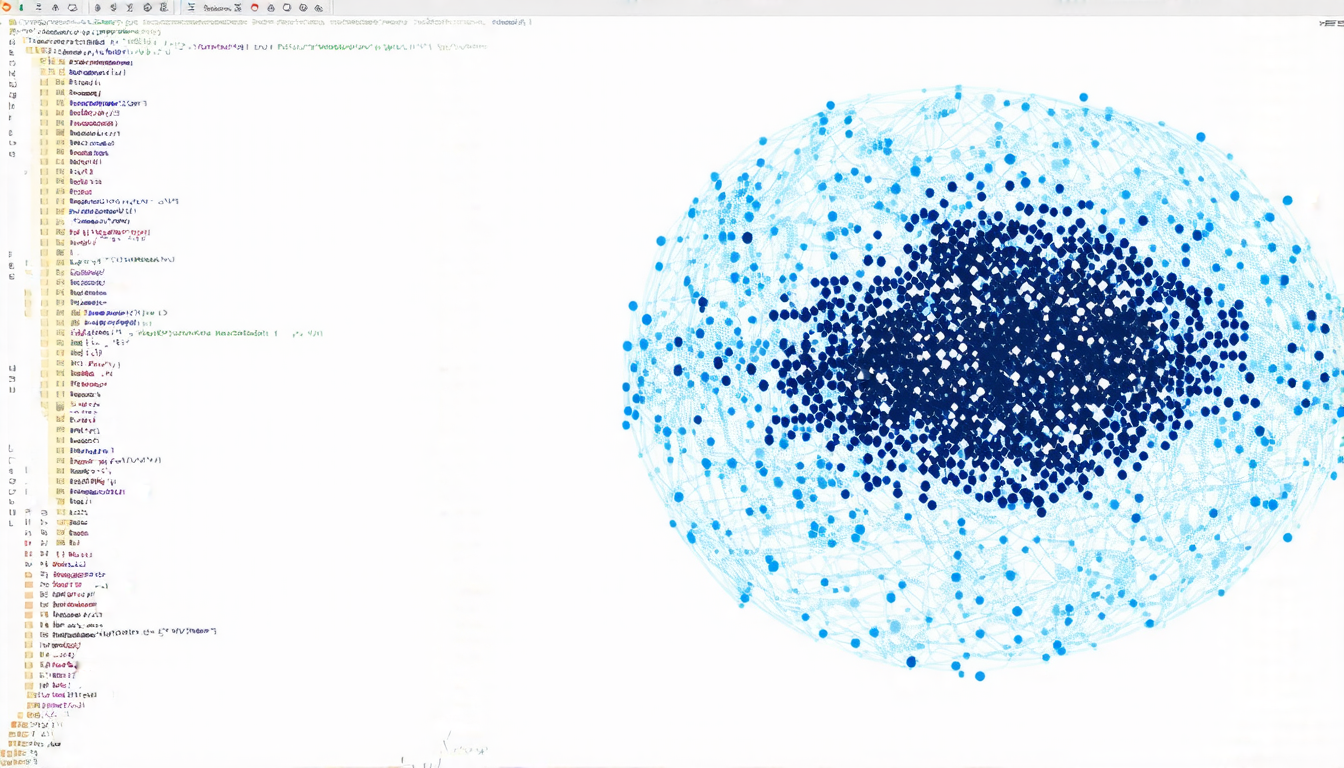
Researchers have developed a new dimensionality reduction algorithm, DiRe-JAX, that can efficiently handle large datasets while preserving both local and global structures within the data. This is particularly important in fields such as machine learning, bioinformatics, and data science, where high-dimensional data is common.
Traditional methods like UMAP and tSNE are widely used for dimensionality reduction, but they often struggle with scalability, interpretability, and preservation of global data structures. DiRe-JAX addresses these challenges by leveraging the JAX framework to provide a scalable and efficient solution.
One of the key features of DiRe-JAX is its ability to capture the topology of the dataset, which allows it to preserve both local and global structures. This is achieved through the use of k-NN graphs, which are then used to produce an initial embedding of the data. The algorithm can also be fine-tuned using a variety of metrics, including neighborhood preservation, context preservation, and persistence homology.
DiRe-JAX was tested on several datasets, including blobs, MNIST digits, disk uniform, half-moons, Levine 13, and Levine 32. In each case, the algorithm produced embeddings that were able to preserve both local and global structures within the data.
For example, in the blobs dataset, DiRe-JAX produced an embedding that clearly showed the different clusters of points, whereas traditional methods like UMAP and tSNE were unable to capture this structure. Similarly, in the MNIST digits dataset, DiRe-JAX was able to produce an embedding that preserved the context between similar digits.
In addition to its ability to preserve local and global structures, DiRe-JAX is also highly efficient and scalable. This makes it well-suited for large datasets that are common in many fields.
Overall, DiRe-JAX represents a significant improvement over traditional methods for dimensionality reduction. Its ability to capture the topology of the dataset and produce high-quality embeddings make it an important tool for researchers and practitioners working with complex data.
The algorithm’s efficiency and scalability also make it well-suited for use in a variety of applications, from machine learning to bioinformatics. As such, DiRe-JAX has the potential to have a significant impact on many fields.
Cite this article: “Advances in Dimensionality Reduction: A Comparative Study of DiRe-JAX and Traditional Methods”, The Science Archive, 2025.
Dimensionality Reduction, Machine Learning, Bioinformatics, Data Science, Jax Framework, K-Nn Graphs, Topology Preservation, Scalability, Efficiency, Embedding Algorithms





