

Sunday 06 April 2025
Artificial intelligence has been touted as a panacea for many of humanity’s problems, but one area where it still lags behind is in its ability to predict and understand complex systems like business processes. These intricate networks of activities, resources, and events are the lifeblood of modern organizations, and being able to accurately forecast what will happen next can make all the difference between success and failure.
Enter graph neural networks (GNNs), a type of AI that’s specifically designed to tackle this challenge. In a recent paper, researchers explored the use of GNNs for predictive process monitoring, with some surprising results.
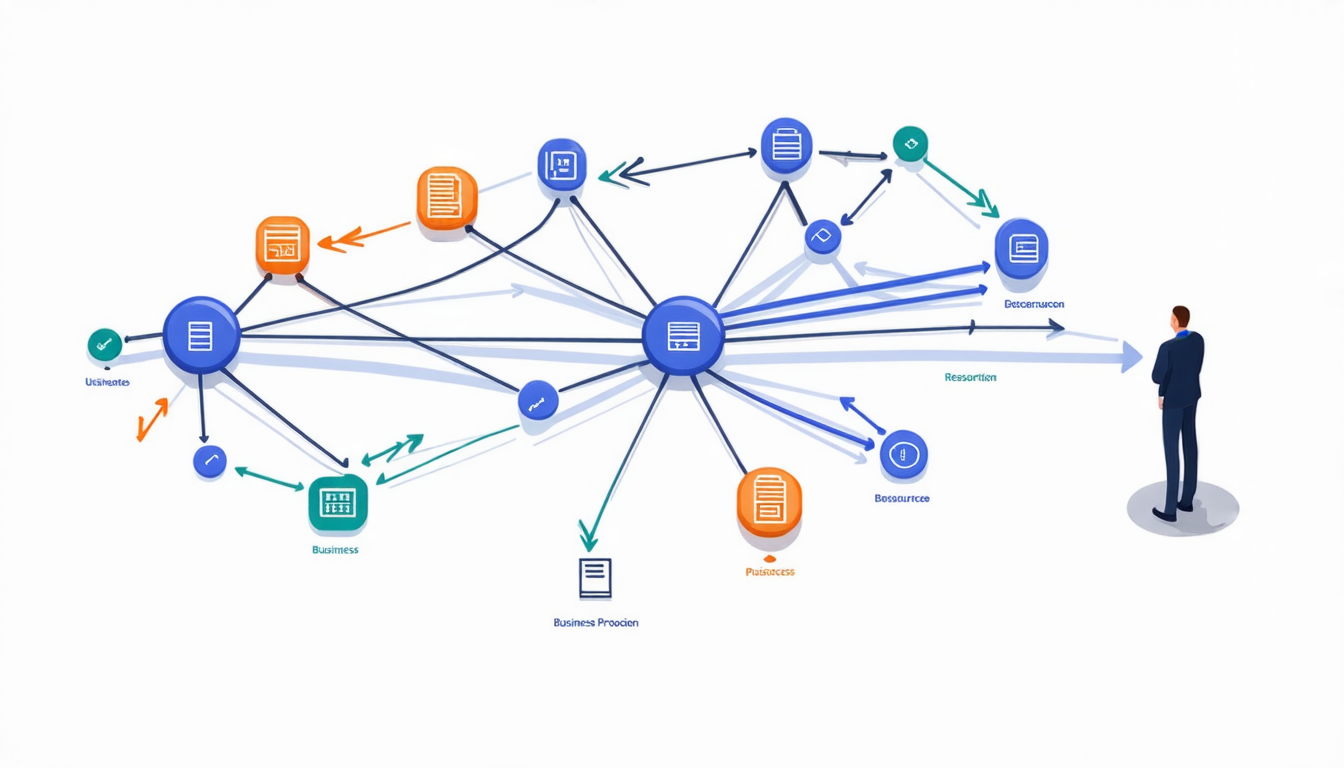
The key innovation here is in how the data is represented. Traditionally, business processes are viewed as sequences of events, which is useful but limited. By transforming these sequences into graphs – think of it like mapping relationships between activities and resources – researchers can tap into the underlying structure of the process and make more accurate predictions.
But that’s not all. The paper also introduces a new technique for enriching these graph representations by incorporating various features, such as time-stamped data and categorical variables. This allows the GNNs to learn even more about the processes they’re analyzing, making them more effective at predicting what will happen next.
The researchers tested their approach on several real-world datasets, with impressive results. On average, their GNN-based models outperformed traditional sequence-based approaches by a significant margin, and in some cases were able to accurately predict process outcomes with an accuracy rate of over 90%.
So what does this mean for the world of business and industry? For starters, it could be a game-changer for companies looking to optimize their processes and improve efficiency. By being able to forecast what will happen next, organizations can make more informed decisions about resource allocation, scheduling, and even strategic planning.
But the implications go far beyond just business. This technology has the potential to transform the way we approach complex systems in general – think of it like a new tool for understanding and predicting the behavior of everything from supply chains to social networks.
Of course, there’s still much work to be done before GNNs can be widely adopted. But as researchers continue to refine their approaches and push the boundaries of what’s possible, we may see a future where AI is not just a helpful tool, but an indispensable part of how we understand and interact with the world around us.
Cite this article: “Unveiling Graph Neural Networks for Predictive Process Monitoring: A Comparative Study on Event Logs and Node Embeddings”, The Science Archive, 2025.
Artificial Intelligence, Graph Neural Networks, Predictive Process Monitoring, Business Processes, Complex Systems, Machine Learning, Sequence-Based Approaches, Time-Stamped Data, Categorical Variables, Optimization Efficiency.





