
Sunday 06 April 2025
Deep learning algorithms have revolutionized the field of medical imaging, enabling doctors and researchers to analyze large amounts of data quickly and accurately. But what if we could take this technology a step further and apply it to whole slide images of tissue samples? That’s exactly what scientists have been working on.
For decades, pathologists have examined these slides by eye, searching for tiny abnormalities that can indicate disease. But the process is time-consuming, prone to error, and often relies on human judgment alone. By contrast, artificial intelligence algorithms can analyze vast amounts of data in a matter of seconds, spotting patterns and connections that might elude even the most experienced pathologists.
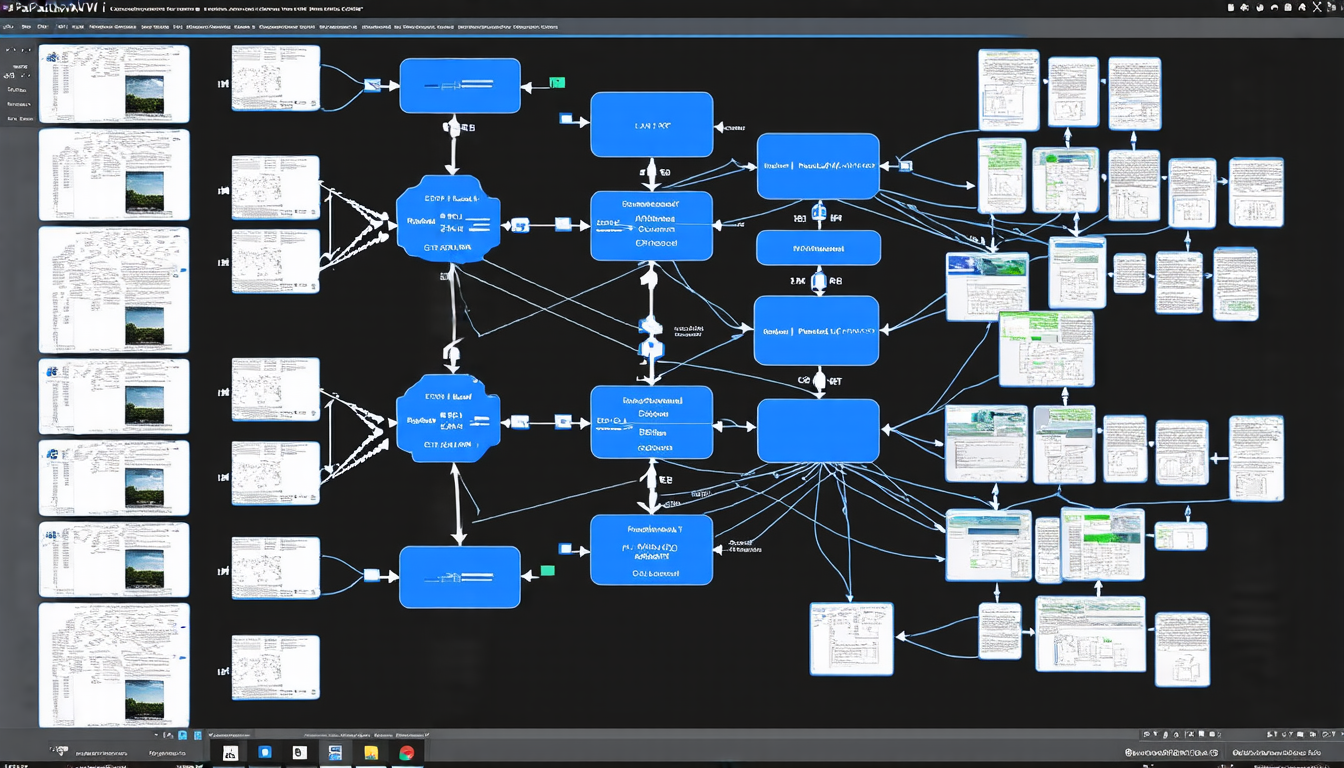
Recently, researchers have developed a novel approach called PathRWKV, which uses a combination of recurrent neural networks and transformer models to analyze whole slide images. The result is a system that can accurately identify disease markers and diagnose conditions more quickly and accurately than human experts.
The key innovation behind PathRWKV is its ability to handle variable-sized input data – in this case, whole slide images with millions of pixels each. Traditional deep learning algorithms struggle with such large datasets, but the researchers have developed a clever workaround. By using a recurrent neural network, they can process the image in chunks, rather than all at once.
This allows PathRWKV to analyze not just the individual features within an image, but also how those features relate to one another. It’s like being able to see the entire forest, rather than just individual trees.
The potential applications of this technology are vast. For patients with cancer, for example, accurate diagnosis can be a matter of life and death. PathRWKV could potentially speed up the process of diagnosing disease, allowing doctors to provide patients with more effective treatment options sooner.
But it’s not just about diagnosis – the technology also has implications for medical research. By analyzing large datasets of whole slide images, scientists could gain new insights into the biology of disease and develop more targeted treatments.
Of course, there are still challenges to overcome before PathRWKV can be used in clinical settings. The algorithm needs to be trained on even larger datasets than it currently uses, and it must be tested extensively to ensure its accuracy and reliability.
Still, the potential is clear. As researchers continue to refine and improve PathRWKV, we may soon see a new era of precision medicine, where diagnosis and treatment are tailored to individual patients based on their unique biological profiles.
Cite this article: “Transforming Whole Slide Imaging: A Novel Recurrent-Transformer Model for Efficient and Accurate Pathological Diagnosis”, The Science Archive, 2025.
Medical Imaging, Deep Learning, Whole Slide Images, Tissue Samples, Artificial Intelligence, Pathologists, Recurrent Neural Networks, Transformer Models, Precision Medicine, Cancer Diagnosis.